






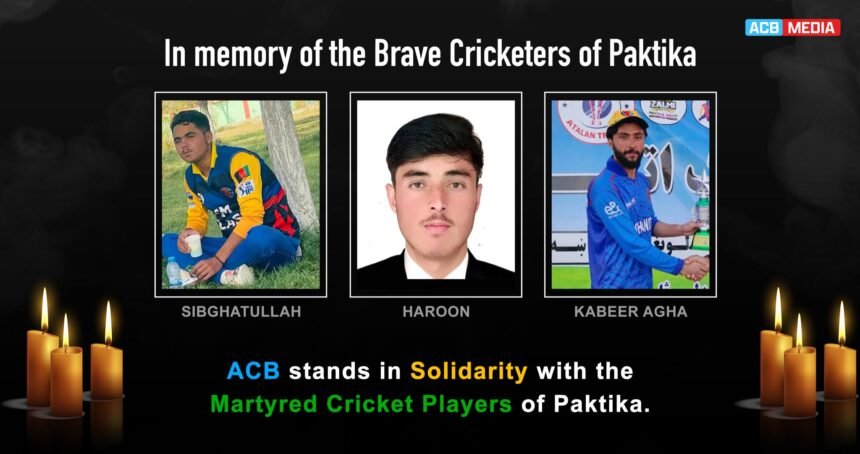
New Delhi/Kabul: Friday evening brought heartbreaking news from Afghanistan’s Paktika province. Three young cricketers lost their lives in what’s being described as a cross-border attack, and the fallout has already sent shockwaves through international cricket.
When Cricket Turned to Tragedy
Kabeer, Sibghatullah, and Haroon were heading home. Just hours earlier, they’d been playing a friendly match in Sharana, Paktika’s capital city. The kind of low-key game that happens in towns across South Asia every weekend.
They made it back to Urgun district. Friends gathered. And then everything went wrong.
By the time the dust settled, eight people were dead. Seven others wounded. Among those killed were the three cricketers, along with five other locals from the same district.
Kabul’s Extraordinary Response
Afghanistan’s cricket authorities didn’t hold back. Their official statement pointed fingers directly at Islamabad, calling what happened a “cowardly attack” by the Pakistani regime.
But words weren’t enough. The Afghanistan Cricket Board took the unprecedented step of pulling out of a tri-nation T20 tournament scheduled for late November in Pakistan. It’s the kind of decision you don’t see often in cricket—where politics and sport collide so directly.
“We consider this a tremendous loss,” ACB officials said, describing the impact on Afghanistan’s sporting community. They extended condolences to the families while making it clear that participation in the Pakistan series was now off the table.
The gesture speaks volumes. For a cricketing nation that’s fought hard to establish itself on the world stage, walking away from an international tournament isn’t taken lightly.
India Steps In
The Board of Control for Cricket in India wasted no time responding. Secretary Devajit Saikia issued a media statement from Mumbai headquarters condemning what he called a “ghastly and unwarranted attack.”
The language was strong. Delhi described the deaths as “deeply distressing” and emphasized that losing young sportspeople like this crosses every line.
“The BCCI stands in solidarity with ACB, the cricket fraternity, and the families of the departed players,” the statement read. It wasn’t just diplomatic boilerplate—there was genuine anger about what happened.
India’s message was clear: we’re with you, Afghanistan.
Cricket Caught in Regional Politics
Here’s the thing about South Asian cricket: it’s never really just about cricket. Political tensions seep into everything, from bilateral series to tournament scheduling.
But this is different. We’re not talking about a visa dispute or a scheduling conflict. Three young men are dead. They were athletes doing what they loved, playing a game that’s meant to bring people together.
The incident raises uncomfortable questions about safety in border regions. About whether young athletes should have to worry about becoming collateral damage in geopolitical conflicts.
Afghanistan cricket has already beaten incredible odds to get where it is today. Their rise from refugee camps to World Cup participants is one of sport’s great stories. But tragedies like this remind us just how fragile that progress can be.
What Happens Next
The international cricket community will likely respond in the coming days. Expect statements from other boards, tributes from players, perhaps a moment of silence before upcoming matches.
Pakistan hasn’t issued an official response yet. The diplomatic fallout from Afghanistan’s tournament withdrawal will probably take weeks to fully unfold.
For now, though, the focus remains on those who died. Young men who just wanted to play cricket.
The Human Cost
Let’s not lose sight of the numbers here:
Lives lost: Eight people. Three were cricketers (Kabeer, Sibghatullah, Haroon). Five were other community members from Urgun.
Injured: Seven people are getting treatment. Their conditions haven’t been publicly disclosed.
These aren’t just statistics. They’re sons, brothers, friends. People who had families waiting for them at home.
Prayers and Grief
ACB officials ended their statement with prayers, asking that the martyrs receive the highest stations in paradise and that the injured recover fully. They requested patience and strength for the grieving families.
The BCCI echoed similar sentiments, expressing sympathy with the Afghan people and sharing in their loss.
It’s the kind of tragedy that transcends cricket rivalries and national boundaries. When young athletes die, everyone in the sporting world feels it.
Also Read | 2026 T20 World Cup: UAE Completes 20-Team Lineup