






STOCKHOLM/OSLO: Each year the month of October ushers in a period of global anticipation, as announcements from Sweden and Norway reveal the names of the exceptional individuals who have transcended boundaries in science, literature and peace to confer the “greatest benefit on humankind.” The Nobel Prize widely regarded as the world’s most prestigious honor is more than an award; it is the living legacy of Alfred Nobel’s vision transforming the legacy of an inventor of destruction into that of a great benefactor to humanity.
Introduction: A Global Legacy of Excellence
The Nobel Prize is a global heritage that does not just recognize achievements but celebrates the pinnacle of human intellect and the indomitable spirit of inquiry. Its origins are rooted in the 1895 will of Alfred Nobel the Swedish inventor and industrialist, who dictated that the bulk of his vast fortune be dedicated to establishing prizes for those who “during the preceding year, shall have conferred the greatest benefit on mankind.” This report presents a comprehensive saga of the Nobel Prize, exploring the story of its founder its intricate institutional framework the secret workings of its selection process and its deep rooted relationship with India.
Chapter 1: The Will of Alfred Nobel – An Inventor’s Atonement and Vision
The story of the Nobel Prize is inextricably linked to the life and conscience of its founder Alfred Nobel. Born in Stockholm on October 21, 1833, Nobel was an extraordinary chemist, engineer and prolific inventor who held 355 patents. His most famous invention was Dynamite in 1867. While it revolutionized the mining and construction industries it also became a powerful instrument of destruction on the battlefield.
A turning point came in 1888. Following the death of his brother Ludvig a French newspaper mistakenly published Alfred’s obituary. It was titled “Le marchand de la mort est mort” (“The merchant of death is dead”). The article shocked him to his core confronting him with the stark reality of how history would remember him: as a harbinger of destruction. This profound moral reckoning is widely believed to have motivated him to redefine his legacy, from a destroyer to a champion of humanity. This act of atonement became the foundation of the Nobel Prize.
In his final will in 1895, Nobel allocated 94% of his total assets about 31 million Swedish kronor to establish five annual prizes. His vision was finally realized after his death on December 10, 1896.
Chapter 2: The Institutional Structure – Governance and Administration
The enduring prestige of the Nobel Prize lies in its decentralized expert driven framework. Instead of a single committee Nobel entrusted the selection of laureates to established and respected academic institutions.
The Nobel Foundation: Guardian of the Prize Established on June 29, 1900, the Nobel Foundation is tasked with managing the assets of Alfred Nobel and ensuring the financial stability of the prizes. It does not select the laureates; that role is exclusively assigned to specialized committees.
The Prize Awarding Committees Nobel’s will designated different institutions to award the prizes:
- Physics and Chemistry: The Royal Swedish Academy of Sciences
- Physiology or Medicine: The Karolinska Institute, Stockholm
- Literature: The Swedish Academy
- Peace: A five member Norwegian Nobel Committee, elected by the Parliament of Norway (Storting). The choice of Norway for the Peace Prize was a symbolic decision that gave the prize a more international character.
The Prize in Economic Sciences: A Later Addition It is crucial to note that the prize in economics was not part of Alfred Nobel’s original will. It was established in 1968 by Sweden’s central bank, Sveriges Riksbank on its 300th anniversary in memory of Nobel. Officially titled “The Sveriges Riksbank Prize in Economic Sciences in Memory of Alfred Nobel,” it was first awarded in 1969 and is also selected by The Royal Swedish Academy of Sciences.
Chapter 3: The First Prizes (1901) – The Dawn of a New Tradition
On December 10, 1901, the fifth anniversary of Alfred Nobel‘s death, the first Nobel Prizes were awarded, beginning a tradition that has defined excellence for over a century. The inaugural laureates perfectly embodied Nobel’s ideal of conferring the “greatest benefit on mankind.”
The First Laureates and their Groundbreaking Contributions:
- Physics: Wilhelm Conrad Röntgen of Germany for his discovery of X rays, which revolutionized medical diagnostics.
- Chemistry: Jacobus Henricus van ‘t Hoff of the Netherlands for his discoveries of the laws of chemical dynamics and osmotic pressure.
- Physiology or Medicine: Emil Adolf von Behring of Germany, for developing a serum therapy against diphtheria earning him the title “saviour of children.”
- Literature: Sully Prudhomme of France for his poetic composition.
- Peace (Jointly): Henry Dunant of Switzerland the founder of the Red Cross and Frédéric Passy of France a leading peace activist.
Chapter 4: Rules, Criteria and the Secretive Selection Process
The unparalleled prestige of the Nobel Prize is built on its rigorous, confidential and multistage selection process, designed to ensure objectivity and excellence.
Core Criteria and Process:
- Guiding Principle: The foundational criterion for all categories is the phrase from Nobel’s will: “the greatest benefit to humankind.”
- Nomination: This is an invitation only process; one cannot nominate oneself. Thousands of qualified nominators worldwide are invited to submit names.
- Selection: Committees screen nominations create a shortlist and consult with experts. The final decision is made in October.
- Award Ceremony: The prizes are awarded annually on December 10, the anniversary of Alfred Nobel’s death in Stockholm and Oslo.
Key Rules and Statutes:
- The Fifty Year Secrecy Rule: All documents related to nominations and deliberations are kept secret for 50 years. This rule protects the process from external pressure and politicization ensuring its integrity.
- Three Laureate Limit: A prize can be shared among a maximum of three people.
- No Posthumous Awards: Since a rule change in 1974, the prize cannot be awarded posthumously unless the laureate dies between the announcement and the December ceremony.
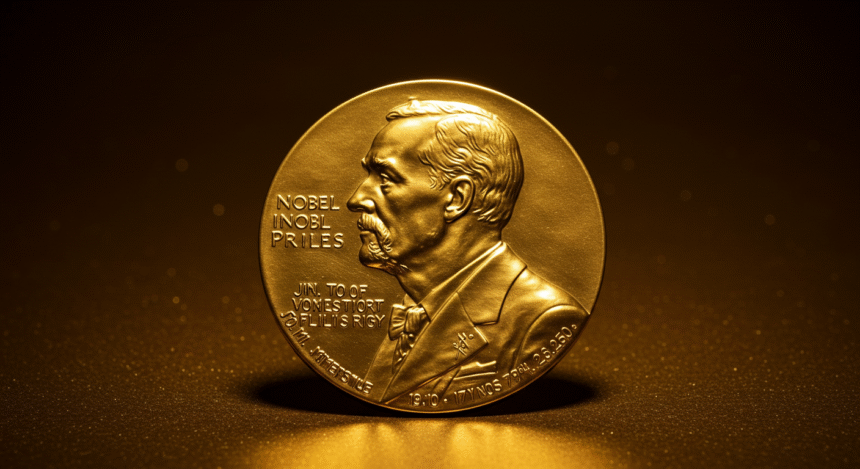
- Prize Components: Each laureate receives a gold medal a uniquely designed diploma and a monetary award. For 2023, the sum was 11 million Swedish kronor.
Chapter 5: India and the Nobel Prize – A Proud Legacy of Laureates
India has a long and distinguished history with the Nobel Prize reflecting its intellectual journey and evolving place on the global stage. The list of Indian laureates is often discussed but a nuanced classification is essential: Indian citizens persons of Indian origin who became foreign citizens and foreign citizens who were born or resided in India. This categorization also highlights the phenomenon of “Brain Drain.”
The Complete List of Nobel Laureates with an India Connection:
| No. | Laureate Name | Year | Field | Citizenship Status at Time of Award | Contribution for which the prize was awarded |
|---|---|---|---|---|---|
| 1 | Rabindranath Tagore | 1913 | Literature | Indian Citizen (British India) | “For his profoundly sensitive, fresh and beautiful verse, by which, with consummate skill, he has made his poetic thought… a part of the literature of the West.” (Gitanjali) |
| 2 | Sir C. V. Raman | 1930 | Physics | Indian Citizen (British India) | “For his work on the scattering of light and for the discovery of the effect named after him.” (The Raman Effect) |
| 3 | Har Gobind Khorana | 1968 | Physiology or Medicine | Indian born American Citizen | “For their interpretation of the genetic code and its function in protein synthesis.” |
| 4 | Mother Teresa | 1979 | Peace | Indian Citizen (Naturalized in 1948) | “For her work for bringing help to suffering humanity.” (Founder of the Missionaries of Charity) |
| 5 | Subrahmanyan Chandrasekhar | 1983 | Physics | Indian born American Citizen | “For his theoretical studies of the physical processes of importance to the structure and evolution of the stars.” (The Chandrasekhar Limit) |
| 6 | Amartya Sen | 1998 | Economic Sciences | Indian Citizen | “For his contributions to welfare economics.” |
| 7 | Venkatraman Ramakrishnan | 2009 | Chemistry | Indian born British American Citizen | “For studies of the structure and function of the ribosome.” |
| 8 | Kailash Satyarthi | 2014 | Peace | Indian Citizen | “For their struggle against the suppression of children and young people and for the right of all children to education.” (Bachpan Bachao Andolan) |
| 9 | Abhijit Banerjee | 2019 | Economic Sciences | Indian born American Citizen | “For their experimental approach to alleviating global poverty.” |
| – | Ronald Ross | 1902 | Physiology or Medicine | British Citizen born in India | “For his work on malaria, by which he has shown how it enters the organism.” (Born: Almora, British India) |
| – | Rudyard Kipling | 1907 | Literature | British Citizen born in India | “In consideration of the power of observation, originality of imagination, virility of ideas and remarkable talent for narration.” (Born: Bombay, British India) |
| – | The 14th Dalai Lama | 1989 | Peace | Tibetan Citizen in exile in India | “For his consistent resistance to the use of violence in his people’s struggle to regain their liberty.” (Residing in India since 1959) |
Conclusion: A Journey of Excellence Spanning Over a Century
From its inception in 1901, the Nobel Prize has defined the pinnacle of human achievement. It stands as an enduring testament to Alfred Nobel’s vision born from a desire to transform a legacy of destruction into one of profound benefit for humanity.
However, the prize has not been without its controversies. The most notable omission remains that of Mahatma Gandhi who despite being nominated five times was never awarded the Peace Prize. It is a powerful reminder that the award for all its glory is a product of human judgment and is not infallible.
Despite these limitations, the enduring relevance of the Nobel Prize is undeniable. It not only honors the great achievements of the past but also inspires future generations to strive for the betterment of humanity through science literature and peace a continuous journey guided by Alfred Nobel’s simple yet profound wish to confer the “greatest benefit on mankind.”