









New Delhi: The air quality situation across India continues to remain alarmingly poor. According to latest data released by international air quality monitoring organization IQAir, major Indian cities are experiencing hazardous pollution levels, posing serious health threats to millions of residents.
Pollution Reaches Dangerous Levels
On the morning of November 10, 2025, several major cities recorded AQI (Air Quality Index) readings exceeding 350, falling into the ‘very unhealthy’ to ‘hazardous’ categories. PM2.5 levels remain dangerously elevated, capable of causing severe respiratory complications.
Experts have issued warnings stating that these pollution levels are particularly dangerous for children, elderly citizens, and individuals suffering from cardiovascular and respiratory ailments.
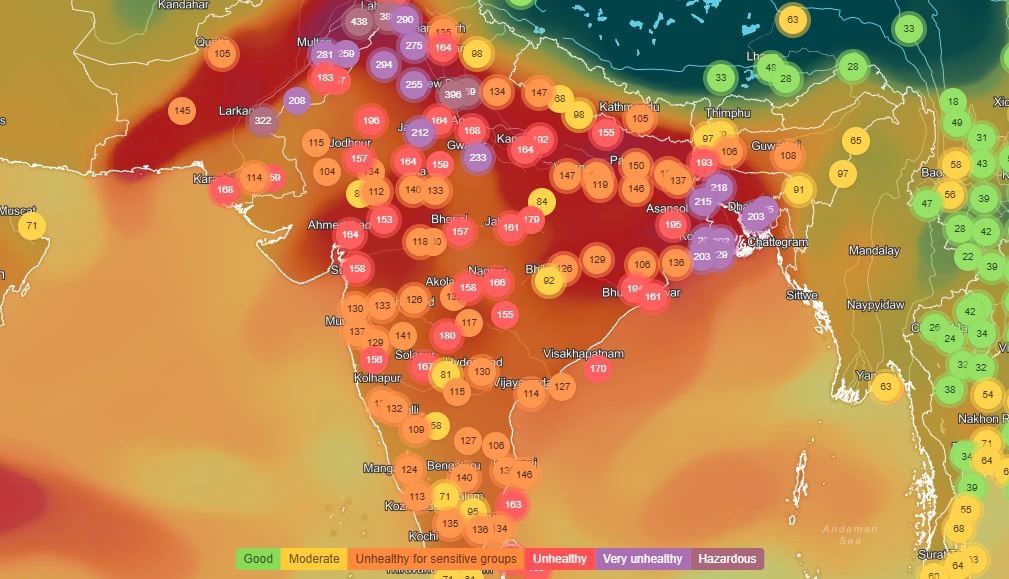
Alarming Global Standing
According to 2024 annual statistics, India’s average PM2.5 concentration stood at 50.6 micrograms per cubic metre, equivalent to an AQI of 138. This falls under the ‘unhealthy for sensitive groups’ category. More concerningly, this figure is approximately 11 times higher than the World Health Organization’s (WHO) annual guideline of 5 micrograms per cubic metre.
Based on these statistics, India remained the world’s 5th most polluted country in 2024. This situation results from increasing vehicular emissions, industrial pollution, construction activities and seasonal factors such as stubble burning.
Severe Health Implications
At current pollution levels, medical professionals have advised citizens to exercise extreme caution. Experts warn that such pollution levels significantly increase the risk of asthma, bronchitis, cardiovascular diseases and serious lung-related illnesses.
Safety Recommendations for Citizens
Air quality experts have urged the following precautionary measures:
- Avoid outdoor activities and stay indoors
- Wear N95 or N99 masks if going outside is essential
- Keep windows closed and use air purifiers
- Postpone morning and evening walks
- Provide special care to children and elderly
- Avoid strenuous physical activities
Authorities have announced the implementation of emergency measures and strict action to control pollution sources, but comprehensive policy changes are needed for long-term solutions.
The deteriorating air quality underscores the urgent need for sustained efforts in pollution control, including stricter emission norms, enhanced public transportation, better waste management and increased green cover across urban areas.
Source: IQAir Global Air Quality Data
Also Read | Pollution Sensors Failed When Needed Most, Top Court Questions Authorities