







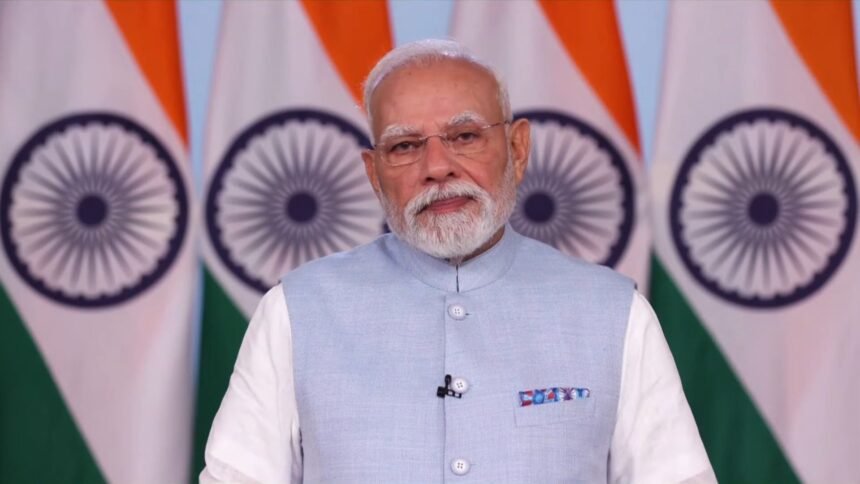
New Delhi, November 26: Prime Minister Narendra Modi will virtually inaugurate the Safran Aircraft Engine Services India (SAESI) facility on November 26 at 10 AM. The new unit, located inside the GMR Aerospace and Industrial Park – SEZ at Hyderabad’s Rajiv Gandhi International Airport, represents a landmark addition to India’s fast-growing aviation ecosystem.
According to the official PIB announcement, the SAESI centre is Safran’s dedicated Maintenance, Repair and Overhaul (MRO) hub for LEAP engines the powerplants used by Airbus A320neo and Boeing 737 MAX aircraft. This marks the first instance of a global aircraft engine OEM establishing an MRO operation in India, signalling a major shift in the country’s aviation capabilities.
Large-Scale Global MRO Facility Built with ₹1,300 Crore Investment
Spread across 45,000 square metres, the new state-of-the-art complex has been built with an initial investment of around ₹1,300 crore. Once the facility reaches its peak operating capacity in 2035, it will be able to overhaul up to 300 LEAP engines annually.
The centre is expected to employ over 1,000 highly skilled Indian engineers and technicians, supporting advanced repair operations using next-generation process equipment and globally benchmarked maintenance systems.
Boost to Aatmanirbharta & Strengthening India’s Aviation Hub Aspirations
The government has highlighted the project as a major step toward self-reliance (Aatmanirbharta) in the aviation sector. Developing indigenous MRO capacity will reduce dependence on overseas servicing hubs, curb foreign exchange outflows, reinforce supply chain resilience, and generate high-value employment for Indian professionals.
Officials emphasise that the facility aligns with India’s long-term vision of emerging as a global aviation hub, especially as domestic air traffic and fleet size continue to expand at record pace.
Policy Push Enabling India’s MRO Growth
The PIB note further underlines that India’s push to build a strong MRO ecosystem has been supported by several key policy measures.
Notable reforms include:
- GST rationalisation in 2024, which simplified the tax structure for MRO operations
- MRO Guidelines, 2021, reducing royalty burdens and easing procedural requirements
- National Civil Aviation Policy, 2016, which first laid the foundation for enabling MRO expansion in India
These measures together have made India a more attractive destination for global aerospace companies seeking long-term investment opportunities.
Also Read | PM Modi Returns After South Africa Visit, Calls G20 Summit a Major Success