







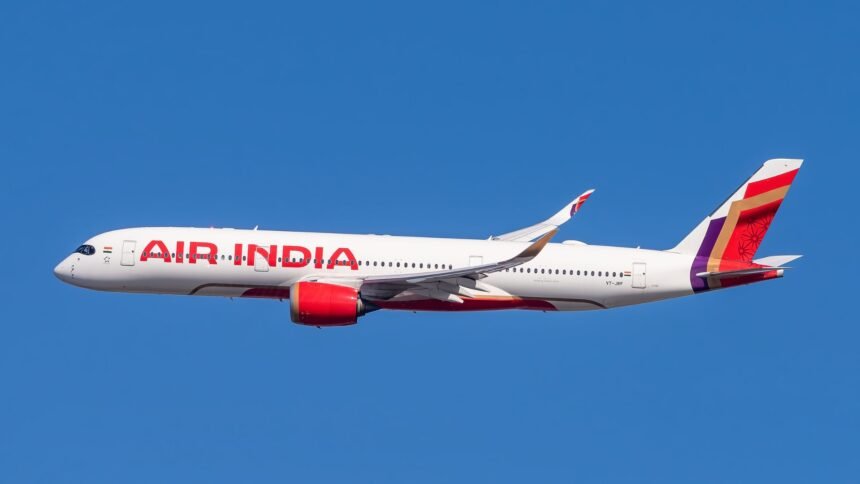
New Delhi, November 19: Air India is requesting the Indian government to press China for access to a controlled section of Xinjiang airspace, arguing that continued detours around Pakistan have created unsustainable financial strain. The airline states that long-haul routes have become significantly longer and more expensive since Pakistani airspace closed to Indian carriers, and the impact is now affecting both operations and revenue.
Internal data shows fuel expenses rising by nearly one-third. Certain flights are stretching by two to three extra hours, forcing higher crew costs, additional fuel burn, and reduced aircraft availability. According to The Hindu, Air India lost $439 million in the fiscal year of 2024-25. Long-pending tax liabilities worth hundreds of millions remain unresolved in parallel, adding another layer of stress to the carrier’s balance sheet.
The airline is specifically seeking access to civilian and emergency corridors near Hotan, Kashgar, and Urumqi. This access, Air India argues, would stabilize its long-haul network and reduce the need for further operational cutbacks.
However, experts note that Xinjiang’s airspace carries heavy military oversight and limited fallback airports, which makes approvals difficult. The region falls under the Western Theatre Command of the Chinese military, and any change in access is expected to require extensive diplomatic negotiation. China’s foreign ministry has already stated that it has no information about Air India’s request, passing inquiries to aviation authorities without further comment.
Air India has warned the government that temporary financial support may be necessary until one of two outcomes occurs: either Pakistan reopens its airspace or China permits a new corridor. The airline has already scaled back frequency on some long-haul flights and signals that more reductions may follow if costs remain elevated. It argues that prolonged constraints will weaken India’s international connectivity and shift passengers toward foreign airlines operating on shorter, cheaper routes unaffected by South Asian airspace restrictions.
Also Read | Trump says Saudi Arabia agreed to invest $600bn in US