







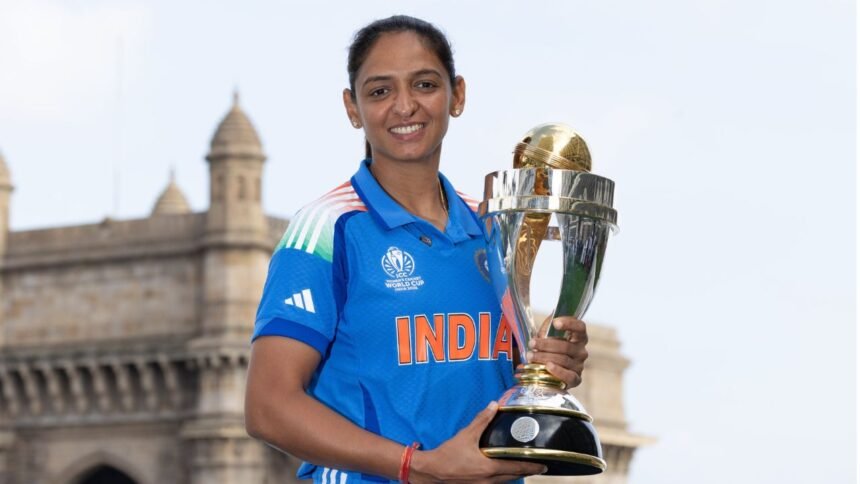
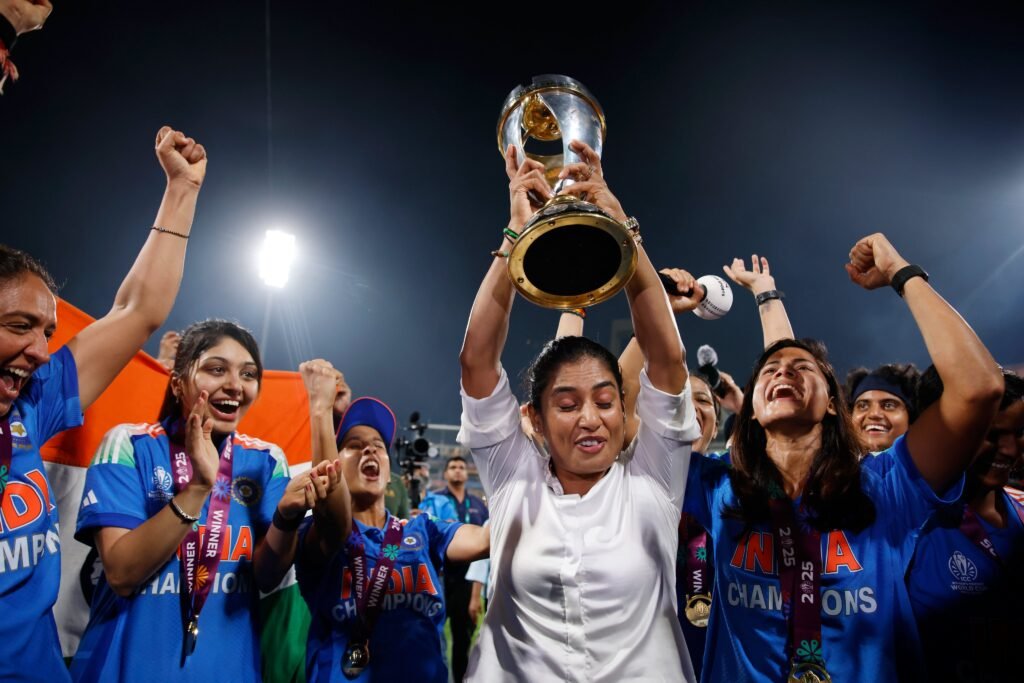
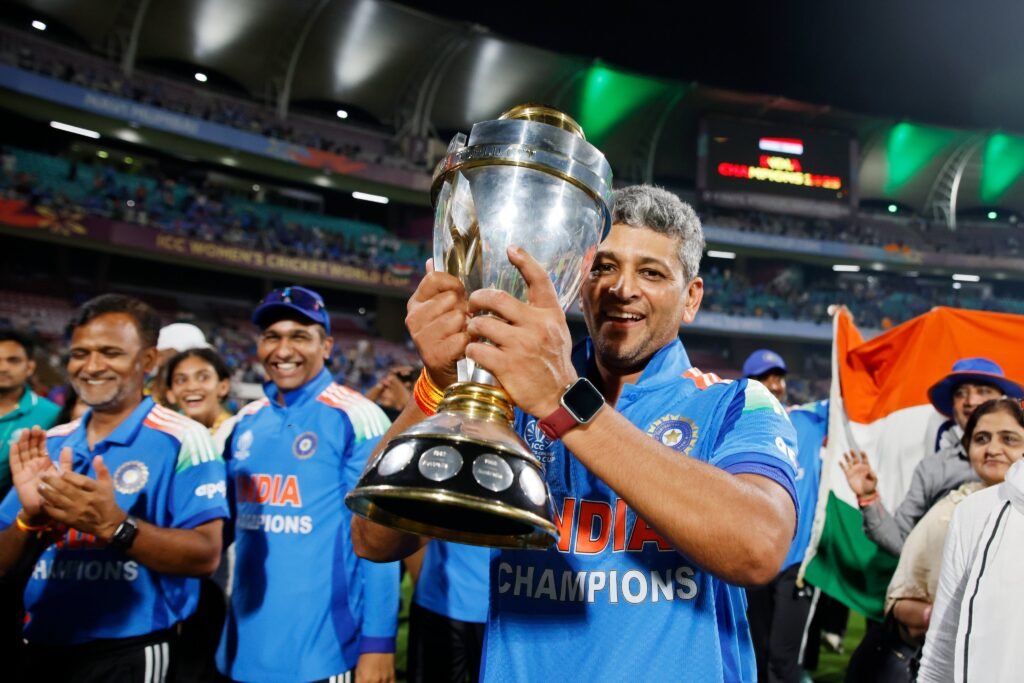
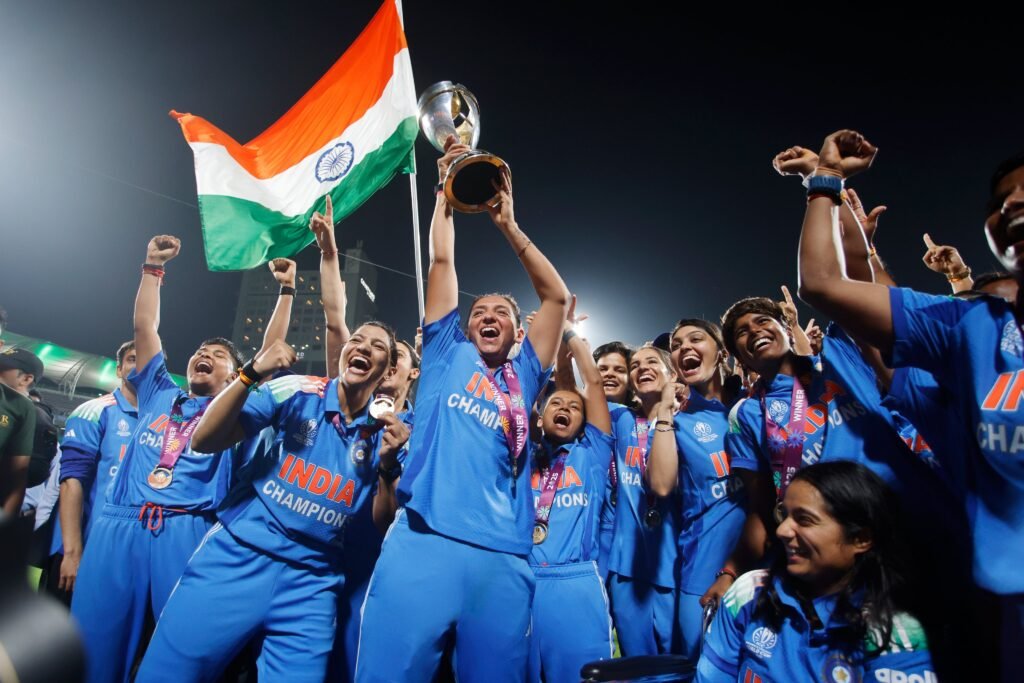
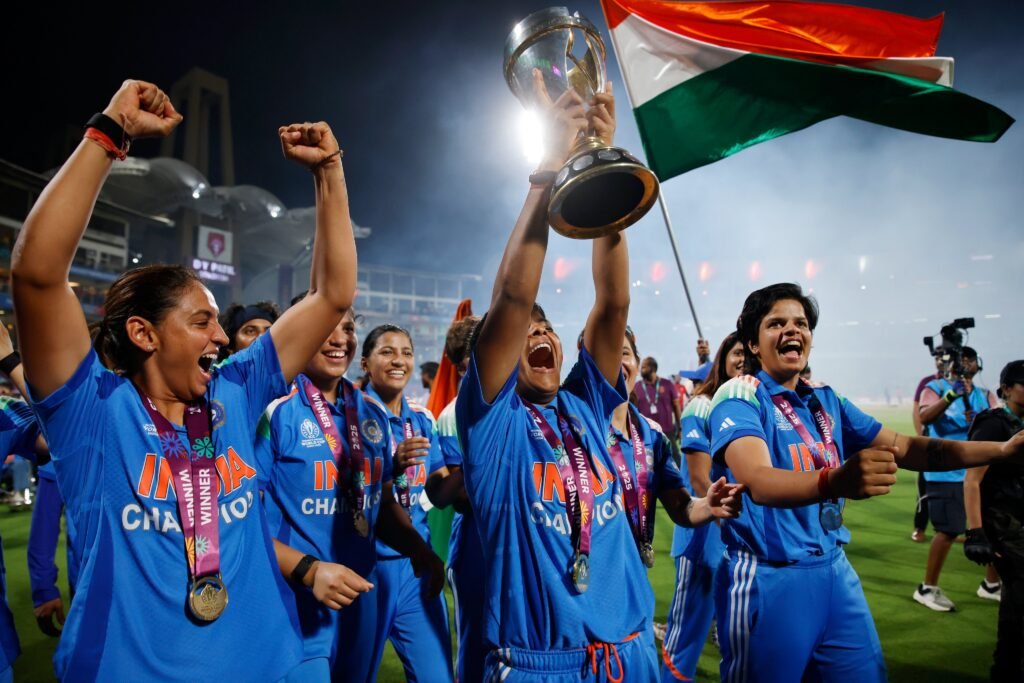
In March 2025, when Deepti Sharma’s final wicket sealed India’s first-ever ICC World Cup triumph, it marked the culmination of a 52-year journey from obscurity to glory. The ₹39.55 crore prize money and packed stadium of 40,000 fans stood in stark contrast to an era when players paid from their own pockets to represent India, traveling in unreserved train compartments and sleeping on dormitory floors. This is the story of resilience, struggle, and ultimate vindication.
The dark days before recognition
Before November 2006, Indian women’s cricket existed in the shadows, managed by the Women’s Cricket Association of India (WCAI) since 1973. The hardships faced by these pioneers would be unimaginable to today’s generation. Players like Diana Edulji and Shantha Rangaswamy traveled 36-48 hours in unreserved second-class train coaches, carrying cricket kit bags strapped to their backs like backpacks. They slept near toilets when funds were unavailable, shared dormitories with four washrooms for 20 people, and even packed old newspapers to spread on train floors.
The financial reality was brutal. After India’s runner-up finish in the 2005 World Cup, each player received merely ₹1,000 per match approximately ₹8,000 for the entire tournament. There were no match fees, no central contracts, and no career viability. Players paid to play cricket, pursuing their passion with zero monetary reward. Teams shared as few as three cricket bats total: two for openers and one for number three. Equipment was a luxury most couldn’t afford.
Yet these women achieved the extraordinary despite having nothing. Shantha Rangaswamy became India’s first Test captain in 1976 and scored the nation’s first Test century in 1977. Sandhya Agarwal smashed a world-record 190 runs against England in 1986, batting nearly nine hours. Diana Edulji, who took 120 international wickets across a 17-year career, convinced Railways Minister Madhavrao Scindia in 1984 to field a women’s team, creating the first institutional support structure. India even hosted the 1978 World Cup when WCAI was just five years old, with no major sponsorship.
When Mandira Bedi changed everything
In 2004, a breakthrough moment arrived from an unexpected source. Television personality and cricket enthusiast Mandira Bedi attended a women’s international match at Mumbai’s Cricket Club of India and was shocked to find fewer than 50 spectators. Deeply moved, she approached WCAI Secretary Shubhangi Kulkarni and offered help.
Within days, Bedi personally introduced Kulkarni to executives at Asmi, a contemporary diamond jewellery brand from the Diamond Trading Company (DTC). As Asmi’s brand ambassador, she took an extraordinary step: she waived her entire endorsement fee of approximately ₹10 lakh and redirected it to sponsor the women’s cricket team. The February-March 2004 ODI series against West Indies became the “Asmi Trophy” among the first instances of private-sector support for Indian women’s cricket.
The impact was transformative. Funds were used to arrange air tickets for the team’s England tour, organize better training camps, and provide improved facilities.
The money I would have taken for my endorsement will go towards the cricket sponsorship,”
Bedi told The Telegraph in 2004. Kulkarni credited Bedi with breaking the “vicious cycle” where lack of sponsors meant no publicity, and no publicity meant no sponsors. Other corporations soon followed, drawn by Bedi’s advocacy and the team’s growing visibility. India reached the 2005 World Cup final their first partly enabled by this support.
The 2006 watershed: BCCI finally steps in
Following the 2005 merger of the International Women’s Cricket Council (IWCC) with the ICC, all member boards were mandated to absorb their women’s cricket bodies. In November 2006, BCCI became the last of the top eight cricketing nations to comply, taking over women’s cricket administration from WCAI.
The takeover, described by many as “less amalgamation and more hostile,” nevertheless brought immediate material improvements. Trains became planes. Dormitories became hotel rooms. Newspapers were read rather than sat on. Basic match fees and daily allowances were introduced, though exact initial amounts remained minimal. Neutral umpires, video analysis, and access to better training facilities marked the beginning of semi-professional cricket.
However, structural issues persisted. The under-16 age group was eliminated. International matches actually decreased initially, with a 424-day gap from March 2007 to May 2008. Central contracts standard in countries like Australia and England weren’t introduced until 2015, nine years after the takeover. Still, BCCI’s involvement under President Sharad Pawar laid the institutional foundation for future growth.
The climb to the summit
The transformation accelerated in the 2010s. Legends like Mithali Raj and Jhulan Goswami carried Indian cricket forward through this transition. Mithali became the highest run-scorer in women’s international cricket with 10,868 runs across formats, captaining India in 155 ODIs the most by any woman. Her 23-year career spanning 1999-2022 saw India reach two World Cup finals. Jhulan, with 255 ODI wickets and 355 total international wickets, became women’s cricket’s most prolific bowler.
The 2017 World Cup final at Lord’s proved the visibility breakthrough. Though India lost to England by nine runs in a heartbreaker, Harmanpreet Kaur’s 171* in the semifinal against Australia captured global imagination. Viewership exploded. Women’s cricket entered mainstream consciousness for the first time.
Pay parity arrived in October 2022 when BCCI announced equal match fees: ₹15 lakh per Test, ₹6 lakh per ODI, ₹3 lakh per T20I. The Women’s Premier League, launched in March 2023, revolutionized opportunities with franchise cricket worth crores. Top players like Smriti Mandhana (₹3.4 crore) and Deepti Sharma (₹2.6 crore) secured lucrative contracts. Stadium attendance and television ratings soared.
The moment of glory
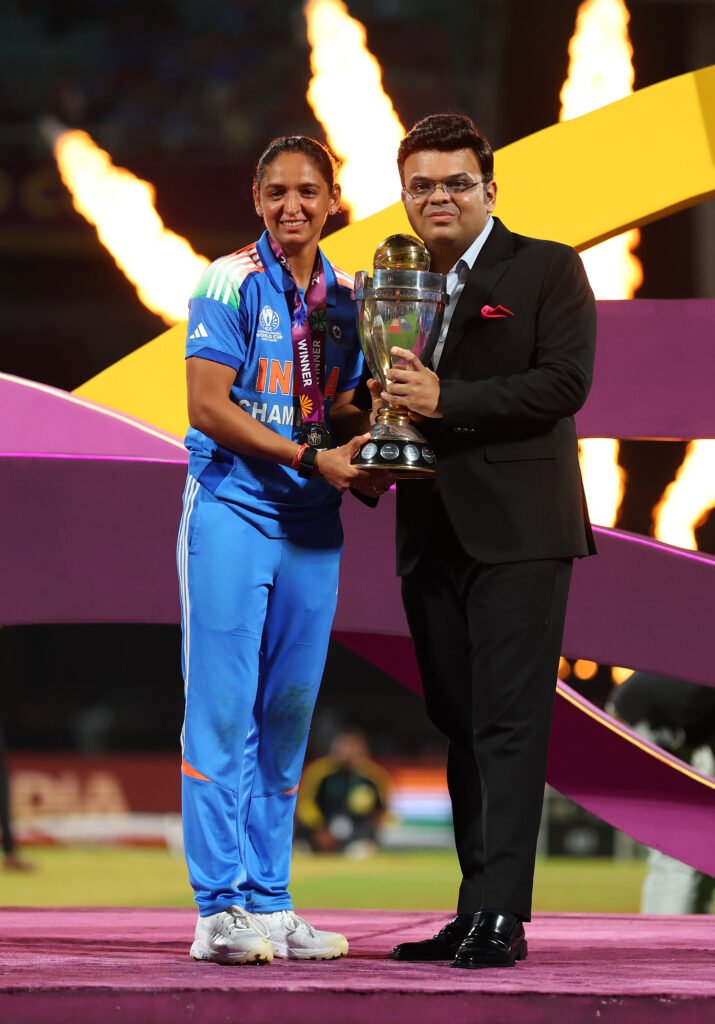
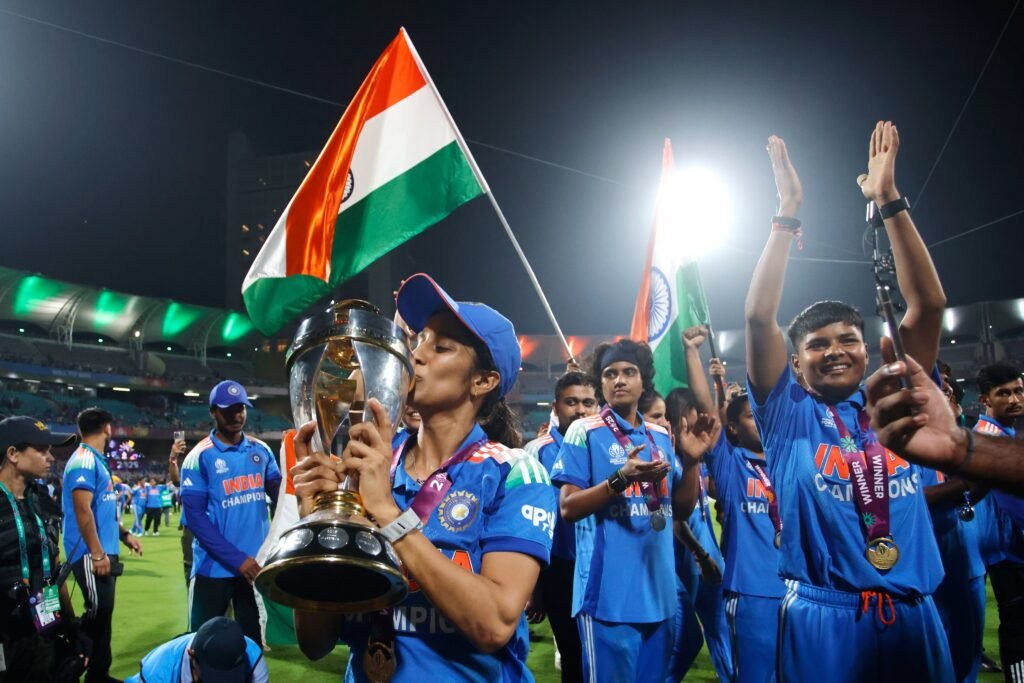
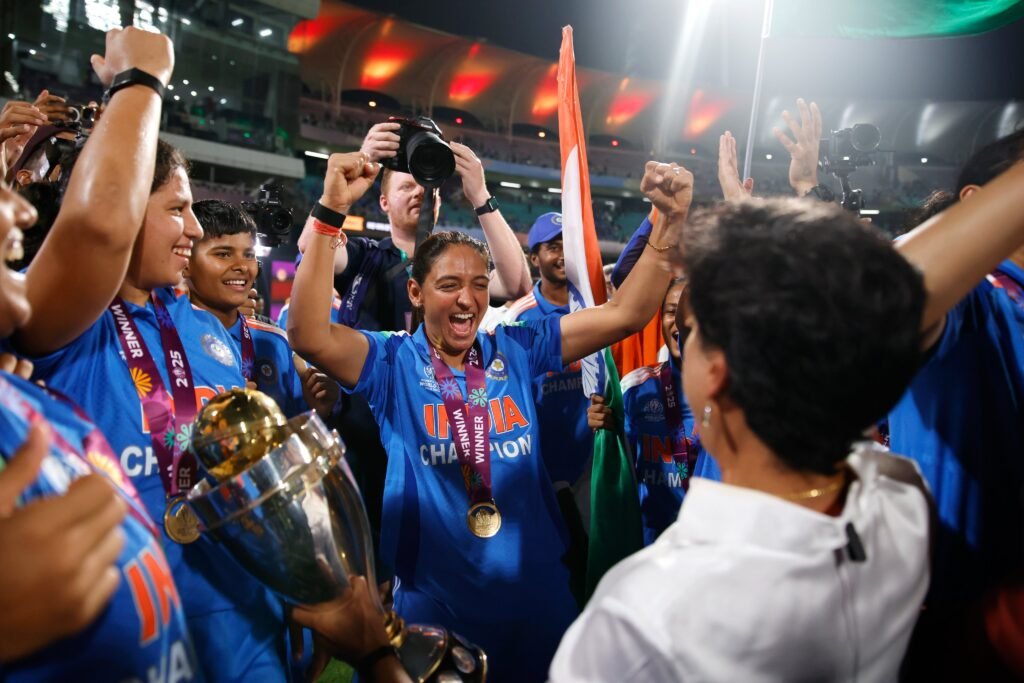
The 2025 World Cup hosted in India became women’s cricket’s coming-of-age party. The tournament drew 60 million viewers for the first 13 matches five times more than 2022. When India defeated South Africa by 52 runs in the final at Navi Mumbai’s DY Patil Stadium before 40,000 fans, it vindicated decades of struggle.
India scored 298/7 with Shafali Verma’s 87 setting the foundation. South Africa’s chase ended at 246, with Deepti Sharma’s 5/39 sealing victory. The ₹39.55 crore prize money, plus BCCI’s ₹51 crore additional bonus, meant each player earned more from one tournament than entire previous generations did in their careers. Deepti’s Player of the Tournament award symbolized how far Indian women’s cricket had traveled.
A revolution, finally realized
From ₹1,000 per match in 2005 to ₹15 lakh per Test in 2022 a 150-fold increase. From dormitory floors to five-star hotels. From obscurity to 60 million viewers. From paying to play to earning ₹25-35 crore annually (for top players including all income sources). The numbers tell a story of transformation, but they cannot capture the courage of pioneers who played for passion when the nation looked away.
Today’s stars Harmanpreet Kaur, Smriti Mandhana, Jemimah Rodrigues, Deepti Sharma stand on the shoulders of giants like Diana Edulji, Shantha Rangaswamy and Mithali Raj. They inherited a struggle and transformed it into a movement. The 2025 World Cup isn’t just India’s first ICC title; it’s the validation of every woman who ever picked up a cricket bat when society said she shouldn’t, every administrator who funded tours from their own pocket, and every visionary like Mandira Bedi who saw potential where others saw impossibility.


Indian women’s cricket has finally arrived. And this is just the beginning.
Also Read | India Creates History: Women’s Team Clinches Maiden World Cup Title