







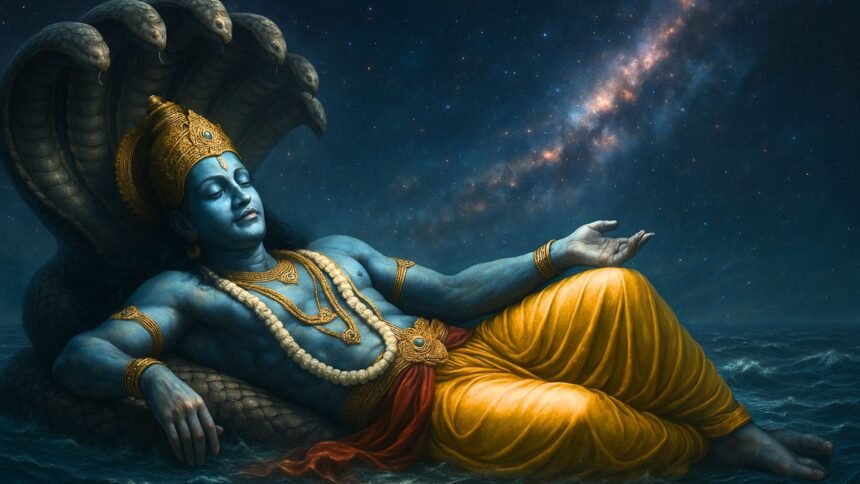
While many pack our lamps post Diwali to be used again next year, numerous homes still sparkle with the glimmering lights, as they celebrate Gyaras, or Dev Prabodhini Ekadashi.
The divine festival marks the end of Vishnu’s slumber of four months or Chaaturmaas, that began on the Ekadashi of the lunar month of Aashadh, also called Dev Shayani Ekadashi.
Ekadashi is the 11th day of each fortnight, called paksha, of a hindu lunar month. It is a day of fasting and penance, usually attributed to Vishnu. Amongst all the Ekadashis, this one is considered as the purest. This year Dev Uthani Gyaras falls on 1st November for householders, while people from the Vaishnava community will celebrate the festival the following day.
According to scriptures, the organiser of the universe himself had to enter into the deep dark alleys of Pataal lok, fulfilling his devotee Bali’s wish. When Vishnu’s 5th incarnation
Vamana asked for the third step after conquering heaven and the land under, Bali offered himself. Bali demanded Vishnu to come with him to Pataal. Vishnu agreed, but disturbing
the divine balance of the universe. His consort Lakshmi convinced him to return to his abode, kshirsagar, but allowed him to stay and rest in the netherworld for 4 months. During these 4 months he passed on the stewardship to Shiva, to take care for one month– during shravana, Ganesha for 10 days, during Ganesh utsav, ancestors or pitr during the fortnight of pitrupaksha, Devi Durga and her nine forms during Navratri, Lakshmi and Kali during Diwali. He returns, or wakes up on Dev Uthani Ekadashi, hereby ending his 4 month long rest period and restoration of the cosmic order.
As one walks through a neighbourhood during the evening on this day, they might hear the aarti- Jai Tulsi Mata, venerating the plant goddess Tulsi. The medicinal plant, is an important deity in Hinduism, who is also a consort of Vishnu. As mentioned in the Bhagvata Purana, Tulsi in her previous birth was named Vrinda, was the wife of the demon king Jalandhara.
He was killed by Shiva, according to a plan devised by Vishnu. He in return was cursed by Vrinda that he will have to face the wrath of losing his wife, and he will turn black. The curse came true in his incarnation as Rama, when Sita entered into soil, and turned black when he took the form of Shalagram stone. Vishnu blessed Vrinda that she will reincarnate as Tulsi,
as his beloved, and will not accept any offering without her. Also, he will marry her on the day of Dev Uthani Gyaras. Therefore, this day is also ascribed to Tulsi, where people conduct Tulsi and Shalagram’s wedding under a canopy made of sugarcanes, hence the name Ganna Gyaras.
This celestial wedding also marks the beginning of the wedding season in the country. As
lights and firecrackers of Diwali finally fades, wedding halls and banquets light up again, as families step into a joyous and celebratory mood.
Also Read | Where Two Rivers Meet to Form Ganga: The Timeless Story of Devprayag