







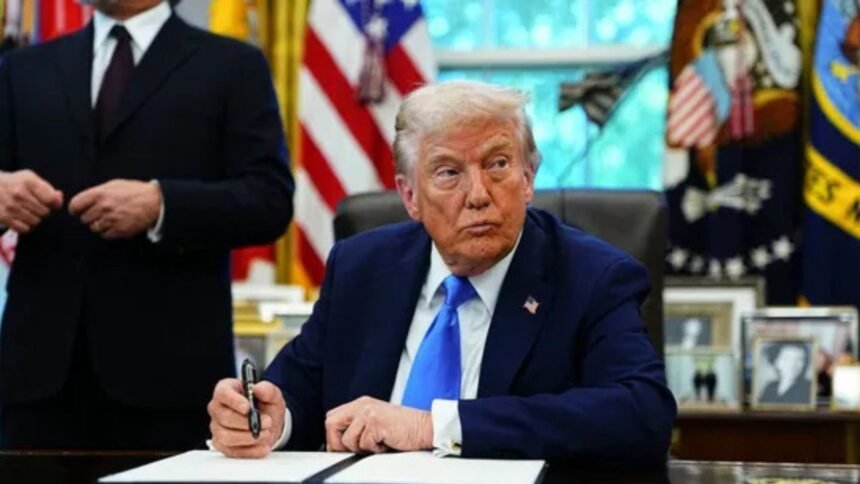
WASHINGTON DC: President Donald Trump’s latest executive order, signed Friday, imposes a $100,000 annual fee on H-1B visa applications, a decision hitting Indian tech workers and their families hard. Effective next week, this steep increase threatens to reshape the dreams of thousands eyeing careers in the U.S. tech hub.
The H-1B program, limited to 85,000 visas annually, 65,000 through a lottery and 20,000 for U.S. advanced degree holders, fuels companies like Amazon, Google, and Infosys. Indian professionals, holding 71% of these visas, dominate tech roles, with 65% in computing jobs. Previously, application fees hovered around $5,000, a manageable cost for employers. Now, the $100,000 yearly fee, renewable for up to six years, burdens companies and workers alike, with median H-1B salaries at $118,000 barely cushioning the blow.
The White House argues it protects American jobs, claiming some firms hire H-1B workers at $60,000, undercutting local wages. Commerce Secretary Howard Lutnick insists tech leaders back the policy, but critics see a legal overreach, with lawsuits likely imminent. A $1 million “gold card” visa for wealthy applicants has also sparked criticism for favoring the elite.
For Indian families, the impact is deeply personal. In cities like Bengaluru and Hyderabad, many are rethinking U.S. plans, with some canceling flights and others pausing relocations, daunted by the financial strain. “It’s like a gate closing on our future,” said a Chennai-based engineer, speaking anonymously. Analysts predict a 30-50% drop in applications, squeezing firms like TCS and lengthening green card backlogs.
While India’s $500 billion IT sector may gain from returning talent, U.S.-India relations could face new tensions. Affected workers are advised to monitor USCIS updates and consult employers as legal battles loom.