








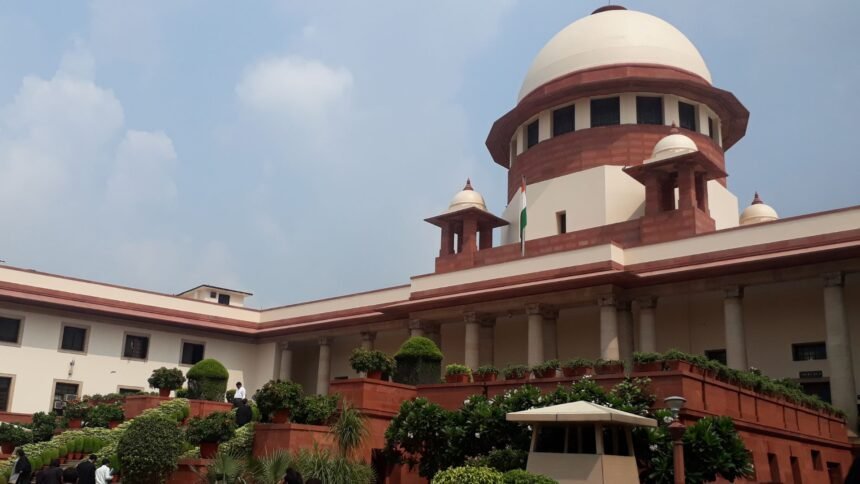
New Delhi, November 20: A five judge bench of the Supreme Court, led by CGI B.R. Gavai has ruled that courts cannot impose strict timelines on the President or Governors for taking decisions on bills passed by State Legislatures. The judgment answers a set of constitutional questions referred by President Droupadi Murmu under Article 143, after conflicting interpretations began affecting Centre and State relations.
Constitutional Framework
The Court said Articles 200 and 201 were written to give the President and Governors some breathing room. They need space to think about the political, legal, and administrative impact of a bill before deciding on it. Forcing strict deadlines would mess with how the Constitution divides power between the legislature, the executive, and the judiciary.
Rejection of ‘Deemed Assent’
The Court threw out the idea of “deemed assent.” This idea would have made a bill automatically become law if the Governor or President didn’t act in time. The judges said this would wrongly let courts step into the role of these constitutional authorities, which the Constitution does not allow.
Judicial Review of Unreasonable Delay
The Court made it clear that even though there can’t be a fixed deadline, a Governor cannot keep a bill pending forever. If the delay becomes unreasonable and blocks the work of the State Legislature, the Supreme Court can step in. It can order the Governor to make a decision within a fair time, but it cannot tell them what decision to make, only that they must act.
Federalism and Institutional Balance
The ruling dedicates considerable attention to federalism, noting that State Legislatures must not be placed in a subordinate position where their bills can be held hostage. At the same time, the Court refused to weaken the constitutional independence of Governors and the President by forcing mechanical deadlines or rubber-stamp behavior. The judgment reinforces that all three institutions – State Assemblies, the Governor’s office and the judiciary must operate within defined limits.
Background and Advisory Reference
This advisory opinion overturns an April 2025 two-judge bench ruling that had introduced fixed timelines and the concept of deemed assent. Concerned about the constitutional validity of that ruling, President Murmu sought the Court’s opinion on 14 separate questions, prompting this detailed examination of constitutional boundaries.
Impact
The ruling keeps the President and Governors free to make their own decisions, but stops them from delaying bills for too long. State Legislatures keep their power to pass laws, Governors can’t block those laws by doing nothing, and courts won’t step in to control how the executive should function.
Also Read | President Murmu Becomes First President to Visit Kainchi Dham