






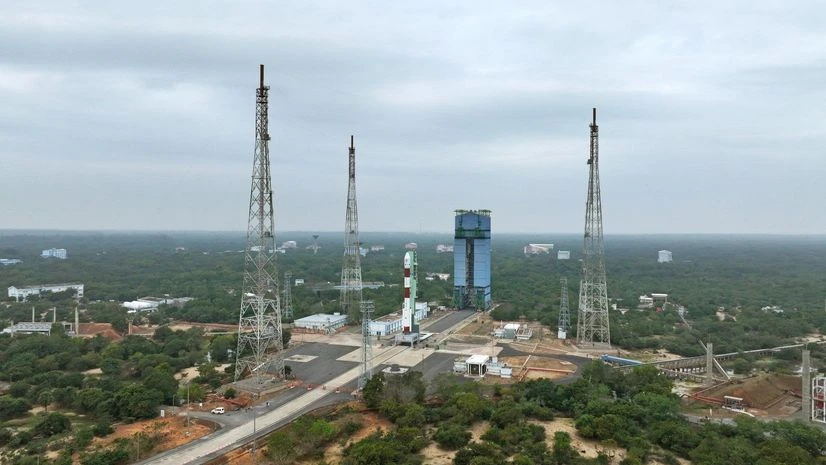
India’s first launch of 2026 ended in failure on Monday after the PSLV-C62 rocket veered off course due to a critical third-stage malfunction. The mission began flawlessly with a 10:18 am IST liftoff from Sriharikota, but eight minutes later, flight computers flagged a “performance disturbance” in the PS3 segment, triggering an immediate mission review by Isro.
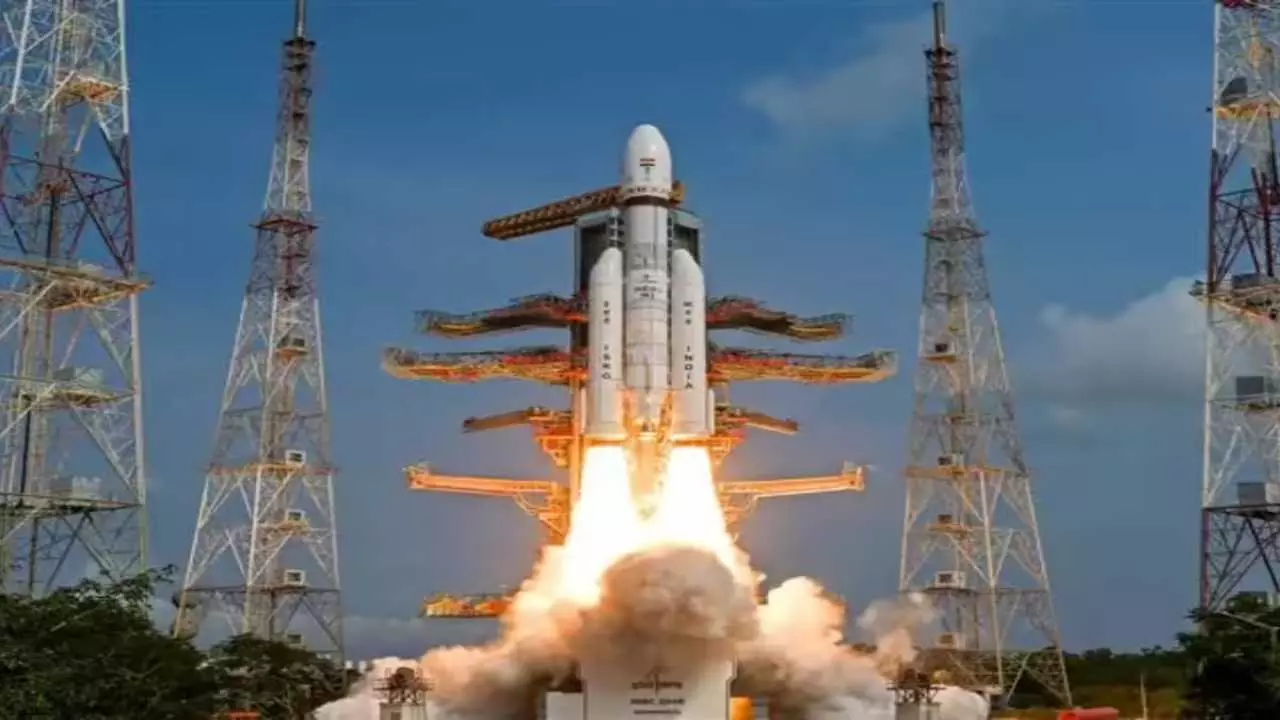
ISRO Chairman V Narayanan, addressing a sombre press briefing, confirmed the anomaly. “The initial phases were nominal, but the third stage did not produce the required thrust due to an unexpected drop in chamber pressure,” he said. “The vehicle deviated significantly from its intended trajectory, and the satellites could not be placed in orbit.”
ISRO Chief V Narayanan says,” Today we have attempted the PSLV C62 / EOS – N1 Mission. The PSLV vehicle is a four-stage vehicle with two solid stages and two liquid stages. The performance of the vehicle close to the end of the third stage was as expected. Close to the end of the third stage, we are seeing more disturbance in the vehicle. Subsequently, there is a deviation observed in the vehicle flight path. We are analysing the data.”
The failure has likely resulted in the loss of DRDO’s strategic hyperspectral satellite Anvesha and 15 accompanying payloads, dealing a second consecutive blow to the PSLV family and raising pointed questions about the health of the launcher’s solid-fuel systems.
What went wrong with PSLV-C62?
Preliminary data indicates that the mission faltered when the PS3 engine, which is responsible for delivering the decisive boost to inject satellites into orbit, suffered a sudden pressure drop. The under-performance left the rocket without enough thrust to stay on track, leading to a trajectory drift that made orbital insertion impossible.
Isro has begun a detailed analysis of telemetry and propulsion data to pinpoint the failure mode, particularly whether the anomaly is linked to the same class of issues suspected in last year’s PSLV-C61 mission.
PSLV-C62 mission anomaly during third stage and official response
Tension inside the control room increased once third-stage ignition passed without regular telemetry updates, signalling an orbit insertion failure similar to the PSLV-C61 setback in 2025. Isro chief V Narayanan later stated, “The performance of the vehicle at the end of the third stage was nominal, and then a disturbance in roll rates and a deviation in flight path was noticed. We are analysing the data, and we will come back with more updates,” confirming that investigators were examining detailed logs.
What was PSLV-C62 carrying?
PSLV-C62 was the vehicle’s 64th flight and the fifth mission of the two-strap-on DL configuration. It carried a mix of Indian and international technology demonstrators, including AI-enabled in-orbit processors, Internet of Things communication payloads, radiation sensors and agricultural data systems.
Its primary satellite, DRDO’s EOS-N1 (Anvesha), was designed for hyperspectral imaging to support advanced surveillance and strategic monitoring. Also onboard was AayulSAT, built by Bengaluru startup OrbitAID Aerospace, India’s first in-orbit satellite refuelling demonstrator aimed at testing propellant-transfer technologies crucial for future satellite servicing.
Another payload was the European KID re-entry capsule, developed in collaboration with a Spanish startup, which was to separate from the fourth stage and splash down in the South Pacific to validate controlled atmospheric re-entry systems.
This is the 64th flight of PSLV
PSLV is considered one of the world’s most reliable launch vehicles. Missions such as Chandrayaan-1, Mangalyaan, and Aditya-L1 have been launched using this rocket. This is the PSLV’s 64th flight overall. It has completed 63 successful flights to date. The previous PSLV mission was PSLV-C61, which launched the EOS-09 satellite on May 18, 2025. However, that mission was not fully successful due to a technical problem in the third stage.