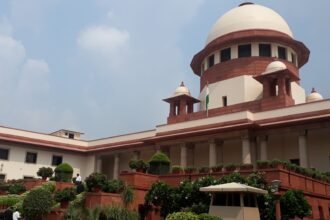








New Delhi: A startling revelation has emerged amid the capital’s toxic air crisis. During Diwali celebrations, barely nine out of Delhi’s 37 air quality sensors were functioning properly. This fact came to light in the Supreme Court on Monday.
The bench headed by Chief Justice BR Gavai expressed deep displeasure over this failure. The court posed a sharp question to air quality regulators – how will emergency protocols be triggered when the measuring instruments themselves aren’t working?
Senior lawyer Aparajita Singh drew the court’s attention to persistent media coverage about non-functional monitoring centers.
When the equipment itself remains switched off, how can GRAP implementation be decided?” she questioned pointedly.
What makes this particularly troubling is the timing. Diwali night typically sees pollution levels spike dramatically across the capital. Precisely during those critical hours, most sensors had stopped transmitting data. Government agencies were essentially flying blind.
The court reprimanded both CAQM and CPCB, demanding sworn statements.
You must explain what arrangements are being made before conditions deteriorate further,” the judges stated firmly.
Commission representatives attempted deflecting responsibility by suggesting CPCB handles data collection. Additional Solicitor General Aishwarya Bhati then assured the bench that relevant agencies would submit their reports.
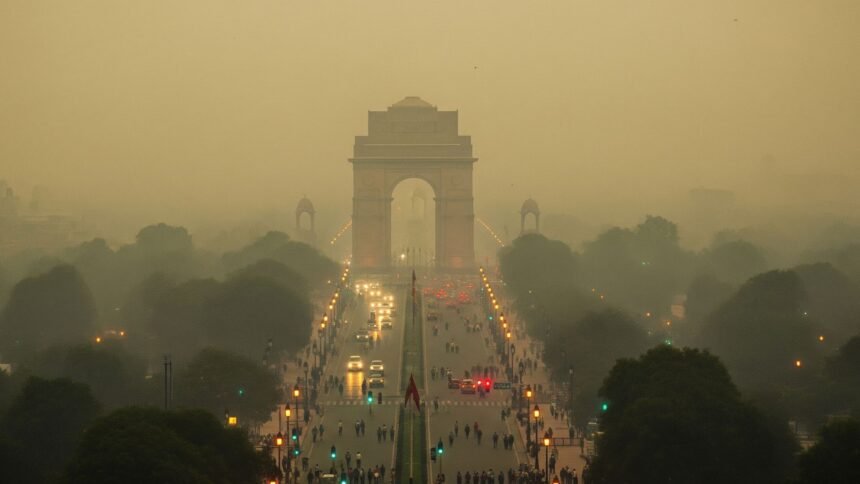
Monday morning saw thick smog enveloping the capital. Air quality remained firmly in the ‘very poor’ bracket. Central pollution board figures showed average readings touching 316. Twenty-eight stations recorded values exceeding 300.
Recall that the court had granted limited permission for green crackers in mid-October. Three days of sales and two-hour usage windows were permitted. Ground reality, however, told a different story. People burst crackers far beyond the designated timings.
Consequences were swift and severe. Post-Diwali days witnessed progressively worsening atmospheric conditions. Analysts say this marked the most hazardous period in four years.
Meteorological data indicates minimum temperatures ran nearly two degrees above seasonal norms. Moisture-laden air trapped pollutants, creating denser smog layers.
This judicial intervention has deep roots. Since the 1980s, the apex court has monitored Delhi’s pollution through MC Mehta’s petition. Over decades, orders have mandated CNG adoption, firecracker restrictions, and construction halts.
Yet the same narrative repeats annually. Winter’s arrival transforms the capital into a gas chamber. Stubble fires, vehicular exhaust, construction dust, and festive fireworks combine into a deadly cocktail.
Specialists maintain that accurate data forms the backbone of any emergency response system. When measuring devices disappear from the equation, administrators make decisions blindly. This amplifies public health risks manifold.
The monitoring infrastructure breakdown raises uncomfortable questions about maintenance protocols and preparedness levels. If three-quarters of pollution sensors failed during a predictable high-pollution event, what does it say about system robustness?
The situation also highlights coordination gaps between multiple agencies. CAQM oversees overall air quality management, CPCB handles monitoring, state boards manage regional compliance, and local administrations enforce ground-level restrictions. When one link fails, the entire chain weakens.
Environmental activists have long argued that Delhi’s pollution battle requires year-round sustained action rather than seasonal panic. Permanent solutions demand addressing root causes – vehicular emissions, industrial discharge, waste burning, and regional agricultural practices.
Meanwhile, residents continue breathing hazardous air. Schools shift to online classes, outdoor activities get cancelled, and air purifier sales soar. Those without resources to afford protective measures suffer disproportionately.
The upcoming hearing will review the commission’s response and actions taken. Whether governmental machinery demonstrates genuine seriousness or continues its lethargic approach remains to be seen.
Also Read | Delhi Chokes After Diwali: AQI Touches 500, Worst Pollution in Five Years