






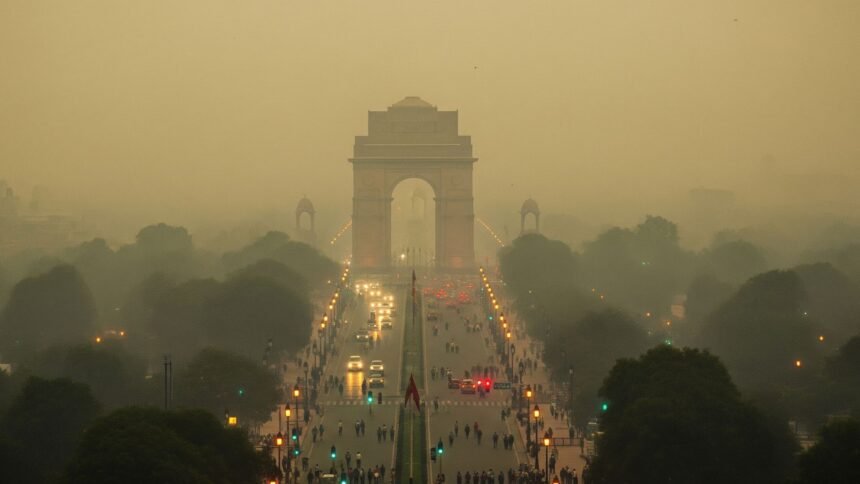
New Delhi: Tuesday morning when Delhi residents opened their windows, thick smog greeted them. India Gate? Can’t see it. Roads? Blurry. Air? Poisonous.
Firecracker sounds echoed through the night. Morning arrived with the city buried under smog. Nothing new really. Happens every year. But this time? Bit worse than usual.
What do official numbers say? Central Pollution Control Board released figures that shocked many. Those tiny toxic particles floating in air – called PM2.5 – reached nearly 500. Confused? Simple terms: three times more than safe levels.
Worst in Five Years
Climate Trends research agency dug through five years of data. Turns out, pollution-wise this was the worst Diwali since 2021.
See how pollution climbed each year: 2021 was pretty bad. 2022 saw slight improvement. 2023 jumped again. 2024 showed some control. But 2025? Broke records.
Numbers tripled within 24 hours after Diwali compared to the day before. Late night in some areas touched 675 – that’s dangerous, extremely dangerous.
Every Corner Hit
By 11 am, Air Quality Index stood at 359. Meaning? ‘Very poor’ category. Measurements taken at 38 spots citywide. 35 locations showed red zone pollution.
Jahangirpuri faced the worst. Wazirpur, Bawana – these areas crossed 400. That’s ‘severe’ category. Means stepping outside is risky.
A foreign agency IQAir declared Delhi the world’s most polluted city. According to them, AQI hit 442. Toxic particles were 59 times above WHO’s annual limit.
Weather Didn’t Help Either
University of Delhi’s Professor Dhaka explained the situation. Said winds were completely still. Less than one metre per second speed. Pollution couldn’t disperse.
On top of that, temperature suddenly dropped. Night showed 27 degrees, morning brought it down to 19. Result? Toxic particles got trapped near ground level. Couldn’t escape.
So firecrackers burned, smoke formed, winds stopped, cold increased – everything combined into perfect storm.
Court Orders? Who Listens
Supreme Court clearly stated on October 15. Only green firecrackers. Only between 8-10 pm. That’s it.
What happened? People burst crackers late into Monday night. Sounds continued past midnight. Nobody cared. Result’s in front of everyone.
Health Effects
Doctors keep warning repeatedly. Breathing this air equals smoking 10 cigarettes daily. For asthma patients, even more dangerous. Breathing troubles will increase. Heart disease risks will rise.
Small kids, elderly folks – they suffer most. But what to do? Everyone has to step outside eventually, right?
Stubble Burning Fight Restarts
Interesting fact: Punjab and Haryana burned less stubble this time. 77% less compared to last year. Still Delhi’s pollution jumped so high – why?
Straight answer – firecrackers. Local emissions. Vehicle smoke. All these combined are doing the damage.
Climate Trends’ Aarti Khosla said we’ve watched the harm for years, yet repeat same mistake annually. Palak Balyan showed data proving pollution tripled from before to after the festival.
Let’s see what happens next. For now, wear masks, stay indoors – that’s the advice.
Sources: Central Pollution Control Board (CPCB), Climate Trends (research organization), IQAir (Swiss monitoring group), WHO, Prof. S K Dhaka (University of Delhi)