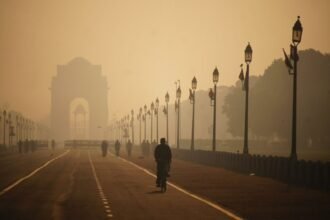









New Delhi: Delhi, the capital of one of the world’s fastest-growing economies, often struggles to breathe post Diwali every year without fail. This raises a question in everyone’s mind – is this a natural pattern or is it a consequence of human actions on nature?
During winter, the air becomes denser and traps the pollutants near the ground. There is little or no rainfall to wash them away, and the wind speed drops, preventing pollutants from dispersing. These seasonal conditions create a perfect setting for smog to settle over the city.
Yet, these are the surface level or environmental conditions that worsen the situation but they do not cause pollution in the first place. The real problem lies in human activity.
The first trigger comes from firecrackers during Diwali, which release sulphur dioxide and PM2.5 particles into the atmosphere. The AQI spikes rapidly after Diwali, and the air becomes toxic to breathe. Another major culprit is stubble burning, which is the largest seasonal cause of Delhi’s smog. Farmers in Punjab and Haryana burn the leftover rice straw, and the smoke plumes drift straight toward Delhi.
Vehicular emissions and construction dust are year-round sources of pollution, but because winter air becomes denser and traps pollutants, they end up adding even more to the overall pollution levels.
Pollution in Delhi is not just limited to large scale activities but a major share also comes from the everyday choices of people. Those who choose to travel from private vehicles rather than public transport increase the emissions. These pollutants are not visible during summer but they accumulate in the atmosphere ready to become trapped once the winter arrives.
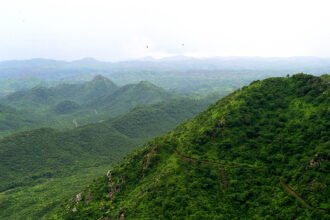
Delhi’s geographical location makes the problem even worse as the city is landlocked and surrounded by the plains on all sides. There is very little natural wind movement to clear the air. The Arravali range, which has been weakened by decades of mining and deforestation, once acted as a natural barrier and wind corridor. As a result Delhi behaves like a bowl where pollutants sink and stay.
However, if human actions have created a crisis, they can also take necessary steps to improve it. Individual choices when made collectively can reduce the pressure on nature. Choosing metro and bus instead of personal vehicles, not burning firecrackers, keeping construction areas covered are all small steps that can create a real change.
It is also important to note that winter is not the problem. Nature is not the source of pollution, it simply reveals what has been accumulating throughout the year. The smog is not a sudden phenomenon, it is the result of the activities that take place all year. If the pollutants were not produced all year long, winter would have nothing to trap.
In the end, Delhi’s smog season is a man-made disaster that becomes visible only in winter. Unless long term changes in behaviour, policy and awareness take place, the city will continue to suffocate every year.
Also Read | Air Pollution Crisis Deepens in India, Health Alerts Issued