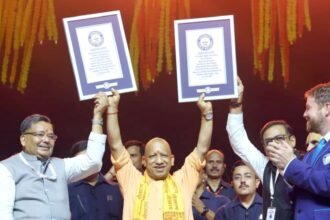









Raipur: Chhattisgarh marked its 25th foundation day on Friday with a magnificent Rajat Mahotsav celebration in Nava Raipur, where cultural heritage took center stage alongside developmental achievements. Prime Minister Narendra Modi inaugurated the Shaheed Veer Narayan Singh Tribal Freedom Fighters Museum, highlighting the state’s commitment to preserving its rich indigenous legacy.
The newly inaugurated museum stands as a testament to Chhattisgarh’s deep-rooted tribal culture, showcasing over 150 years of pre-independence tribal history. The exhibits vividly portray how tribal freedom fighters contributed to India’s independence struggle while maintaining their distinct cultural identity. The museum features traditional artifacts, weaponry, lifestyle documentation, and artistic expressions that define the tribal communities’ invaluable contributions to the nation.
Home to one of India’s largest tribal populations, Chhattisgarh’s cultural fabric is woven with vibrant folk traditions. The state’s artistic heritage includes Panthi and Raut Nacha dances, Pandavani musical narration, Sua dance, and Karma celebrations—art forms that have been passed down through generations. These cultural expressions are not mere performances but living traditions that connect communities to their ancestral roots.
The Bastar region’s Dussehra celebration stands out as India’s longest festival, spanning 75 days and embodying the unique tribal interpretation of the epic Ramayana. Today, initiatives like Bastar Pandum and Bastar Olympics are providing platforms for tribal youth to showcase their traditional sports and cultural prowess on national stages, transforming once-isolated regions into celebration zones.
Chhattisgarh’s handicraft tradition represents centuries of skilled craftsmanship. Bastar’s iron craft, bell metal artifacts, and bamboo-cane handicrafts have gained international recognition. The state’s Kosa silk, known as “jungle silk” or “Tussar silk,” remains a unique identity marker. These traditional crafts provide livelihood to thousands of artisans while preserving age-old techniques.
The government’s Van Dhan Kendra initiative has revolutionised forest produce collection, traditionally practiced by tribal communities. Better procurement arrangements for tendu leaves and forest products have significantly improved collectors’ incomes, ensuring that cultural practices translate into economic empowerment.
Religious and cultural sites dot the Chhattisgarh landscape. Rajim, Ratanpur, Dongargarh, and Shivrinarayan attract pilgrims throughout the year. The Rajim Kumbh, held on the Mahanadi riverbanks, has evolved into a nationally recognized spiritual gathering, blending devotion with cultural festivities.
The declaration of Bhagwan Birsa Munda’s birth anniversary as Janjatiya Gaurav Diwas reflects the nation’s recognition of tribal contributions. This year’s celebration emphasized that development and cultural preservation are not contradictory but complementary goals. The ₹80,000 crore Dharti Aaba Janjatiya Gram Utkarsh Abhiyan brings developmental light to thousands of tribal villages while respecting their cultural autonomy.
While inaugurating modern infrastructure projects worth over ₹14,260 crore, including highways, medical colleges, and industrial parks, the leadership emphasised that progress must honor tradition. The foundation stone for an Ayurveda College in Bilaspur alongside modern medical facilities demonstrates this balanced approach—embracing contemporary healthcare while preserving traditional healing systems.
The event witnessed 3.51 lakh families receiving houses under Pradhan Mantri Awas Yojana (Gramin), with ₹1,200 crore disbursed to three lakh beneficiaries. This massive social initiative ensures that development reaches the grassroots, particularly benefiting tribal and marginalised communities who form the cultural backbone of Chhattisgarh.
The transformation of former Maoist-affected areas into development hubs symbolises hope triumphing over violence. Villages like Chilkapalli receiving electricity after seven decades and Rekawaya witnessing its first school since independence represent not just infrastructural progress but cultural renaissance. When basic amenities reach remote areas, traditional communities can preserve their heritage without sacrificing modern necessities.
As Chhattisgarh completes 25 years, the Rajat Mahotsav celebration underscored a crucial message: true development honors cultural roots while building modern infrastructure. The state’s journey from being primarily a raw material exporter to emerging as an industrial hub with 14 medical colleges, extensive connectivity, and thriving cultural institutions exemplifies balanced growth.
The coming decades promise even greater integration of Chhattisgarh’s cultural wealth with developmental aspirations, ensuring that the state’s tribal communities, traditional artisans, and cultural custodians remain central to the growth narrative rather than being sidelined by modernization.Retry
Also Read | When the Heart of India Started Beating: Madhya Pradesh Day