






From battlefield wisdom to everyday life — why the Gita remains the cultural heartbeat of India
The Bhagavad Gita, often described as the spiritual soul of India, continues to shape the country’s cultural consciousness in profound and enduring ways. More than a sacred text, it is a living philosophy that has travelled from the ancient battlefield of Kurukshetra to the fast-paced digital age—guiding millions in moments of confusion, crisis, duty and self-discovery.
A Dialogue Beyond Time
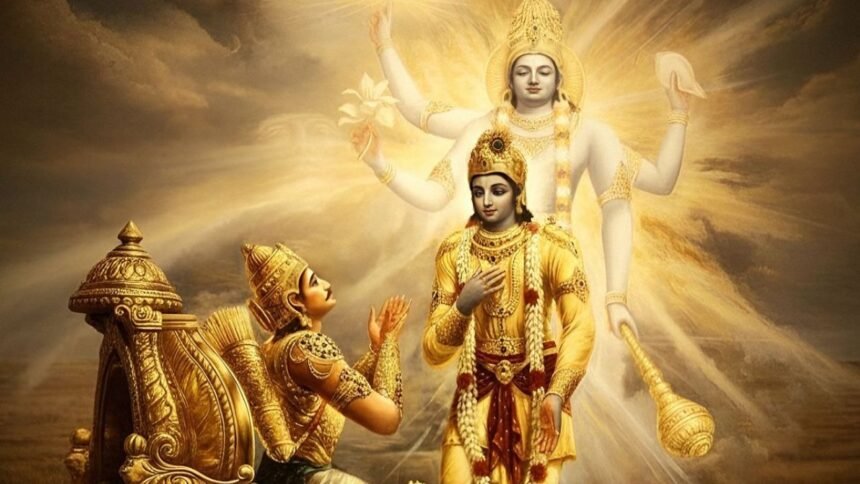
The Gita, a 700-verse dialogue between Lord Krishna and the warrior Arjuna, unfolds at a moment of intense moral turmoil. Arjuna’s dilemma—torn between emotion and duty—is not just historical; it is deeply human. As highlighted in the provided text, the battlefield becomes a metaphor for the inner war we all fight every day—between desire and discipline, fear and courage, clarity and confusion.
The Gita’s Universal Blueprint for Life
The PDF insightfully summarises the Gita as a manual for self-transformation. Its teachings cover every dimension of human life—identity, work, relationships, leadership, mental health, and meditation. Key principles include:
- Karma Yoga — focus on effort, not outcome (“कर्मण्येवाधिकारस्ते…”).
- Jnana Yoga — knowledge as the purest transformative force.
- Bhakti Yoga — devotion rooted in humility and compassion.
- Raja Yoga — mastery of mind through meditation and discipline.
Today, these ideas resonate in corporate culture (detachment from results), psychology (cognitive discipline), and lifestyles seeking balance amid chaos.
A Cultural Bridge Across Generations
From teachers to entrepreneurs, artists to political thinkers, the Gita remains a cultural foundation. The text explains that Krishna’s insights on leadership, emotional balance, and ethical responsibility mirror modern concepts like mindful decision-making, role clarity, and emotional resilience.
This is why the Gita is not confined to temples or classrooms it lives in:
- classical arts inspired by Krishna,
- yoga traditions across the world,
- popular culture, cinema, and literature,
- and increasingly, mental-wellness discourse among young Indians.
Meditation and Mind: Ancient Techniques for a Restless Age
The provided document beautifully captures Chapter 6, which describes one of the world’s earliest scientific meditation methods—a straight spine, steady gaze, controlled breath, and returning the mind gently each time it wanders.
In a world drowning in noise, this verse-by-verse guidance feels not ancient, but urgently modern.
Love, Relationships and Emotional Intelligence
Surprisingly for many readers, the Gita also offers profound teachings on relationships. As noted in the text, true affection is free from possession, expectation and ego. Krishna’s description of an ideal devotee—compassionate, forgiving, ego-free—reads almost like a modern handbook on emotional maturity.
A Cultural Text That Refuses to Age
The enduring cultural power of the Bhagavad Gita lies in its paradox: it is eternal, yet ever-relevant.
Its Sanskrit verses travel into management classrooms, meditation studios, cinema dialogues, therapy sessions, and even startup boardrooms. Each generation discovers it anew—seeking clarity, courage, purpose and peace.
As the document concludes, the Gita’s final message remains simple, powerful, and deeply cultural:
“मा शुचः — Do not grieve.”
A reminder that strength, wisdom and peace are never far away—they already exist within us.
Also Read | Krishna’s Philosophy and the Environment: A Gita Jayanti Reflection Through the Kaliya Naag Story