







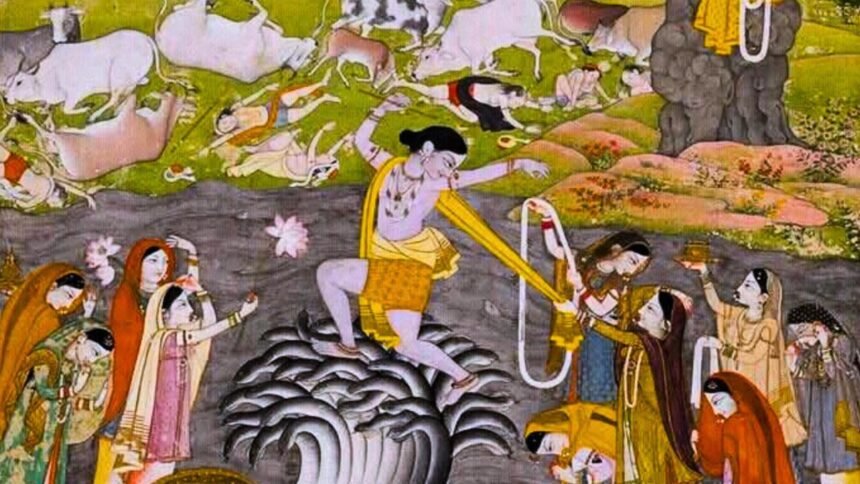
Gita Jayanti serves as a reminder of Krishna’s timeless teachings and their continuing relevance in the modern world. In the Bhagavad Gita, Krishna speaks repeatedly about balance, duty and harmony with all forms of life. These ideas align closely with modern concerns about the environment. Among the many stories from Krishna’s childhood, the episode of the Kaliya Naag offers a powerful ecological message that remains relevant today.
The story says that when the serpent Kaliya injected venom into the waters, it turned the Yamuna poisonous. Life around the toxic river was at stake. This image now also comes pretty close to reality with many rivers suffering from chemicals, industrial waste, and untreated sewage dumped into them. The poisoned Yamuna symbolizes what happens when nature is disturbed and ecosystems lose their balance. Krishna’s entry into these polluted waters represents the urgent need for an incisive intervention in problems related to the environment, rather than any evasive or procrastinating action.
What stands out most in this encounter is Krishna’s way of dealing with Kaliya. Instead of resorting to violence, Krishna stabilized the serpent’s rage and sent him away from the Yamuna to a place where he could live in harmony with his environment. This points out a very vital ecological lesson: every living thing has a proper place within nature, and destruction does not necessarily provide a remedy. There is a problem when any species or element finds itself in a setting that cannot support it, much like what is witnessed in invasive species or harmful pollutants in present environments. Krishna’s decision denotes compassion, balance, and respect for all forms of life, even those which appear dangerous.
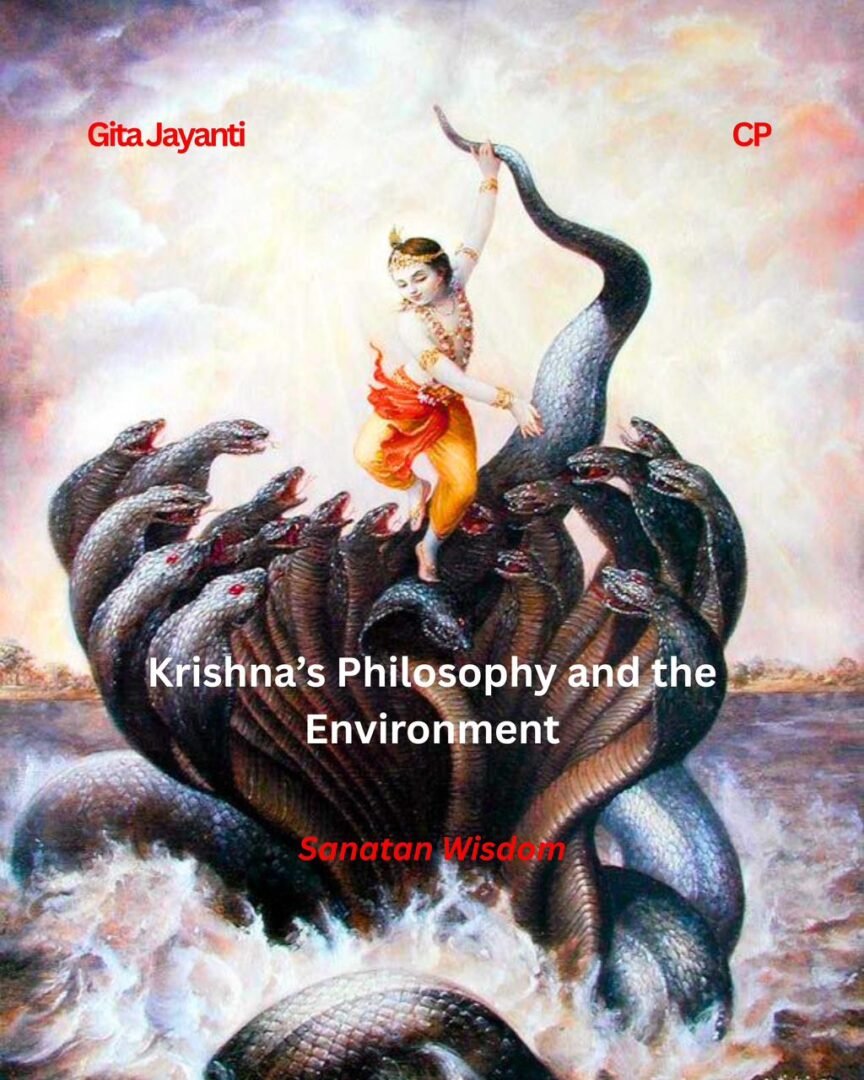
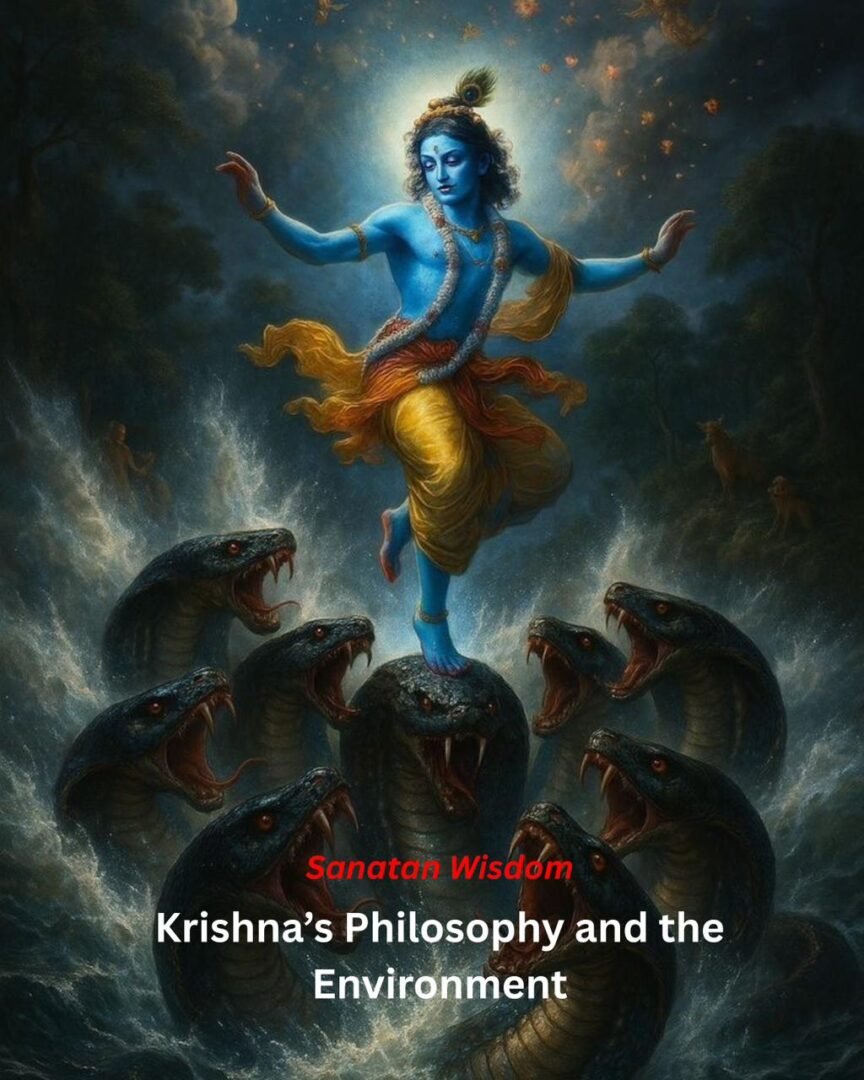
The image of Krishna dancing on Kaliya’s hoods carries deep symbolic meaning. Each movement represents the restoration of harmony between humans, animals and nature. The dance illustrates that true balance is achieved through gentle interaction with the environment rather than force or domination. It portrays the idea that living beings should coexist with nature in a way that preserves its natural rhythm.
The Bhagavad Gita also introduces the concept of Lokasangraha, which refers to actions that uphold the welfare of the world. Environmental protection fits naturally within this idea. Krishna’s bond with the Yamuna underscores that rivers are sacred lifelines, animals are co-inhabitants of the planet and natural spaces must be treated with care and reverence.
The Kaliya Naag episode holds significant meaning in the present era. Rivers face heavy pollution, forests continue to shrink, biodiversity is declining and climate patterns are becoming increasingly unstable. The poisoned Yamuna in the legend mirrors these modern challenges. As Gita Jayanti is observed, the story of Krishna and Kaliya serves as a reminder that environmental responsibility forms an essential part of dharma. Just as Krishna restored balance to the Yamuna, society today carries the duty to protect and heal the Earth by acting with sensitivity, awareness and respect toward the environment.
Also Read | Indian Philosophy And Environment: Ancient Wisdom for Sustainable Living