







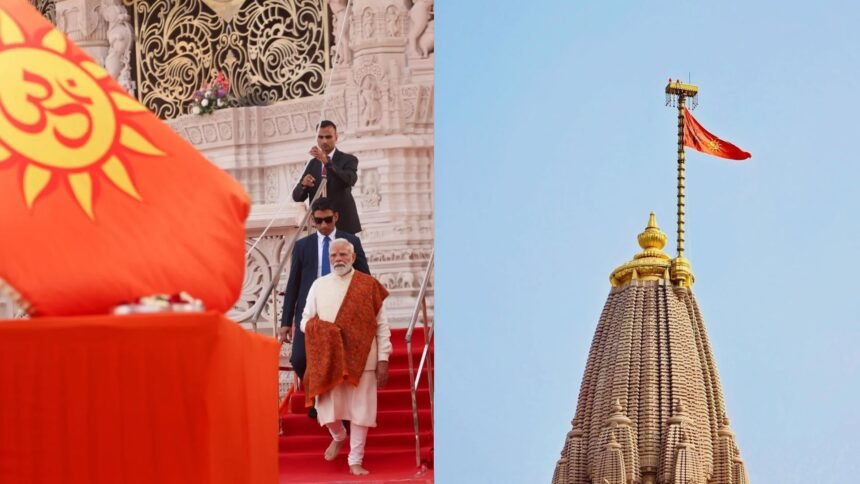
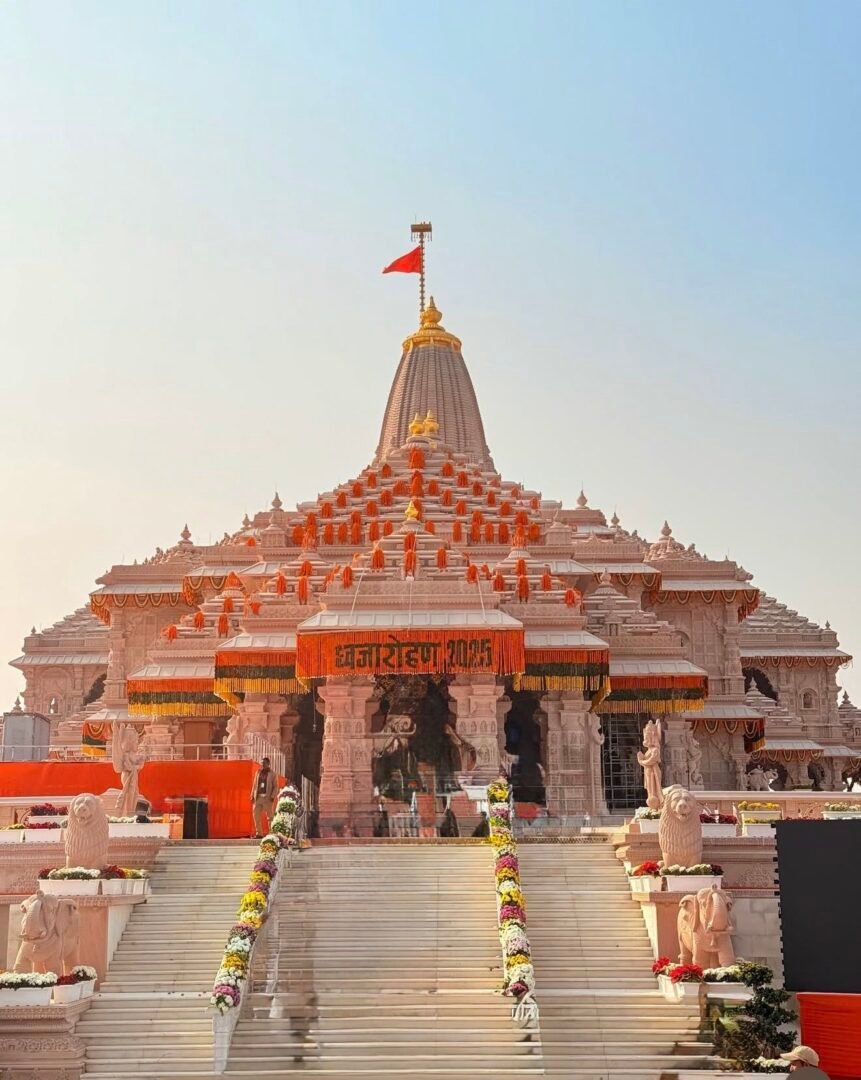
Ayodhya, November 25: In a ceremony steeped in religious significance and national pride, Prime Minister Narendra Modi presided over the installation of the Dharma Dhwaja atop the Shri Ram Janmabhoomi Temple’s highest point on Tuesday. This landmark event represents the ceremonial culmination of the temple’s construction journey, bringing to fruition an aspiration cherished by devotees for generations.
The timing of the ceremony carried special meaning, coinciding with Vivah Panchami the day marking the sacred union of Lord Ram and Goddess Sita in Hindu tradition.
A Ceremony Steeped in Vedic Tradition
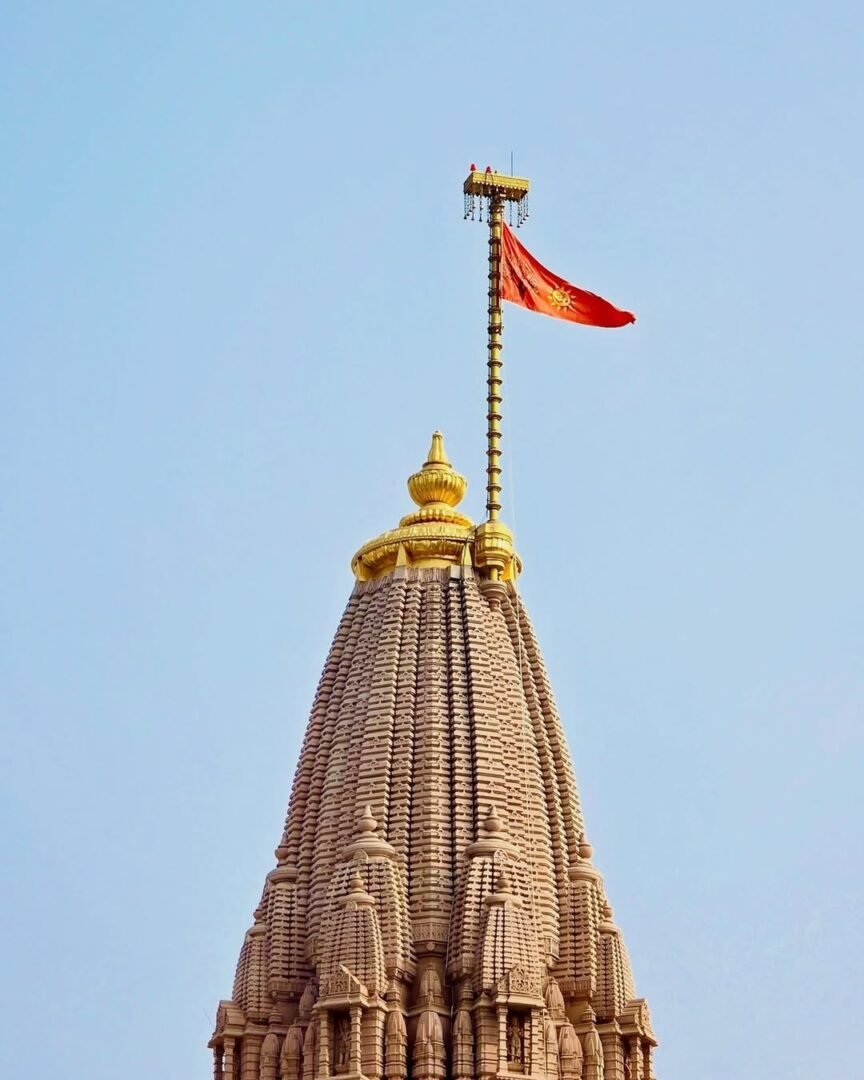
Temple authorities scheduled the flag installation during the Abhijit Muhurta, considered the most propitious window in Hindu astrology, occurring between noon and 12:30 PM. This period holds particular significance as it is associated with Lord Ram’s birth.
Distinguished Attendees: Among those present were RSS leader Mohan Bhagwat, Uttar Pradesh’s Chief Minister Yogi Adityanath, state Governor Anandiben Patel, and representatives from the Ram Janmabhoomi Trust.
Prime Minister’s Message: After the installation, Modi addressed attendees, characterizing the moment as one that “closes historical wounds” and signals a “civilizational renaissance.” He described the flag as an enduring symbol of faith that would be visible to all approaching the sacred city.
Preliminary Observances: Prior to the main ceremony, the Prime Minister participated in worship rituals at the temple’s inner sanctum and visited the recently completed Sapta Mandir complex along the temple’s circumambulatory pathway.
Understanding the Sacred Flag’s Symbolism
The kesariya (saffron) colored banner now flying from the temple’s summit carries multiple layers of meaning:
Dharma Dhwaja – Symbolic Specifications
| Aspect | Description |
|---|---|
| Pole Structure | Standing 42 feet tall with advanced ball-bearing mechanisms allowing full rotation |
| Banner Size | Triangular design spanning roughly 10 feet vertically and 20 feet horizontally |
| Color Significance | Saffron represents valor, renunciation, and dharmic principles |
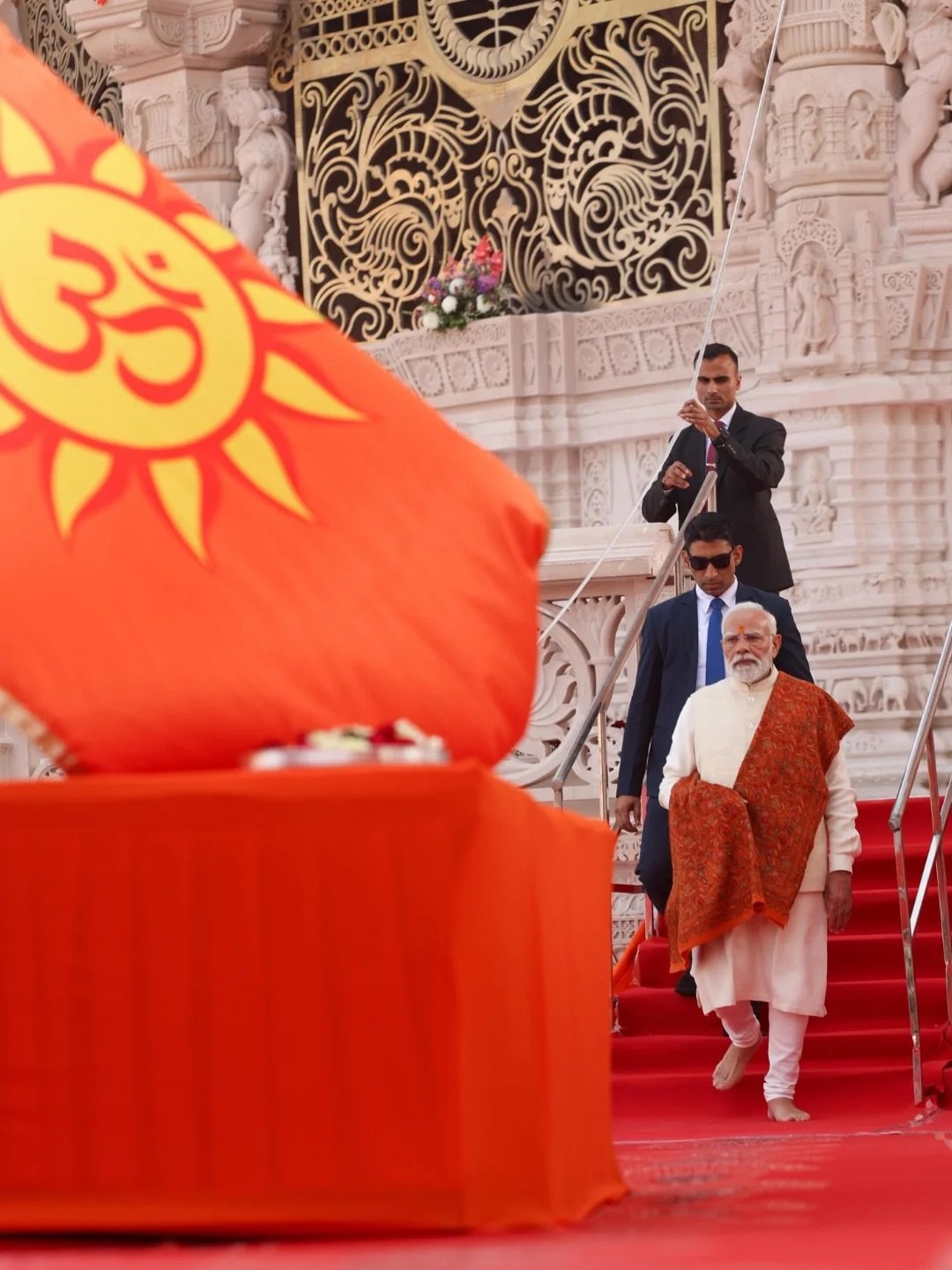
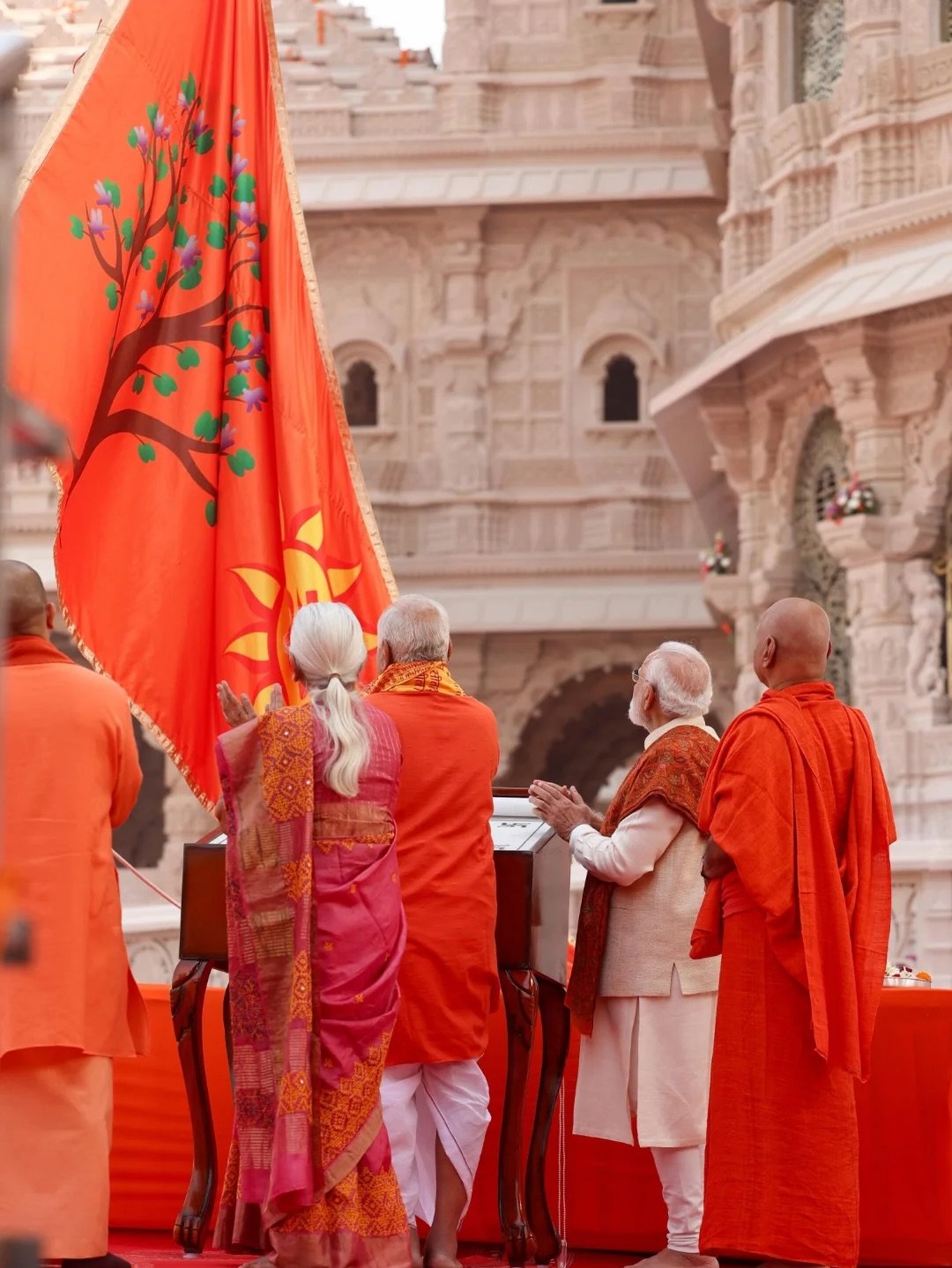
| Sacred Imagery | Incorporates the Sun, Om symbol, and the Kovidara tree linked to the Ikshvaku dynasty |
| Engineering | Constructed from specialized parachute material designed to endure wind speeds reaching 200 km/hr |
| Mass | Weighs approximately 2–3 kilograms |
Architectural Context: While the temple's main structure measures 161 feet in height, the complete spire including the flagpole reaches 191 feet—the location where this historic flag now flies.
Seven Sacred Shrines: The Sapta Mandir Complex
An important component of the expanded temple grounds is the Sapta Mandir, comprising seven individual shrines honoring key personalities from the Ramayana epic. This cluster emphasizes devotion and righteous living:
The seven honored figures include:
- Sage Vashishtha - served as royal spiritual advisor
- Sage Vishwamitra - guided Ram's early education
- Sage Valmiki - composed the original Ramayana
- Sage Agastya - revered spiritual master
- Queen Ahilya - whom Ram restored from a curse
- Nishad King Guha - Ram's devoted ally
- Mata Shabari - exemplified pure devotion
These dedicated temples demonstrate the comprehensive spiritual vision behind the complex.
Ayodhya's Festive Transformation
The historic city underwent a remarkable transformation for the occasion. Streets throughout Ayodhya featured elaborate floral decorations and sophisticated illumination, creating an atmosphere of celebration and reverence.
Authorities implemented comprehensive security protocols including aerial surveillance to accommodate the large gathering of dignitaries and pilgrims. The citywide atmosphere of devotion underscored the event's cultural and spiritual importance for the nation.
Voices from the Ceremony
Prime Minister Modi reflected: "India and the world today are immersed in Ram's presence. Every devotee experiences profound contentment and gratitude. Ancient grievances find resolution. Centuries of suffering now reach their conclusion."
He further elaborated: "This banner transcends its material form—it announces the revival of an ancient civilization. Its saffron color, solar emblem, Om inscription, and Kovidara imagery collectively embody the ideals of Ram Rajya."
Chief Minister Adityanath observed: "This flag demonstrates that dharma's light burns eternally, and Ram Rajya's principles remain timeless. This magnificent temple embodies the faith and dignity of India's 140 crore citizens."

RSS Chief Bhagwat characterized the occasion as: "A defining moment in our nation's journey."
Architectural Specifications
The temple showcases impressive dimensions and traditional craftsmanship:
- Overall Measurements: Extends 380 feet lengthwise, 250 feet in width, rising 161 feet high
- Design Philosophy: Follows the traditional Nagara architectural tradition of northern India
- Construction Method: Assembled entirely without ferrous materials (no iron or steel)
- Column Count: Features 392 elaborately carved pillars
- Land Usage: Occupies 70 acres with substantial green space preservation
- Perimeter Wall: Stretches 800 meters, incorporating southern Indian architectural elements
Milestone Context: This flag installation ceremony marks the formal conclusion of the temple's construction phase, following January 2024's consecration ritual (Pran Pratishtha). The temple continues welcoming devotees for regular worship, with visiting hours resuming after the special ceremony concluded.
Significance: The event represents not merely a construction milestone but a moment of deep cultural and spiritual meaning for Hindu devotees worldwide, symbolizing the restoration of a site considered sacred for millennia.
Also Read | Vivah Panchami 2025: The Sacred Wedding of Lord Rama and Goddess Sita