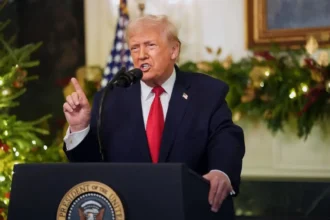







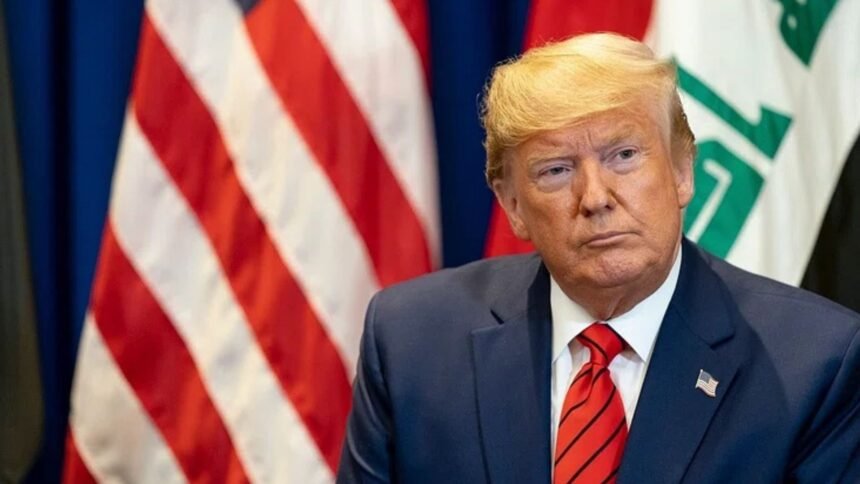
Washington, November 20: In a significant reversal, President Donald Trump signed legislation Wednesday evening mandating the release of federal investigative records related to convicted sex offender Jeffrey Epstein, ending months of political wrangling that exposed rare fissures within his Republican coalition.
The Epstein Files Transparency Act directs the Justice Department to make public approximately 30 days’ worth of previously classified documents, emails, flight records, and investigative materials connected to Epstein’s criminal activities and his extensive network of powerful associates.
A Political U-Turn
Trump’s signature came after sustained pressure from an unusual alliance of victims’ advocates, transparency activists, and members of his own party—including some of his most loyal supporters in Congress. Just days earlier, the president had actively opposed the measure, warning it could be weaponized by political opponents.
The about-face appeared complete when Trump posted on Truth Social over the weekend: “We have nothing to hide.” By Tuesday, both chambers of Congress had approved the bill with overwhelming bipartisan support—427-1 in the House and unanimous consent in the Senate.
Throughout the process, Trump consistently framed the Epstein controversy as primarily involving Democrats, repeatedly citing former President Bill Clinton and former Treasury Secretary Larry Summers as figures with documented connections to the late financier.
The “Piggy” Incident
The president’s shifting stance came against the backdrop of renewed scrutiny over his own past friendship with Epstein. Last week, Trump made headlines by calling Bloomberg reporter Catherine Lucey “piggy” when she attempted to question him about newly released emails mentioning his name.
The November 14 exchange aboard Air Force One was captured on video released by the White House itself. When Lucey began asking about Epstein’s references to Trump in correspondence, the president pointed at her and said: “Quiet, quiet piggy.”
The incident sparked immediate criticism and drew comparisons to Trump’s 2016 comments about former Miss Universe Alicia Machado, whom he also allegedly called “Miss Piggy.”
What the Documents Show
Last week, House Democrats released over 20,000 pages of materials obtained from Epstein’s estate through subpoena. The trove included emails showing casual references to Trump attending events at Epstein’s properties, though they did not explicitly accuse Trump of criminal wrongdoing.
One email from Epstein to longtime associate Ghislaine Maxwell cryptically stated: “I want you to realize that the dog that has not barked is Trump.” Another message offered to show “photos of Donald and girls in bikinis in my kitchen.”
Trump has consistently denied any knowledge of Epstein’s crimes and says their friendship ended in the early 2000s—well before Epstein’s 2008 conviction. Several Epstein victims have publicly stated they never witnessed Trump engage in inappropriate behavior.
The Larry Summers Fallout
The document release triggered immediate professional consequences for several high-profile figures. Former Harvard President Larry Summers announced Wednesday he would take leave from teaching duties while the university investigates his extensive correspondence with Epstein spanning 2013 to 2019.
The emails showed Summers seeking personal advice from Epstein who had been a registered sex offender since 2008 on topics ranging from romantic relationships to professional matters. In one November 2018 message, Epstein referred to himself as Summers’ “wingman.”
“I am deeply ashamed of my actions and recognize the pain they have caused,” Summers said in a statement, also announcing his resignation from the OpenAI board of directors.
The Epstein Timeline
Jeffrey Epstein pleaded guilty in 2008 to Florida state charges of soliciting prostitution from a minor, serving just 13 months under a controversial plea deal that allowed him extensive work-release privileges. That agreement, negotiated by then-U.S. Attorney Alexander Acosta, shielded Epstein from federal prosecution and granted immunity to potential co-conspirators.
In July 2019, federal prosecutors in New York charged Epstein with sex trafficking of minors, concluding they were not bound by the earlier non-prosecution deal. Epstein died by apparent suicide in his Manhattan jail cell on August 10, 2019, while awaiting trial.
Ghislaine Maxwell, Epstein’s former girlfriend and alleged accomplice, was convicted in 2021 of sex trafficking and conspiracy. She is currently serving a 20-year federal prison sentence.
What Happens Next
Under the newly signed law, the Justice Department has 30 days to release all unclassified Epstein-related materials. However, the legislation includes significant exceptions that could limit what actually becomes public.
Attorney General Pam Bondi retains discretion to withhold or redact information that could jeopardize active investigations, compromise victims’ identities, or expose sensitive law enforcement methods. The department must provide Congress with detailed justification for any material withheld.
Some transparency advocates worry these carve-outs could be used to shield embarrassing information about powerful individuals. The law requires the Justice Department to submit a report to Congress explaining any redactions on legal and factual grounds.
Mounting Pressure on Multiple Fronts
The Epstein files controversy has played out amid other challenges for the administration. Trump has clashed repeatedly with journalists in recent days, at one point calling for ABC News to lose its broadcast license after correspondent Mary Bruce pressed him on why he hadn’t simply ordered the files’ release himself.
“Your news is so fake and so wrong,” Trump told Bruce during an Oval Office event. “I think the license should be taken away from ABC.”
The president has also faced renewed questions about his decision-making process, particularly his initial opposition to releasing files he now says contain nothing problematic.
For victims of Epstein’s abuse, the law represents a partial victory after years of demanding transparency and accountability. Whether it delivers the full truth they’ve sought remains an open question that will only be answered when the Justice Department’s 30-day clock runs out.
Also Read | US Clears $93 Million Weapons Package to Boost India’s Precision Strike Capability