






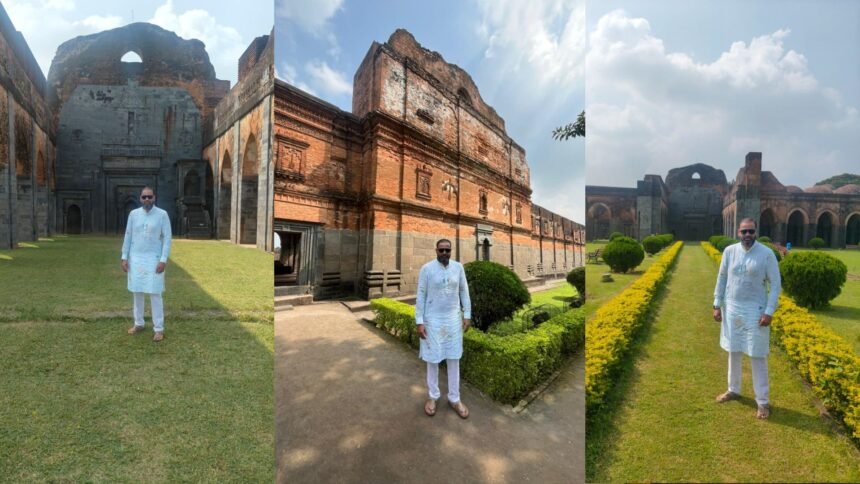
Malda, West Bengal: A social media post by former cricketer and newly-elected Trinamool Congress MP Yusuf Pathan has reignited one of West Bengal’s oldest historical disputes. Pathan visited the 14th-century Adina Mosque and shared photos praising its architecture. In a swift and sharp reaction, the West Bengal BJP’s official social media handle called it the “Adinath Temple,” escalating a debate where carvings on the mosque’s walls are presented as key evidence.
What is the Issue?
On October 16, TMC MP Yusuf Pathan from Baharampur went to the Adina Mosque in the West Bengal district of Malda. He tweeted on X (formerly Twitter), “The Adina Mosque in Malda, West Bengal, is a historic mosque built in the 14th century by Sultan Sikandar Shah, the second ruler of the Ilyas Shahi dynasty. Constructed in 1373-1375 CE, it was the largest mosque in the Indian subcontinent during its time, showcasing the region’s architectural grandeur.”
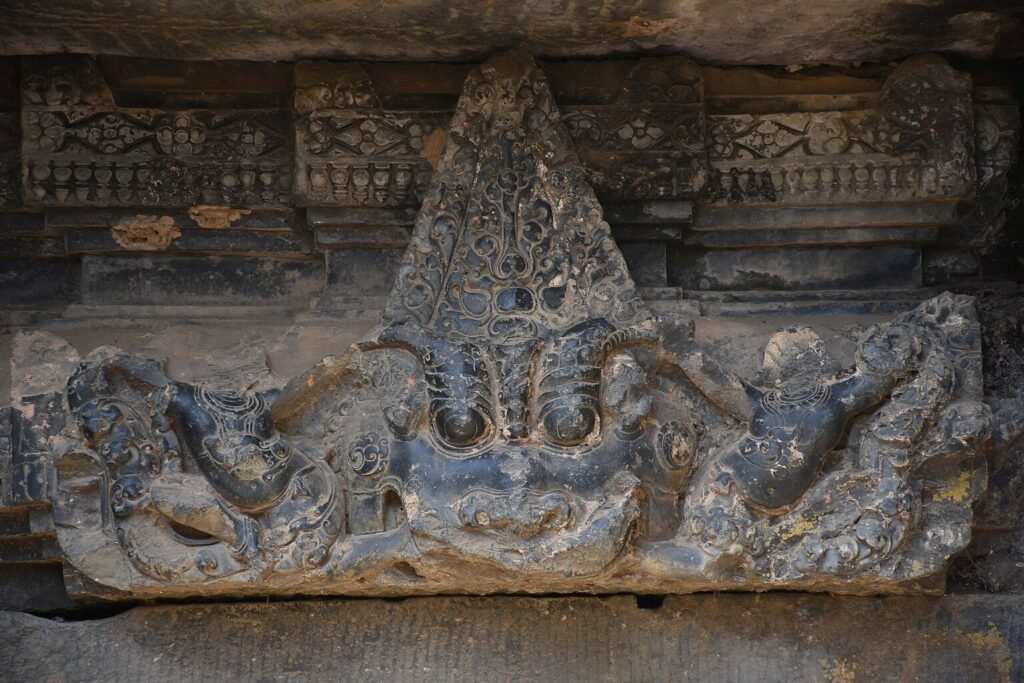
The BJP and other Hindu institutions blame the second Sultan of the Bengal Sultanate, Sikandar Shah, to have erected the mosque in the year 1373-75 CE by destroying an old Hindu temple and constructing the building out of its debris. They also refer to various archaeological evidences inside the structure of the mosque to validate the allegations. Herein, two photographs on Wikipedia stand out especially:
Lotus Decoration in Basalt: This image shows a large, black basalt stone on the mosque’s exterior wall, on which a massive lotus flower is carved. The lotus is an extremely sacred symbol in Hinduism and Buddhism, representing purity, creation, and divinity. The use of such large and prominent lotus symbols is uncommon in Islamic architecture. Proponents of the temple claim that this carving was directly part of a Hindu temple and was incorporated as is into the mosque’s wall.

Carved Lintel with Hindu Iconography: This image shows a carved stone lintel (a slab of stone laid over a doorway) that is undoubtedly in the Hindu temple style. At its core is an image looking like a ‘Kirtimukha’ (head of an imaginative creature commonly seen on the entrance to temples), accompanied by other deities or figures. The appearance and stances of these figures conform to the conventional Hindu sculpture. The existence of this lintel is among the strongest evidence that the building of the mosque included material from the debris of an old temple.
Perspective of Archaeologists and Historians:
The Archaeological Survey of India has the site listed among protected monuments under the appellation “Adina Mosque.” Most conventional historians accept that it has been constructed by Sultan Sikandar Shah. They do not deny the possibility that debris from earlier establishments, possibly destroyed Hindu and Buddhist temples, has been greatly recycled to construct it. This was common to medieval India.

Political Relevance:
The row has its roots deep within West Bengal’s political sphere. The BJP brings it up to indicate the culture of appeasement and the lack of attention to Hindu culture. Yusuf Pathan’s tweet has provided the BJP with the chance to once more put the issue on the table and escalate the state’s culture and religious identity politics.
Also Read: Maithili Thakur’s joining the BJP: A cultural and political masterstroke?