






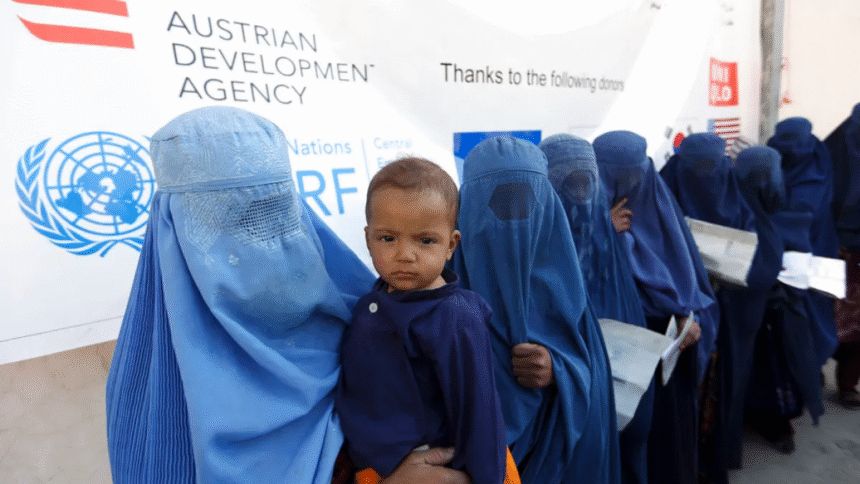
GENEVA: The United Nations has temporarily halted some of its “time-critical” and “essential” programs in Afghanistan following the Taliban administration’s decision to ban women from working for aid organizations. The move is expected to deepen the humanitarian crisis in a country where over 28 million people depend on aid to survive.
The decision comes in the aftermath of a devastating earthquake on August 31, which killed more than 2,000 people and left thousands homeless. The ban has been imposed amid a brutal winter, a time when aid is most critically needed.
Prior to the UN’s move, four major global aid groups, including Save the Children, the Norwegian Refugee Council, and CARE International, had already suspended their work, stating they were unable to run their programs without female staff.
In a joint statement, UN officials clarified that the suspension is due to an “operational constraint.” The statement read, “It is impossible to deliver principled humanitarian assistance without female aid workers. They are key to every aspect of the humanitarian response in Afghanistan.” An official explained, “This is a conservative society, and we need female workers to access women. This ban would cut us off from half of Afghanistan’s population.”
Meanwhile, the UN Security Council has unanimously condemned the ban, calling on the Taliban to ensure the full, equal, and meaningful participation of women and girls in society. The UN has appealed for urgent funding, warning that more lives could be lost if female staff are not allowed to work and if unimpeded humanitarian access remains blocked.