







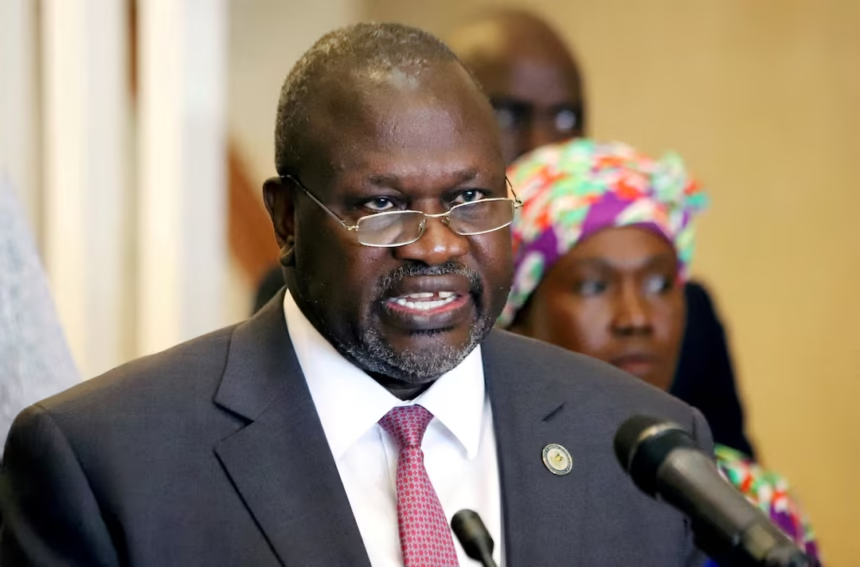
Juba: South Sudan’s First Vice President, Riek Machar, has been formally charged with treason, murder, and crimes against humanity, in connection with a deadly militia attack earlier this year. The indictment follows allegations that Machar and his allies conspired with the so-called White Army militia to launch a violent assault on a government garrison in Nasir, Upper Nile State, in March 2025.
President Salva Kiir suspended Machar from office in early September and placed him under house arrest. The case also names Petroleum Minister Puot Kang Chol and nearly 20 others, many of whom are currently fugitives.
The charges mark a dramatic escalation in the long-standing rivalry between Machar and Kiir, who have shared power uneasily since a 2018 peace deal ended years of civil war. The fragile agreement is now under strain, with Machar’s supporters accusing the government of using the justice system to sideline political opponents.
International media reports suggest the White Army militia historically aligned with Machar’s Nuer ethnic base — was behind the March assault, which left significant casualties among government troops. Officials claim they have obtained evidence linking Machar directly to the planning of the attack.
Political Fallout
Observers warn the trial could destabilize Africa’s youngest nation at a delicate moment. The country remains deeply divided along ethnic and political lines, and any perception of biased justice could reignite violence.
The African Union and rights groups have urged transparency, stressing that the process must adhere to international legal standards. “Political violence cannot be resolved by politicized trials. South Sudan needs reconciliation, not deeper division,” said a representative of Human Rights Watch.
Broader Implications
If convicted, Machar could face life imprisonment or the death penalty — a development that would fundamentally reshape South Sudan’s political landscape. At the same time, analysts caution that removing Machar could destabilize the peace accord, as his role in government was a key part of power-sharing designed to prevent renewed conflict.
As the trial begins, South Sudan finds itself at a crossroads: whether to pursue justice in a way that strengthens the rule of law, or to risk plunging once again into instability and violence.