







When a timber merchant’s son, a railway ticket examiner, and a court clerk’s daughter lifted cricket’s ultimate prize, they didn’t just win tournaments they transformed a nation’s soul. This is their story.
Kapil Dev: The 66-to-1 Miracle (1983)
Born in Chandigarh to timber merchant Ram Lal Nikhanj, Kapil Dev didn’t touch a cricket bat until age thirteen. His father, a Partition survivor, prioritized survival over sport. His mother Raj Kumari, however, nurtured an impossible dream when coach Desh Prem Azad initially rejected young Kapil based on looks alone.
By 1978, at nineteen, Kapil debuted for India a fast bowler in a nation of spinners. When he captained the 1983 World Cup squad, bookmakers rated India 66-to-1 outsiders. The West Indies, undefeated in World Cups, were invincible.
At Tunbridge Wells on June 18, 1983, India collapsed to 17 for 5 against Zimbabwe. The BBC didn’t even broadcast the match, deeming it insignificant. Then Kapil played an innings so magnificent its absence from television made it legendary: 175 not out off 138 balls with sixteen fours and six sixes. From elimination’s edge to 266 for 8. India survived.
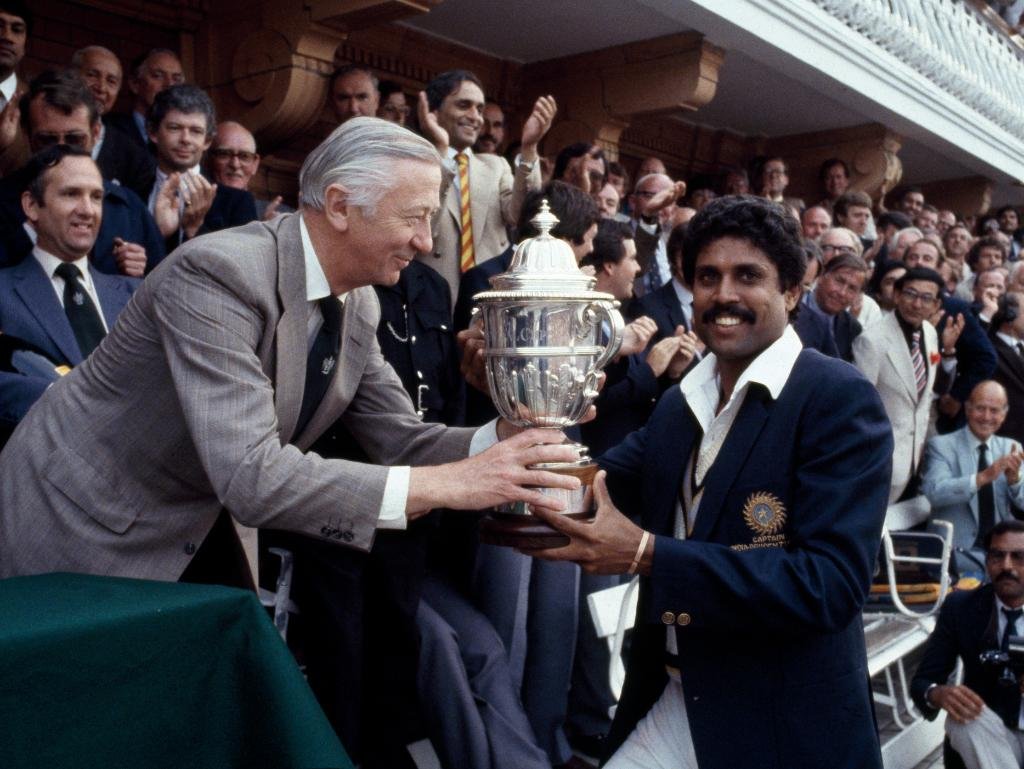
The Lord’s final on June 25 seemed impossible defending just 183 against Richards, Lloyd, and four fearsome pace bowlers. When Viv Richards dominated at 33 off 28, victory appeared certain. Then Madan Lal bowled, Richards mistimed a hook, and Kapil ran backwards twenty-five yards, eyes locked skyward, taking the catch over his shoulder that changed history. West Indies collapsed from 57 for 2 to 140 all out.
India needed a Lata Mangeshkar charity concert that evening to pay players ₹100,000 each. Yet that triumph became Indian cricket’s genesis—the moment sport became national religion. Kapil’s father never witnessed it, having died in 1975. But his words after winning defined everything: “We believed in ourselves when nobody else did.”
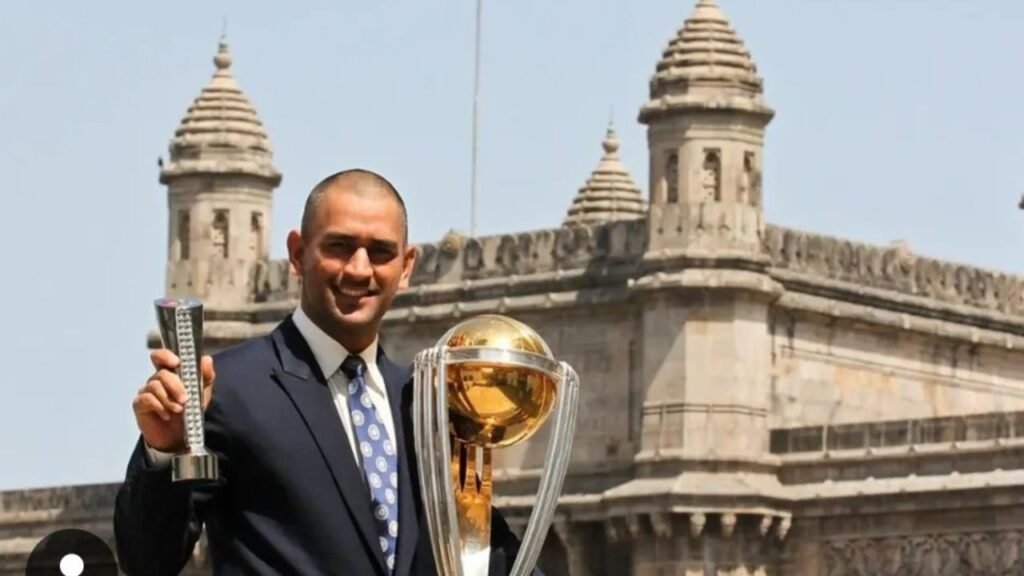
MS Dhoni: From Platform 7 to Glory (2011)
In an 8×10 feet MECON Colony room in Ranchi, Pan Singh Dhoni a pump operator raised his family on modest means. Young Mahendra’s cricket kit competed for space with daily necessities.
From 2001-2003, Dhoni worked as a Travelling Ticket Examiner at Kharagpur Railway Station, sprinting between platforms delivering quota charts, earning ₹5,000-6,000 monthly. He lived in a 10×12 foot room with three colleagues, bathing at an open well. To supplement income, he played tennis-ball “Khep” cricket for ₹2,000 per match.
His international debut in December 2004 was inauspicious run out first ball. But by January 2006, he scored 148 against Pakistan in his fifth Test. Sachin Tendulkar noticed his temperament: “He’s a thinker and cool person.” By 2011, Dhoni captained India in the ultimate pressure a home World Cup.
The April 2, 2011 final at Wankhede against Sri Lanka began disastrously. Sehwag fell LBW on the second ball. Sachin, in his sixth and final World Cup after twenty-one years, edged to slip for 18. Wankhede fell silent.
Gautam Gambhir and Virat Kohli steadied things with 83 runs. When Kohli fell for 35 with India needing 109, Dhoni made history’s boldest captaincy call promoting himself ahead of in-form Yuvraj Singh to counter spinners. Gambhir and Dhoni added 109. When Gambhir fell agonizingly on 97, India needed 52 more.
In the 49th over, Dhoni launched Nuwan Kulasekara straight over long-on into the Wankhede night. “Dhoni finishes off in style!” India won by six wickets. But the defining image was the team hoisting Sachin on shoulders, tears streaming down his face.
“Winning the World Cup is the proudest moment of my life,” Dhoni said, voice breaking. The boy from the tiny room had fulfilled 1.2 billion dreams, making India the first nation to win the World Cup at home.
Harmanpreet Kaur: Sixteen Years to Glory (2025)
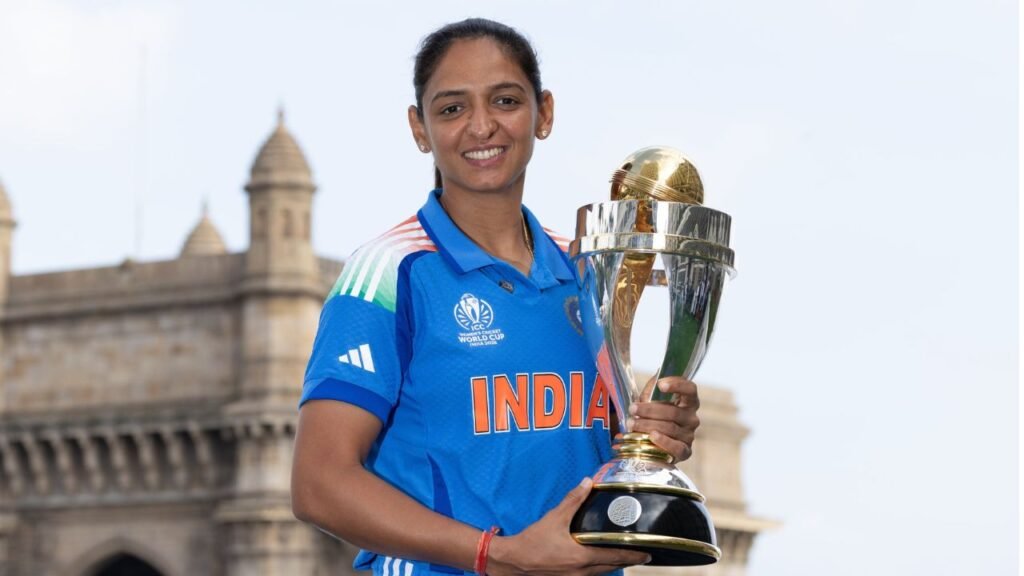
Born on International Women’s Day (March 8, 1989) in Moga, Punjab, Harmanpreet Kaur’s father Harmandar Singh Bhullar a judicial court clerk saw his own cricket dreams crushed by poverty. Daily, young Harmanpreet traveled 30 kilometers to train, playing exclusively with boys’ teams because girls’ cricket barely existed.
On July 20, 2017, at Derby, she announced herself globally. Against Australia in the World Cup semifinal, India collapsed to 35 for 2. What followed was destruction: 171 not out off 115 balls with twenty fours and seven sixes. Her third fifty exploded off just 17 balls. India won by 36 runs. Australian captain Alex Blackwell presented her jersey pure respect.
Though India lost the final, that innings sparked revolution. But the World Cup trophy remained elusive through 2020, 2023, and 2024 heartbreaks.
By 2025, thirty-six-year-old Harmanpreet faced her likely final chance. The tournament began catastrophically losses to New Zealand, England, Australia. Critics circled. Then came her mantra: “Self-belief.”
In the semifinal, India chased 339 women’s ODI history’s highest successful chase. The November 2, 2025 final at DY Patil Stadium drew 39,555 fans India’s largest women’s cricket crowd. Against South Africa, India posted 298 for 7. In a captaincy masterstroke, Harmanpreet brought part-timer Shafali Verma into attack. She dismissed Luus and Kapp rapidly. Deepti Sharma’s 5 for 39 demolished South Africa for 246.
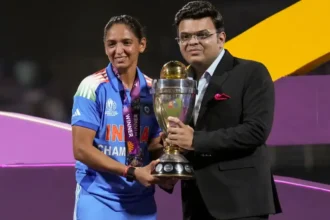
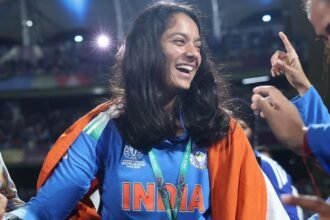
Fittingly, Harmanpreet took the final catch India’s maiden ICC Women’s World Cup. At 36 years and 239 days, the oldest captain to win it. BCCI announced ₹51 crore prize money.
One Story, Three Chapters
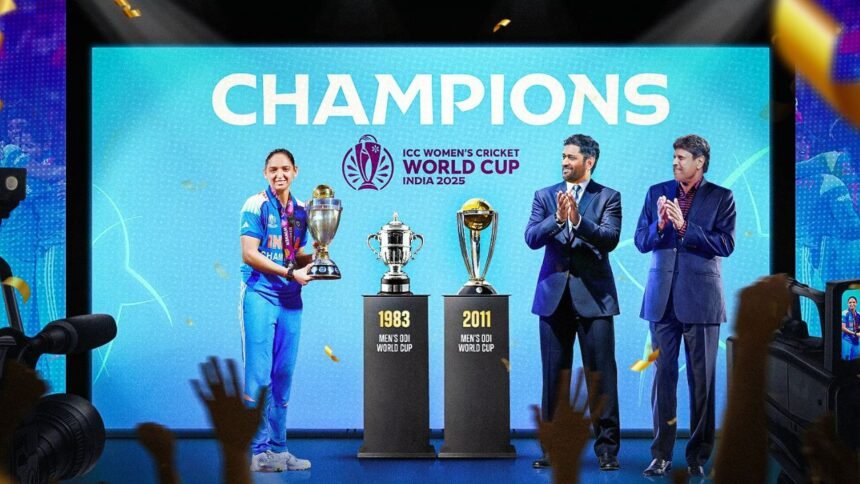
These three captains share one truth: greatness requires no privilege only courage, sacrifice, and belief. Kapil running backwards for an impossible catch. Dhoni’s six disappearing into Wankhede night. Harmanpreet taking the final catch. Three moments when India stopped, believed, and conquered.
“This is the start,” Harmanpreet said. “Our next plan make it a habit.” Just like Kapil in 1983. Just like Dhoni in 2011. They didn’t just win tournaments. They rewrote what’s possible for a billion people. And that victory is eternal.
Also Read | From Train Floors to World Champions: Indian Women’s Cricket’s Extraordinary Journey