






A Judgment That Decided Everything – Without Deciding Guilt
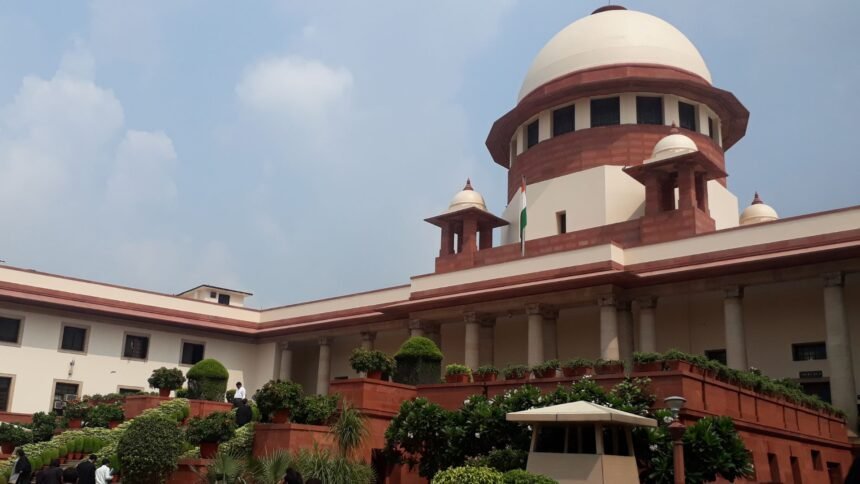
On 5 January 2026, the Supreme Court of India delivered a judgment that did not pronounce guilt, did not begin a trial, and did not finally adjudicate the violence that tore through Northeast Delhi in February 2020. Yet the decision decisively shaped the immediate futures of Umar Khalid and Sharjeel Imam. Spread across 142 pages and 444 paragraphs, the judgment denied bail to both men in the so-called “larger conspiracy” case while granting conditional bail to five other accused. More significantly, the Court barred Khalid and Imam from even applying for bail again for at least one year, tying any future request to the examination of protected witnesses whose testimony may itself take years to materialise. The practical effect is stark: by judicial order alone, two men who have not been convicted of any crime will remain in prison well into their seventh year, without a single prosecution witness having been examined in trial.
When the Legal Process Becomes the Punishment
The case has come to symbolise a deeper shift in India’s criminal justice system, where punishment no longer waits for a verdict. The Supreme Court did not declare Khalid or Imam guilty, but it accepted the prosecution’s claim that both occupied a “central and formative” role in an alleged conspiracy behind the Delhi riots. Civil liberties groups, lawyers, and international observers see something more troubling at work: a system in which incarceration is prolonged, delay is normalised, and dissent is managed not through debate or rebuttal but through years of confinement without trial.
The Citizenship Law That Sparked a Movement
The story begins in late 2019, when Parliament passed the Citizenship (Amendment) Act. The law fast-tracked Indian citizenship for non-Muslim migrants from Pakistan, Bangladesh, and Afghanistan, while excluding Muslims entirely. For many Indians, the law raised serious constitutional concerns, especially when discussed alongside plans fora nationwide National Register of Citizens. Critics feared that citizenship itself was being reshaped along religious lines. Protests erupted across the country, often framed as a defence of the Constitution rather than a challenge to the state.
How Protest Took Shape in Delhi
In Delhi, the protests developed a distinct character. The sit-in at Shaheen Bagh, led largely by Muslim women, became a powerful symbol of resistance. Students from Jamia Millia Islamia, Jawaharlal Nehru University, and other campuses organised marches, speeches, and public meetings. Sharjeel Imam and Umar Khalid emerged as visible voices during this period, though they were far from the only ones. Imam, an IIT Bombay graduate and JNU research scholar, spoke about sustained, peaceful disruption as a way to pressure the government. Khalid, a former JNU PhD scholar and student activist, addressed gatherings across the country, repeatedly urging constitutional resistance while calling for non-violence.
The State’s Story Changes the Meaning of Protest
After the violence, the state’s narrative would turn this period on its head. According to the Delhi Police, the protests were never merely protests. They were described as a cover for a carefully planned conspiracy. Protest sites became “launchpads” speeches were reframed as coded incitement, and WhatsApp groups were treated as command centres. This version of events was formalised in FIR 59 of 2020, which alleged a single, overarching plan to engineer communal violence in Northeast Delhi, deliberately timed to coincide with the February 2020 visit of US President Donald Trump.
The Days Delhi Burned
Between 24 and 25 February 2020, Northeast Delhi witnessed some of the worst communal violence the city had seen in decades. At least 53 people were killed, most of them Muslim. Hundreds were injured. Homes, shops, and places of worship were destroyed. Survivors described fear, chaos, and a sense of abandonment. In the aftermath, more than 750 FIRs were registered, thousands of people were questioned or detained, and arrests disproportionately affected Muslim residents. Attention soon shifted from individual acts of violence to the search for a single “mastermind conspiracy.”
An Arrest Before the Riots Even Happened
One of the most unsettling facts of the case is its timeline. Sharjeel Imam was arrested on 28 January 2020, nearly a month before the riots took place. His arrest was based largely on speeches delivered during the anti-CAA protests, including one at Aligarh Muslim University where he spoke of a peaceful “chakka jam” or road blockade. That speech was immediately branded seditious by political leaders and television debates. Imam was already in custody when the Delhi violence erupted, a fact that continues to sit uneasily with the claim that he masterminded the riots.
An Arrest Months Later, With the Same Allegation
Umar Khalid was arrested much later, on 13 September 2020. He was accused of being a key organiser whose speeches and alleged communications sought to destabilise the government. Like Imam, Khalid was never accused of being present at riot sites, carrying weapons, or physically participating in violence. The case against him rests on what he said, who he spoke to, and what prosecutors believe his intentions were.
The Law That Keeps People in Jail
Both men were charged under the Unlawful Activities (Prevention) Act, India’s main anti-terror law. The UAPA is different from ordinary criminal law because it makes bail extremely difficult. Courts are required to deny bail if the accusations appear prima facie true, even before evidence is tested in trial. In effect, the law turns jail into the default position, especially in large conspiracy cases that can take years to reach trial.
When Speech Becomes Evidence of Terror
The prosecution’s case relies heavily on speeches, WhatsApp messages, and statements from protected witnesses whose identities remain hidden. Khalid’s speeches used strong political language but repeatedly called for non-violence. Imam’s speeches criticised government policy and advocated peaceful disruption. Courts in related cases have noted that WhatsApp chats are supporting material at best, not proof of criminal conspiracy. Yet under the UAPA, even such material can be enough to keep someone in prison for years without trial.
Years Pass, But the Trial Never Begins
As time passed, the weight of prolonged detention became impossible to ignore. Khalid and Imam filed repeated bail applications, arguing that their continued incarceration violated their fundamental right to personal liberty. Khalid was granted bail in one minorcase in 2021 and acquitted in another riot-related case in 2022, but neither development led to his release. By early 2026, both men had spent more than five years in jail without the trial even starting.
Why the Supreme Court Still Said No
In its January 2026 judgment, the Supreme Court refused to treat long incarceration as a reason for bail. Instead, it divided the accused into categories. Five co-accused were granted bail because their roles were considered limited. Khalid and Imam were placed in a separate category and described as central planners. The Court held that delay could not be used as a “trump card” in cases involving national security laws.
When Protest Is Treated Like Terror
The Court also adopted a broad interpretation of what counts as a terrorist act. It held that even non-violent actions, such as large-scale road blockades, could fall under anti-terror law if they disrupted public life or the economy. Legal experts warned that this reasoning risks treating ordinary protest methods as acts of terrorism, blurring the line between dissent and violence.
A Door Shut for Another Year
Most unusually, the Court barred Khalid and Imam from applying for bail again for at least one year. This restriction was tied to the examination of protected witnesses, a process that may itself take years. With more than 900 witnesses listed and Delhi’s courts already overburdened, a speedy trial appears unlikely.
The Human Cost of Endless Waiting
Umar Khalid crossed 2,000 days in jail before the judgment was delivered. After the verdict, he reportedly told his family, “Ab yahi zindagi hai.” (This is life now) Sharjeel Imam’s family expressed shock but said they would continue fighting the case. Both men remain in Tihar Jail, where concerns about mental health, isolation, and the strain of indefinite detention continue to be raised.
A Country Divided Over the Verdict
The ruling deepened political and social divides. Ruling party leaders welcomed it as proof that anti-national forces were being held accountable. Opposition leaders, studentgroups, and civil liberties organisations condemned it as the collapse of bail jurisprudence and the criminalisation of dissent. International human rights groups and UN experts have repeatedly expressed concern, while the Indian government has dismissed such criticism as interference.
When Waiting Becomes the Sentence
With hundreds of riot cases still pending and more than 900 witnesses listed in this one, the prospect of an early trial is remote. By the time Khalid and Imam are allowed to seek bail again, they may already have spent a substantial portion of the minimum sentence under the UAPA in prison, without any finding of guilt. What began as protests against a citizenship law has become one of the most important legal battles over speech, dissent, and liberty in India today. For Umar Khalid and Sharjeel Imam, the question is no longer when justice will come, but how long the law will allow waiting itself to stand in for punishment.