









New Delhi, December 6: India’s largest airline, IndiGo, entered its fifth day of severe operational disruption on Friday, cancelling hundreds of flights nationwide after new pilot duty-time rules sharply reduced crew availability. The crisis, described by aviation officials as one of the worst in India’s recent civil aviation history, has left thousands of passengers stranded across major airports including Delhi, Mumbai, Bengaluru and Hyderabad.
According to data reviewed by aviation authorities, IndiGo cancelled over 250 flights on Thursday alone, while delays stretched across the carrier’s entire domestic network. The cancellations began earlier this week after the government temporarily suspended the new Flight Duty Time Limitations (FDTL) norms, which had been introduced to reduce pilot fatigue.
Airline admits planning gaps
IndiGo said the disruption stemmed from “miscalculations” in transitioning to the new rest requirements, which mandate longer weekly rest periods and tighter restrictions on late-night flying. These changes significantly reduced roster flexibility for a carrier that operates India’s highest daily flight volume.
The airline has begun reworking schedules to comply with the new norms while maintaining essential services and aims to restore operational stability as soon as possible.
Regulator steps in
India’s Directorate General of Civil Aviation (DGCA) temporarily suspended two provisions of the new pilot-rest rules late Thursday, allowing IndiGo limited relief to deploy additional crew and stabilise flight schedules. Officials said the exemption was granted “to prevent further disruption to the travelling public.”
The civil aviation ministry has also sought a detailed report from the airline, while a four-member inquiry panel has been constituted to examine the causes of the breakdown and assess compliance gaps.
Passengers face long queues, last-minute scrambles
Scenes of overcrowded terminals, long queues at airline counters and passengers waiting overnight were reported across several airports. Many travellers were notified of cancellations only hours before departure, forcing a rush for seats on rival carriers or long-distance trains.
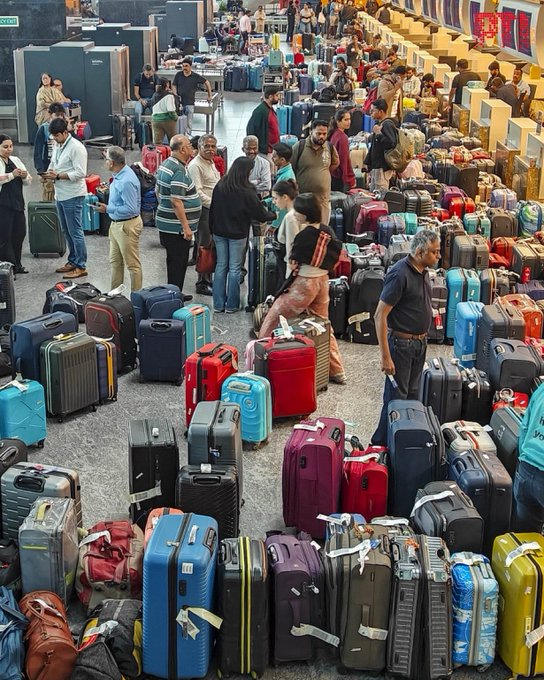
Across the country, flight delays also triggered a spike in last-minute airfares and rail demand, complicating travel plans during an already busy winter season.
A system-wide shock
Aviation analysts say the disruption highlights the vulnerability of India’s domestic travel ecosystem, which relies heavily on a single carrier. IndiGo controls more than 60% of India’s domestic market, meaning any major operational shock has nationwide ripple effects.
“The scale of IndiGo’s network makes it extremely sensitive to regulatory changes. A small reduction in pilot availability can cascade quickly across the system,” one senior aviation analyst said.
A difficult balance between safety and operations
While the FDTL norms were introduced to enhance flight safety, critics argue that the transition required more coordinated planning between airlines and regulators, especially given the volume-heavy structure of India’s aviation sector. Several industry experts also say the crisis may prompt a re-evaluation of how such norms are phased in.
For now, officials say stabilising IndiGo’s operations is the priority, though full recovery is expected to take weeks.
Also Read | Sonu Sood Appeals for Calm After Flight Delays, Urges Passengers to Treat IndiGo Staff with Respect