







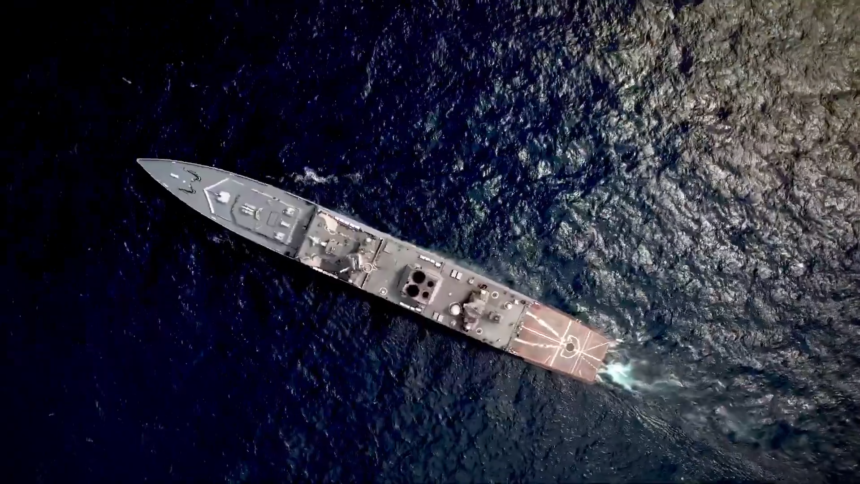
New Delhi: India marked Navy Day 2025 on Thursday with tributes pouring in from national leaders and a grand operational demonstration by the Indian Navy at Thiruvananthapuram, highlighting India’s growing maritime strength, indigenous defence capabilities, and expanding strategic role in the Indian Ocean Region.
Prime Minister Narendra Modi, President Droupadi Murmu, and Defence Minister Rajnath Singh extended their greetings to naval personnel, acknowledging the Navy’s role as the frontline defender of India’s maritime interests.
PM Modi: “Navy synonymous with exceptional courage and determination”
Prime Minister Modi, in his message on X, praised the Navy’s commitment to securing the nation’s maritime borders.
He wrote:
Navy Day greetings to all personnel of the Indian Navy. Our Navy is synonymous with exceptional courage and determination. They safeguard our shores and uphold our maritime interests. In recent years, our Navy has focussed on self-reliance and modernisation. This has enhanced our security apparatus. I can never forget this year’s Diwali, which I spent with Naval personnel on board INS Vikrant.”
His reference to INS Vikrant underscores India’s bold push toward indigenous aircraft carrier capability—one of the strongest symbols of Aatmanirbhar Bharat in defence.
President Murmu Witnesses Naval Operations in Kerala
President Droupadi Murmu presided over the official Navy Day celebrations at Thiruvananthapuram, where the Indian Navy showcased precision manoeuvres, combat demonstrations, amphibious capabilities and aerial operations.
She said:
By securing sea routes, protecting marine resources, preventing illegal activities, and supporting maritime research, the Indian Navy strengthens our vision of safe, prosperous, and sustainable oceans.”
The demonstration also highlighted the Navy’s role in humanitarian assistance, disaster relief, anti-piracy missions, and safeguarding the country’s 7,500-km coastline.
Rajnath Singh: “Largest resident naval power in the Indian Ocean”
Defence Minister Rajnath Singh, in his Navy Day message, emphasised India’s strategic influence in the Indian Ocean Region (IOR).
He wrote:
As the largest resident naval power in the Indian Ocean, the Navy continues to uphold India’s maritime interests with valour, vigilance and commitment to Aatmanirbharta. The professionalism shown by our naval personnel gives me immense confidence that the Indian Navy stands ready to safeguard and advance our national maritime interests.”
His statement aligns with India’s role in maintaining open sea lanes, countering piracy, and contributing to regional security partnerships.
A Brief History of the Indian Navy
Ancient Maritime Legacy
India’s maritime history dates back to the Indus Valley Civilization, with dockyards at Lothal and references to oceanic trade in ancient texts. Chola naval expeditions in Southeast Asia marked an early era of Indian maritime influence.
Colonial Period and Modern Foundation
The modern Indian Navy traces its origins to the 1612 establishment of the East India Company’s Marine, later renamed the Royal Indian Navy.
Post-Independence, the Navy adopted its present name on 26 January 1950, evolving rapidly into a blue-water force.
Post-Independence Achievements
- 1971 War: Naval operations, including the daring attack on Karachi harbour, were decisive in India’s victory.
- INS Arihant: India’s first indigenous nuclear submarine, completing the nuclear triad.
- INS Vikrant (2022): India’s first indigenously built aircraft carrier—a milestone in shipbuilding.
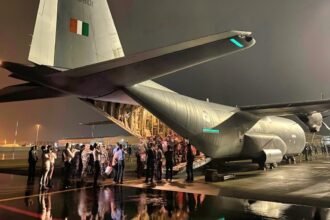
- Humanitarian & Disaster Relief: Evacuations in Yemen (2015), Sudan (2023), and Indian Ocean Tsunami operations (2004).
Modernisation and Indigenous Push
The Indian Navy is currently undergoing one of its largest modernisation drives:
Indigenous Platforms
- INS Vikrant – Indigenous aircraft carrier
- Arihant-class SSBNs – Nuclear-powered ballistic missile submarines
- Kalvari-class submarines – Made under Project 75
- Next-Gen Destroyers & Frigates – Under P15B and P17A projects
Focus Areas
- Expansion of submarine fleet
- Unmanned underwater systems
- Aircraft carrier-based aviation
- Coastal and deep-sea surveillance
- Maritime domain awareness (MDA)
- Collaboration with QUAD partners for Indo-Pacific security
The Navy has committed to becoming fully indigenous by 2047, aligning with India’s goal of building a secure and self-reliant maritime future.
India’s Expanding Role in the Indian Ocean Region
The Navy plays a central role in:
- Securing the world’s busiest trade routes
- Anti-piracy operations around the Gulf of Aden
- Joint exercises with the U.S., Japan, Australia, France, and ASEAN nations
- Monitoring China’s naval activity in the Indian Ocean
- Strengthening SAGAR doctrine (Security and Growth for All in the Region)
With increasing geopolitical complexities, India’s maritime forces are seen as crucial stabilisers from the Arabian Sea to the Indo-Pacific.
Also Read | India Deploys Mi-17 V5 Helicopters in Colombo as HADR Operations Intensify in Sri Lanka