








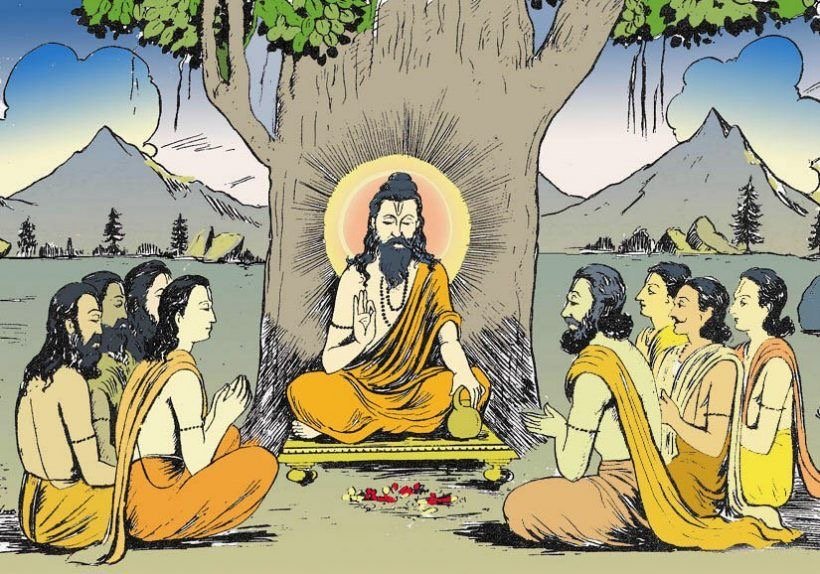
India’s rich philosophical traditions have long emphasized harmony between humans and nature.Long before environmental protection became a global concern, Indian thinkers saw the natural world as a living system that must be treated with respect, balance and responsibility. Today, as the country faces rising pollution, climate stress and rapid ecological decline, these ancient ideas feel more relevant than ever.
The earliest Vedic texts describe the universe as an interconnected whole held together by rita, the natural order. This concept teaches that humans, animals, plants, rivers and cosmic forces exist in a delicate balance. When humans behave irresponsibly, the balance breaks and the environment reacts. This is remarkably close to modern ecological thinking, which shows how pollution, deforestation and climate change create chain reactions across the planet. The Vedas also treated natural elements like fire, wind, water and earth as sacred beings, reminding communities that damaging nature meant damaging something divine.
The Upanishads deepened this ecological worldview by teaching that the same spiritual essence, Atman, exists in all living beings. By removing the separation between humans and nature, they encouraged a life of restraint, compassion and minimal harm. This approach discouraged greed and overconsumption, which are now recognised as major causes of environmental damage worldwide. The idea that the self is connected to the universe (Brahman) also encourages a sense of responsibility toward the environment.
Buddhism added its own ecological insight through the doctrine of pratityasamutpada, or dependent origination. This principle states that all things arise in relation with one another. Nothing exists in isolation. From a modern environmental perspective, this reinforces the idea that pollution, climate change and biodiversity loss are not separate problems, they are interconnected outcomes of human choices. The Buddhist commitment to compassion and minimal harm also supports sustainable living, as it encourages individuals to reduce unnecessary consumption and avoid causing suffering to other creatures.
Jainism remains one of the most ecologically sensitive philosophies in the world. Its central principle, ahimsa, is understood not only as non-violence toward humans but toward every living being, from animals to microorganisms. Jain thinkers argued centuries ago that human desires must be controlled to prevent harm to the planet. The practice of limiting possessions, using resources mindfully and avoiding actions that disturb ecosystems closely mirrors contemporary sustainability principles. Many environmental historians consider Jain ideas to be some of the earliest articulations of a deep ecological ethic.
Classical Hindu thought also speaks of Prakriti, or nature, as a dynamic and creative force that sustains life. Texts like the Bhagavad Gita warn against greed, excess and the uncontrolled exploitation of nature, describing them as actions that disturb social and environmental balance. The concept of dharma further places responsibility on individuals, rulers and communities to protect the natural world. This sense of duty becomes highly relevant today, as governments grapple with air pollution, shrinking forests and climate pressures.
As modern India faces severe environmental crises, from worsening air quality in Delhi to recurring floods, droughts and rising temperatures, these ancient ideas offer a meaningful counterpoint to the consumption-driven lifestyle that dominates cities. Indian philosophy consistently connects ethical living with ecological balance. It teaches restraint instead of excess, responsibility instead of exploitation, and harmony instead of domination.
Environmental experts argue that reconnecting with these traditions can help reshape public attitudes toward sustainability. When people understand pollution or climate change not only as scientific or policy problems but as moral and cultural concerns, they become more willing to change their behaviour. Indian philosophy, therefore, offers more than historical insight, it provides a value system that can guide modern environmental action.
In today’s world, where technology and development often overshadow ecological concerns, these ancient teachings remind society that the environment is not an external object but an extension of human life. Sustainable living is not a modern invention but has been part of India’s intellectual heritage for thousands of years. Reintroducing this wisdom into policy, education and everyday life may be one of the most powerful tools in addressing the environmental challenges of the twenty-first century.
Also Read | New CAQM GRAP guidelines issued for Delhi as pollution levels rise