









Prologue:
The Modern Arjuna
Arjun Mehta had all the things, which is why he assumed that the world was ready to accept his mental health startup when he left his high-paying IT job and believed that he possesses all the skills to code, a vision and savings….
However, a half year later, his team was disintegrating, customers were disoriented, and investors were no longer responding.
And at night he said, “Maybe I am not supposed to be in the startup business.”
His self-doubt kept growing.
It was one evening as he sat down alone at the Marine drive where he called his mentor the retired IIM professor Professor Iyer who taught management using the Bhagavad Gita.
“Sir, I think I’m failing.”
Professor Iyer smiled over the phone.
Arjuna, you are in your Kurukshetra. And the Gita was written very specifically for the leaders, who get frozen in the verge of their greatest struggles. Come tomorrow. We will decipher Krishna as entrepreneur.
That was a meeting that altered all that.
The Story of Gita that can change a desperate founder to a resolute entrepreneur, using ancient wisdom, contemporary examples, inner quest and outer action are as follows…
CHAPTER 1 Clarity
Knowing Yourself Before You Build a Thing.
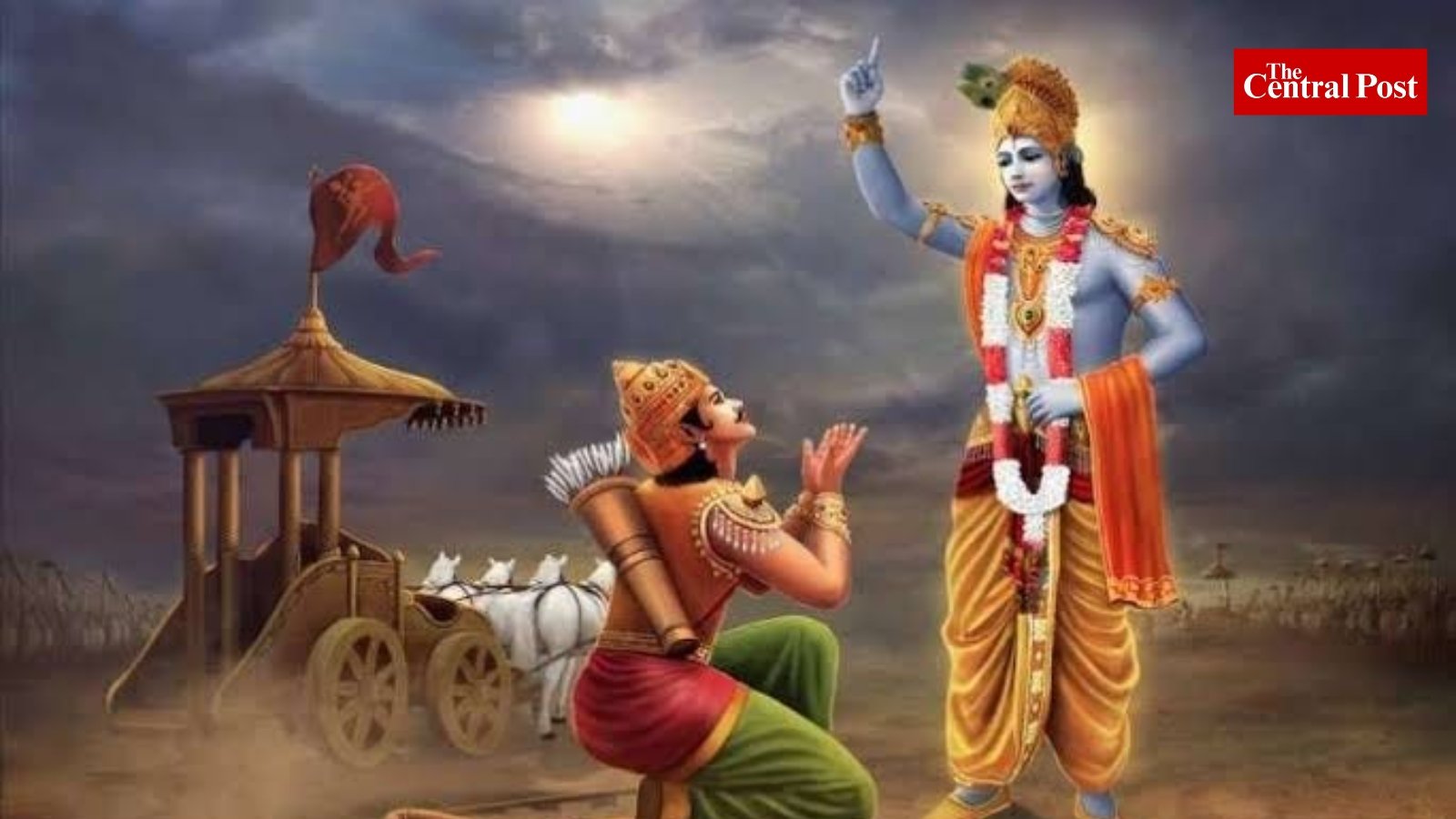
Krishna does not start off giving weapons, he starts by giving clarity.
He tells Arjuna:
You are not the body, you are the Atman, pure potential.
“Do not fall into unmanliness, O Partha.”
स्वयमेवात्मनात्मानं वेत्थ त्वं पुरुषोत्तम |
भूतभावन भूतेश देवदेव जगत्पते ||
(Gita 10.15)
To the entrepreneurs, this is the equivalent to:
The first step to building a startup is to self-build.

The first exercise was done by Arjun, as requested by professor Iyer:
- Write your top 3 skills
- Write your top 3 passions
- Discover the intersection point of your business direction.
This was not a spiritual talk, but business tough talk.
Arjun realized:
Skill is Coding
Skill is Product thinking
Skill is Empathy for people
Passion is Psychology
Passion is Helping youth
Passion is Building apps
The overlap existed, a mental wellness technological product.
He was constructing it out of eagerness but not out of conformity. The first teaching of Krishna put him in harmony.
Real Life Example:
Falguni Nayar of Nykaa
She wasn’t even confused for a second.
After 20 years in banking, she knew her Strengths and Weakness:
Her Skills?
• Finance
• Consumer understanding
• Brand strategy
Her passion?
• Beauty
• Women empowerment
CHAPTER 2 Mindset
The Mindset of a Founder should be like a Yogi…

Krishna says:
योगस्थः कुरु कर्माणि संगं त्यक्त्वा धनञ्जय।
सिद्ध्यसिद्ध्योः समो भूत्वा समत्वं योग उच्यते।।
(Gita 2.48)
Meaning:
Labor intensely, without the desire of outcomes.
There is only a transient success and failure.
Excellence is achieved by constant concentration.
Professor Iyer told Arjun this:
You lose the power of the present moment when you are obsessed with funding, followers, or valuation. Build the product. The conclusions are automatically derived.
This altered the day to day routine of Arjun:
- More time building
- Reduced time panning venture capital news.
- Less anxiety
- More execution
He no longer pursued results and began to master the process and in another month his product was greatly improved.
Real Life Example:
Nithin Kamath (Zerodha) did not think of valuation or media buzzes and he simply concentrated on creating a clean trading product alone and nothing more in this context.
During 10 years, he did not want to be financed by VC and silently worked.
Therefore Process = Outcome.
CHAPTER 3 Your Mind Is Your Co-Founder
One of the greatest lessons Krishna teaches is on mental-fitness:
उद्धरेदात्मनात्मानं नात्मानमवसादयेत् ।
आत्मैव ह्यात्मनो बन्धुरात्मैव रिपुरात्मनः ॥
(Gita 6.5)
Meaning:
Your head may be your dearest or your enemy.

Your mindset determines:
- Your productivity
- Your discipline
- Your team energy
- Your decision making
Arjun realized the sad truth:
The market was not his actual fight.
His disjointed mind was his true struggle.
Professor Iyer in turn introduced him to:
- Daily meditation
- 45 minutes of deep work
- Refusing to take unneeded calls.
- Replying yes to learning and reading.
Arjun felt better, calmer, sharper and more confident within 2 weeks.
nothing minimized his work through meditation… Rather it increased his productivity by two.
Real Life Example:
Deepinder Goyal of Zomato (Said in an interview)
“Startups do not fail due to competition. They die on the account of founders losing mental discipline.”
CHAPTER 4 Swadharma
The selection of an appropriate Business Model.
The Question of Krishna What Is Your Swadharma?

Krishna teaches:
A founder has to construct something that is comparable to his nature (guna + karma).
Professor Iyer caused Arjun to judge:
- Do you enjoy talking to users?
- Do you enjoy working on actual problems?
- Do you care about mental health?
- Would you consider doing so in 5-10 years time?
Arjun realized:
Yes. This was not a trend, this was his vocation.
Most unsuccessful founders gave up due to having:
- Trendy startups
- Startup ideas stolen in Silicon Valley.
- Niches they didn’t love
The instructions of Krishna rescued Arjuna in future burnout.
Real Life Example:
Vineeta Singh of Sugar Cosmetics did not take up high paying jobs since beauty was her vocation.
She liked:
- Talking to users
- Solving beauty problems
- Developing the brand value in the long term.
CHAPTER 5 Team Building
Understood Varna System = The Secret of Hiring.
Krishna says:
चातुर्वर्ण्यं मया सृष्टम् गुणकर्मविभागशः
(Gita 4.13)
Meaning:
Distribution of roles depending on nature (guna) and skills (karma) should be done to people.
But NOT by birth. NOT by caste.

Professor Iyer told him about the modern version:
There are 4 kinds of people in each team:
1. Brahmana (Thinkers)
- Strategic minds
- Product architects
- Researchers
- Data-driven thinkers
2. Kshatriya (Leaders)
- Operations heads
- Managers
- Sales leaders
- People who work under pressure.
3. Vaishya (Value Creators)
- Growth experts
- Revenue-driven roles
- Business developers
- People motivated by numbers
4. Shudra (Execution Workers)
- Task-doers
- Assistants
- People that require teachings.
A startup fails when:
- A thinker is thrown into sales…
- A revenue-mind adopts innovative functions…
- A scared employee is placed in the position of a leader…
Arjun knew the great Mistake he had committed:
He employed Flatterers and not Actors.
Real Life Example:
Bhavish Aggarwal (Ola) confessed that the initial hiring errors at Ola were slackening the company.
He subsequently re-arranged teams into:
- Thinkers into Product leads
- Chiefs into Ops and metropolitan heads.
- Value creators into Revenue teams.
- Executors to Drivers and ground staff.
So, he restructured his team:
• One strong tech architect
• One clear business head
• One revenue-focused manager
• One operations executor
All began to correspond… Not Suddenly but slowly
CHAPTER 6 Hire slow, fire fast, War Strategy
You are only an instrument.
Fates develop as the consequences of the previous actions.

Professor Iyer translated it crudely:
Bad employees will never transform into good ones.
“When a person is unable to do something, do not expect God to rectify him. Remove them.”
Arjun had a weak co-founder who:
- Avoided responsibilities
- Came late
- Incompetent in skills and discipline.
Arjun dreaded conflict.
He terminated them with grace.
Real Life Example:
Uber founders Travis Kalanick also ousted the early co-founders who could not keep up.
Reed Hastings of Netflix has once remarked:
“We’re a team, not a family. When individuals will not fit then make them go early.”
CHAPTER 7 Lakshmi Has Many Forms
Adi Lakshmi (wealth of the primal), Dhana Lakshmi (wealth of money), Dhanya Lakshmi (wealth of food/grains), and Vidya Lakshmi (wealth of knowledge) and so on…
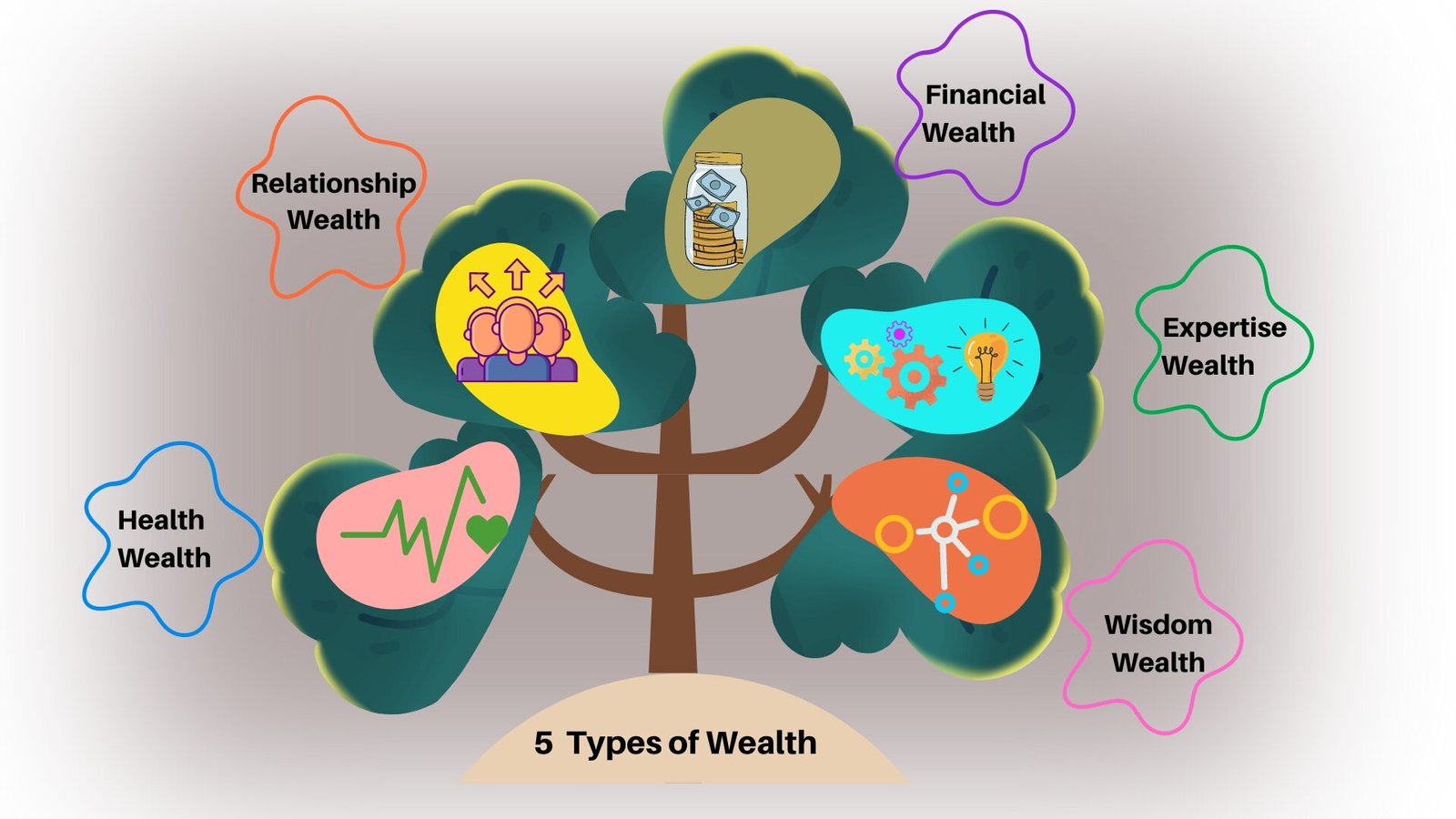
The Gita teaches us
(In nature you are never left without an arm, it is just about opening your eyes.)
Professor Iyer told Arjun:
“Investment is not only money.”
It can be:
- Credit
- Tools
- Connections
- Mentorship
- Partnerships
- AWS credits
- Cloud hosting
- Technical help
- Equity swaps
Arjun realized:
He didn’t need funding.
He requires management over resources.
He used:
- ₹5 lakh worth AWS credits
- Free tools from Google, IBM
- Internship talent
- Government grants
- Startup India benefits
Real Life Example:
Freshworks was founded in a small apartment in Chennai by Girish Mathrubootham just using:
• Free cloud credits
• Open source tools
• Remote interns
• Community support
They generated capital when they turned revenue-positive, Utilizing all resources at their disposal…
They knew that money is not the only Lakshmi, just as Arjun…
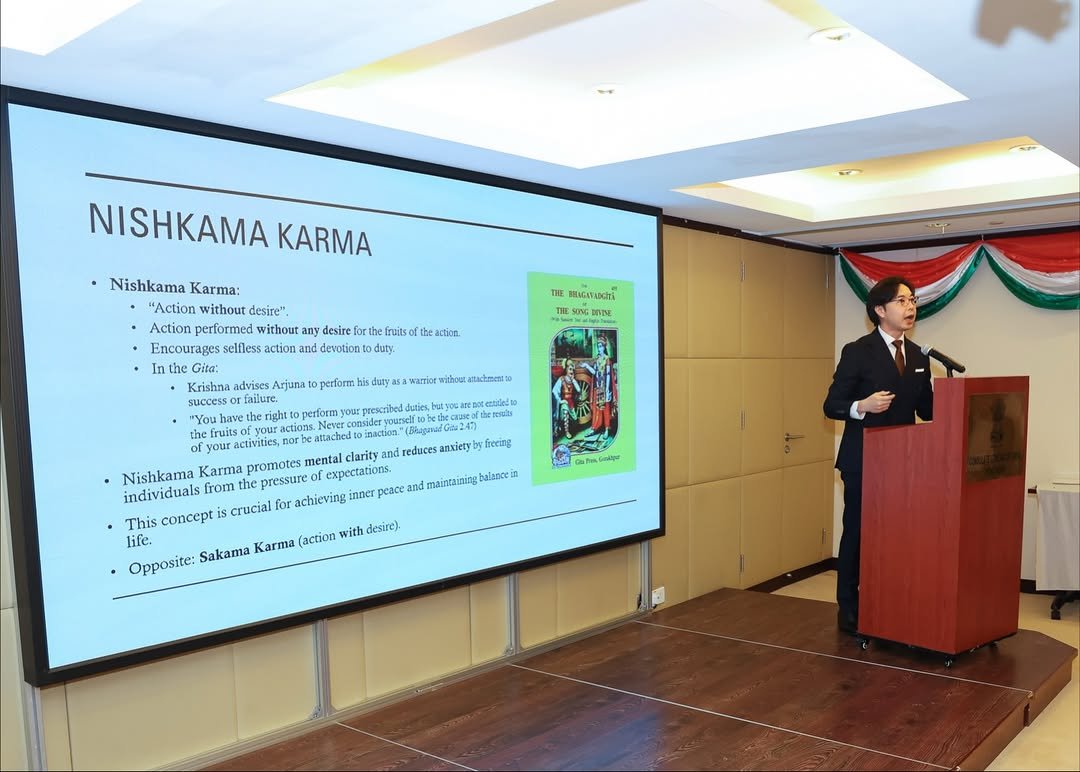
CHAPTER 8 Nishkama Karma for Founders
कर्मण्येवाधिकारस्ते मा फलेषु कदाचन
मा कर्मफलहेतुर्भूर्मा ते सङ्गोऽस्त्वकर्मणि
(Gita 2.47)
Krishna teaches:
Concentrate on doing, not on the results.
Professor Iyer got Arjun erased:
- Random WhatsApp groups
- All distractions
Arjun switched to:
- Pomodoro technique
- 4-hour deep work
- No meetings before noon
His output was tremendous, People believed that he was working harder, in fact, he was not working harder at all, he was just being smart, Krishna was not opposed to success, he was against obsession at any cost and this is more than ever needed by the entrepreneurs…
Real Life Example:
Kunal Shah of CRED adheres to deep work-cycles and avoids the distractions of the social media.
He did not worry about revenue during Initial staze but rather he concentrated on:
- Perfecting the UI and UX
- User psychology
- Product Quality
CHAPTER 9 Handling Chaos
Krishna repeatedly says:
स्थितप्रज्ञस्य का भाषा समाधिस्थस्य केशव |
स्थितधी: किं प्रभाषेत किमासीत व्रजेत किम् ||
This means:
- Have Pressure? Stay calm.
- Criticism? Stay neutral.
- Praise? Stay neutral.
- Bad Day? Don’t panic.
- Great Day? Don’t lose focus.
A founder has to grow stable, physically, as a mountain.
Arjun applied this during:
- A server crash
- Bootstrapped
- A co-founder exits
- Losing a major client
Earlier, he would panic.

He was now patient and clear in his action.
His emotional intelligence was rewired by the Gita.
Real Life Example:
Vijay Shekhar Sharma (Paytm) had to overcome:
- RBI restrictions
- competitor attacks
- Account freezes
- Fintech regulations
But always he remained composed and fit and recovered.
Stoicism = thriving overpower.
CHAPTER 10 Leadership
Serve First, Then Lead
Krishna leads from the front.
यद्यदाचरति श्रेष्ठस्तत्तदेवेतरो जनः
स यत्प्रमाणं कुरुते लोकस्तदनुवर्तते
(Gita 3.21)
He says:
What the leader does, other people follow.
Professor Iyer told Arjun:
You do not have to be an ego to have your team respect you, you have to work hard.
So, Arjun:
- Sat with interns
- Helped junior developers
- Joined customer calls
- Accepted the blame rather than passing it on.
He began to be looked up at by the team.

Leadership isn’t domination.
Leadership is service.
Real Life Example:
Narayan Murthy of Infosys is well known to sit with engineers, write code with them, make direct customer calls.
What one leader does, other leaders follow.
CHAPTER 11 Decision Making
Krishna tells Arjuna:
Do not do the easy thing, but do what is right.
कर्मण्येवाधिकारस्ते मा फलेषु कदाचन
मा कर्मफलहेतुर्भूर्मा ते सङ्गोऽस्त्वकर्मणि
(Gita 3.19)
Meaning:
Krishna tells Arjuna, You only have right to perform actions (karma) and not to worry about Fruits. Do not become a person who constantly meditates upon and gets attached to the results of one’s karma. Do not get attached to inactivity.

Arjun applied this in:
- Pricing strategy
- Firing underperforming employees.
- Shunning business transactions that are unethical.
- The preference of mental health over fast money.
A startup has to deal with moral dilemmas on a daily basis:
Should we copy a competitor?
Should we overdo features?
Should we buy fake reviews?
The Gita becomes a compass for them…
Real Life Example:
Ratan Tata has turned down various unethical business transactions such as a contract in the U.S. aviation market whereby bribe requests were made.
He replied in no even though it would cost crores of money.
CHAPTER 12 Work-Life Balance
The formula of balance provided by Krishna is:
युक्ताहारविहारस्य युक्तचेष्टस्य कर्मसु |
युक्तस्वप्नावबोधस्य योगो भवति दु:खहा ||
Meaning:
Those who are temperate in eating and recreation, balanced in work, and regulated in sleep, can mitigate all sorrows by practicing Yog.

(Gita 6.17)
Arjun changed his lifestyle:
- Satvik food
- 30 mins walk
- Meditation
- Controlled sleep cycle
In three months:
- His stress reduced
- Energy levels increased
- Creativity improved
- Decision-making sharpened
The same principles, meditation, mindfulness and discipline are applied by high performing founders such as Steve Jobs, Satya Nadella and Ray Dalio.
This 5000 years ago, the Gita realized this.
Real Life Example:
Satya Nadella of Microsoft did not transform Microsoft by working 20 hours a day, but by making it better:
- Mindfulness
- Walking habits
- Reading
- Emotional balance
He employed flatterers and not actors.
CHAPTER 13 Crisis Management
क्लैब्यं मा स्म गम: पार्थ नैतत्त्वय्युपपद्यते |
क्षुद्रं हृदयदौर्बल्यं त्यक्त्वोत्तिष्ठ परन्तप ||
Meaning:
“Do not yield to weakness. It does not suit you. Stand up with strength.”

Where Arjuna stood paralysed, Krishna did not:
- Sugarcoat
- Console emotionally
- Tell him to quit
- Give false hope
Krishna gave:
- Logic
- Perspective
- Duty
- Courage
Professor Iyer taught Arjun:
Go to Krishna Mode in case of crisis:
Calm. Rational. Focused.
Arjun applied this mentality at:
- A funding rejection
- Losing a major developer
- A broken product release
Rather than emotional reactions he responded with clarity. This rescued the company.
Real Life Example:
OYO’s Ritesh Agarwal faced:
- Hotel partner strikes
- Layoffs
- Negative press
- Pandemic collapse
Rather than giving up, he changed to the execution mode. Reduced expenses, refurbished business, re-opened hotels.
CHAPTER 14 Arjun Implements Startup Plan of Krishna
Arjun startup turned around after 10 months.
He:
- Rebuilt his team
- Structured his product
- Developed an excellent revenue model.
- Implemented discipline
- Improved his own mindset
The result?
The start-up became profitable, Arjun made angel investment, the product crossed 50,000 users, a partnership was signed by a corporate, and in his first meeting with investors Arjun grinned and said:
“My start up is founded on two things User feedback… and Bhagavad Gita.”
Real Life Parallels:
The former: LensKart, Peyush Bansal had Reconstructed team and Fixed operations.
- Ghazal and Varun of Mamaearth: Grew User First.
- Dream11 founders: Years of bootstrapping before breakout.
Gita teaches us how to think.
How to decide.
How to build.
How to lead.
How to stay calm.
How to rise again.
The modern world calls it:
- Emotional Intelligence
- Team Psychology
- Leadership Science
- Cognitive Behavior
- Decision-Making Framework
Yet Krishna had it all centuries ago…