








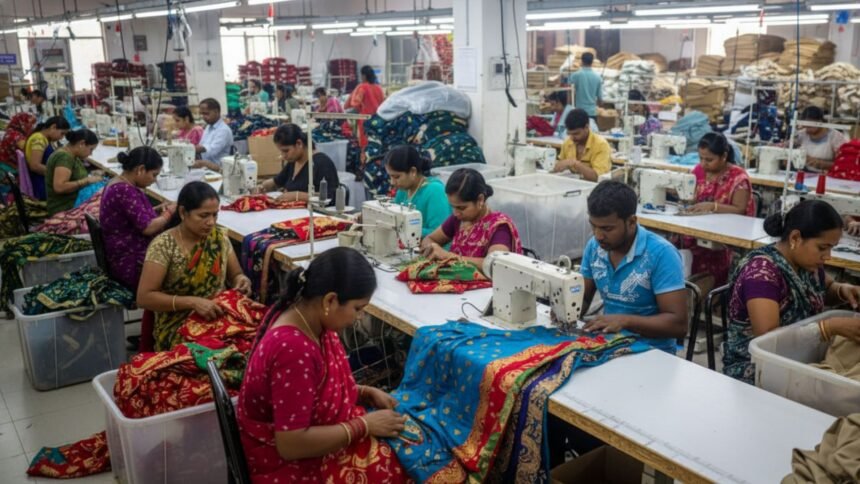
New Delhi, November 21: A surprisingly resilient domestic economy is giving India the upper hand in its stalled trade negotiations with the United States, according to multiple government and industry sources. The U.S. has slapped tariffs of up to 50% on Indian imports, yet India’s exports to the U.S. dropped only 8.6 % in October, better than the 12 % fall seen in September.
A Recovery Cushion
While key sectors such as apparel and footwear faced order declines, India’s overall economy grew an estimated 7 % in the July–September quarter and is forecast to expand around 6.8 % for the full year. Exporters say they have softened the blow by diversifying markets and offering discounts, while policymakers backed them with a $5.1 billion export-support package and tax cuts on inputs.
Negotiation Leverage
Indian officials told Reuters that the tariff pressure from Washington is not forcing India into a rushed deal. One senior official said: “For now, we’ve avoided the worst impact of the 50 % U.S. tariffs. If needed, we are ready to wait.” The expectation is that U.S. tariffs linked to Russian oil will be rolled back and overall duties reduced to around 15 % — in return India may offer reduced import tariffs on over 80 % of goods while safeguarding agriculture and sensitive industries.
Rising Headwinds
However, challenges remain. Indian exporters face stiff competition from low-cost Chinese producers, especially in non-U.S. markets, where exports fell 12.5 % in October.
Strategic Implications
- India’s government is using its strong domestic economy as a bargaining chip in trade diplomacy.
- By refusing to be rushed, India signals it will maintain strategic autonomy rather than be drawn into a quick-fix trade pact.
- For U.S. trade negotiators, India’s stance may require reopening broader terms of the deal rather than seeking immediate headline wins.
In short, India’s internal economic resilience is giving it space and time to negotiate, rather than simply being pressed into concession. Its long-term strategy appears to be: diversify exports, strengthen home demand, and use the leverage to obtain a deal that fits India’s interests rather than simply signing the first offer on the table.
Also Read | Export Push Gets Big Boost: Cabinet Clears ₹25,060-Crore Mission to Make India a Global Trade Powerhouse