






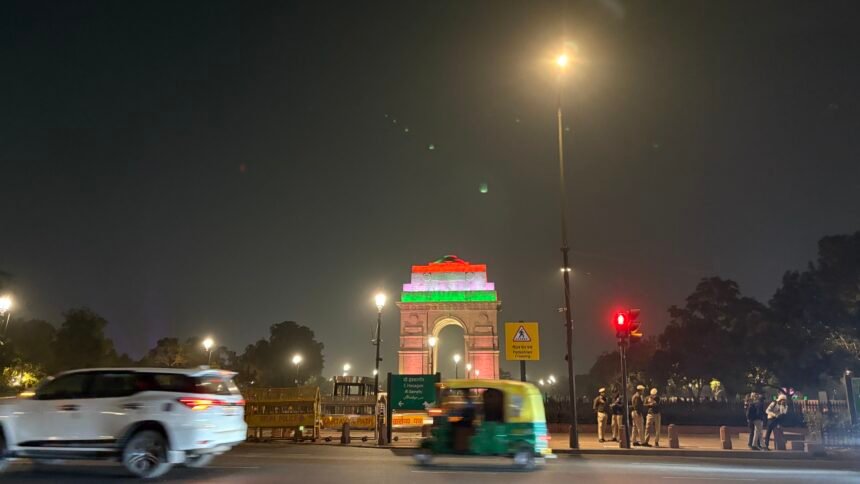
New Delhi, November 16: Delhi is struggling to breathe as winter season arrives. For the second day in a row the city’s air has remained in the “very poor” category. The city is under a blanket of smog. On November 15, the temperature dipped to 9.7°C which is the coldest morning of the season so far. The cold weather also traps the polluted air closer to the ground making the city’s already toxic air harder to escape.
Delhi’s three days of “severe” air pollution ended on Friday when the overall Air Quality Index dropped to 387, which is still in the “very poor” category. But this small change does not mean the air is clean. On Saturday, the 24 hour average AQI was 386, according to the 4pm bulletin issued by the Central Pollution Control Board (CPCB).
Even though the city moved out of the “severe’’ zone, 16 monitoring stations still recorded “severe” AQI showing that some parts of Delhi continue to have extremely polluted air.
Air quality becomes worse in winter because of many factors, such as temperature inversion, slow winds, seasonal emissions, and urban pollution. When the temperature drops, a layer of cold air stays close to the ground. Pollutants like dust,smoke, and tiny particles remain trapped under this layer and cannot rise, which makes the air dirtier. Slower winds are usually calm because of which pollution in the air stays for a longer time. Seasonal emissions include more use of firewood, heaters and diesel generators. Pollution which is carried from stubble burning in Punjab and Haryana. Urban Factors like Delhi’s crowded and built-up areas trap pollutants between buildings, making it harder for the air to clear.
With AQI remaining close to the “severe” mark, the health risk for people in the city is very high. Severe pollution can cause breathing problems, worse symptoms for those with asthma and bronchitis and irritation in eyes and throat. Breathing such air is equal to smoking several cigarettes in a day.
The government uses the Graded Response Action Plan (GRAP) when pollution gets worse. Under this plan, they stop construction work, check vehicles for pollution, and close some factories.But these steps help only for a short time. After some days, the pollution goes up again.
Delhi’s pollution has become a constant struggle for the people living there. It has turned into a never-ending problem for the city. To improve the situation, it is important to have strict rules and action against pollution. Strong action is needed now to help Delhi breathe again.
Also Read | Delhi’s Annual Smog Season: A Man-Made Disaster or a Natural Cycle