







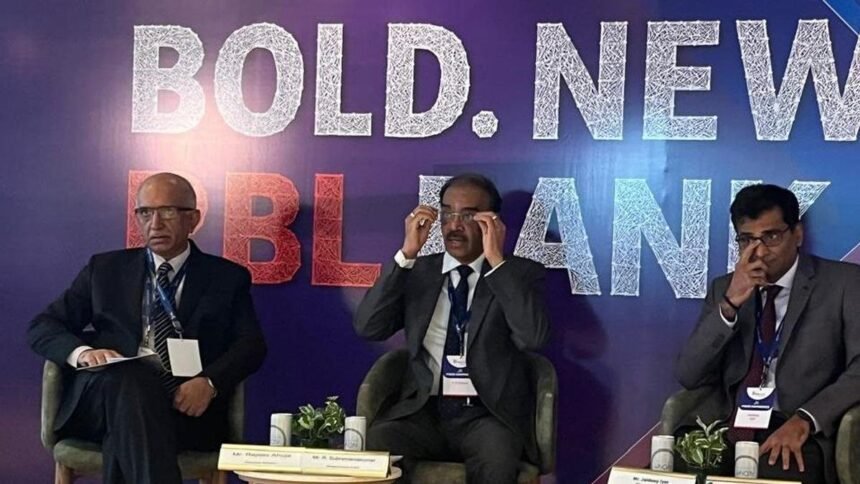
Mumbai/Dubai, October 19: In what’s being called a watershed moment for Indian banking, Emirates NBD has secured board approval to acquire a controlling interest in RBL Bank through a massive capital infusion of approximately $3 billion the largest foreign investment ever seen in India’s financial services industry.
The deal, announced simultaneously in Mumbai and Dubai on Friday, breaks multiple records and signals a major shift in how international banks view opportunities in one of the world’s fastest-growing economies.
A Deal That Rewrites the Rulebook
This isn’t just another corporate transaction. It’s the first time a foreign bank has successfully acquired majority control of a profitable, well-established Indian lender. Previous attempts by international players have either failed or involved distressed assets.
The transaction’s scale is staggering by any measure. At roughly INR 26,850 crore, it represents not only the biggest foreign direct investment in Indian banking but also the largest equity fundraise the sector has ever witnessed. It even sets a record for preferential share issuances by any listed company in India.
Shayne Nelson, who heads Emirates NBD as Group CEO, didn’t mince words about the bank’s ambitions. “Our investment in RBL Bank is a testament to our confidence in India’s vibrant and expanding economy,” he said. “This strategic alignment brings together RBL Bank’s growing domestic franchise with Emirates NBD’s regional reach and financial expertise.”
How the Deal Will Work
Here’s what makes this transaction particularly interesting from a structural standpoint:
Emirates NBD will pump in fresh capital through a preferential share issuance that could give them up to 60% ownership. But that’s not where it ends. Indian regulations require them to make an open offer to existing public shareholders for an additional 26% stake, following guidelines set by the Securities and Exchange Board of India.
The deal also includes a fascinating operational element. Emirates NBD currently operates three branches in India in Mumbai, Gurugram, and Chennai functioning as a foreign bank since 2000. These branches will be merged into RBL Bank once the preferential issuance goes through, effectively consolidating ENBD’s entire Indian presence under the RBL umbrella.
Both banks’ boards gave their blessing on Friday, though the deal still needs regulatory approvals from India’s central bank and other authorities before it can close.
What This Means for RBL Bank
For RBL Bank, this injection of capital couldn’t come at a better time. The bank has been on an impressive growth trajectory but needed deeper pockets to truly compete with India’s banking giants.
R. Subramaniakumar, Managing Director and CEO of RBL Bank, sounded genuinely enthusiastic about the prospects. “Welcoming ENBD as our new strategic partner is a significant milestone for the Bank,” he noted. “This partnership secures a robust and globally respected anchor shareholder, providing a strong capital base for our future.”
The numbers tell an interesting story. As of September 2025, RBL Bank had loans worth about $11.43 billion on its books and deposits of around $13.27 billion. Its total balance sheet stood at roughly $17.51 billion. Not massive by Indian banking standards, but respectable and now positioned for serious expansion.
The bank serves over 15 million customers through 564 branches and 1,347 business correspondent outlets, plus 415 ATMs scattered across the country. It’s particularly strong in digital payments and has carved out a nice niche in credit cards and retail banking.
Why Now, Why India?
The timing of this deal reveals a lot about where smart money sees opportunities. India’s economy has been growing at a clip that makes most developed markets look sluggish. The financial services sector, in particular, has been booming as millions of Indians enter the formal banking system for the first time.
Emirates NBD, for its part, isn’t exactly a newcomer to India. They’ve been present since 2000 and upgraded to a full branch license in 2017. But three branches can only take you so far when you’re eyeing serious growth.
Chairman Chandan Sinha of RBL Bank highlighted the strategic logic: “This partnership marks a defining moment in RBL Bank’s journey of transformation. The entry of Emirates NBD as our strategic shareholder reflects the global confidence in India’s banking sector and RBL Bank’s potential within it.”
The Broader Picture
This deal sits at the intersection of several important trends. First, it underscores India’s growing importance in the India-Middle East-Europe Economic Corridor, a trade route that’s been getting increased attention as countries look to diversify supply chains.
Second, it represents a vote of confidence in India’s regulatory environment. Foreign banks have historically found it difficult to expand in India due to various restrictions. That Emirates NBD could structure such a significant transaction speaks to evolving attitudes in both New Delhi and Dubai.
Third, the deal highlights how Gulf banks are looking beyond their home markets for growth. With Emirates NBD already operating across 13 countries and serving 9 million customers, this acquisition dramatically expands their footprint in Asia’s third-largest economy.
What Happens Next
The transaction now enters what could be a lengthy approval process. India’s Reserve Bank will scrutinize every aspect of the deal. Given the size and strategic importance, other government agencies will likely weigh in as well.
If all goes smoothly, RBL Bank will see its capital ratios improve significantly, giving it room to grow its loan book aggressively. The bank has indicated it plans to expand its branch network and deepen its presence in wealth management and corporate banking.
For RBL Bank’s existing shareholders, the open offer provides an exit opportunity at what’s likely to be an attractive premium. Those who stay will be betting on the combined entity’s ability to compete more effectively against HDFC Bank, ICICI Bank, and other dominant players.
The Advisors Behind the Scenes
Deals of this magnitude require armies of advisors. Ernst & Young’s investment banking arm, along with JP Morgan and NeoStrat Advisors, guided Emirates NBD through the financial aspects. On the legal side, Shardul Amarchand Mangaldas & Co advised ENBD while AZB & Partners represented RBL Bank.
A Changing Landscape
Industry watchers say this transaction could open the floodgates for more foreign investment in Indian banking. If a Gulf bank can successfully acquire majority control of an Indian lender, why not others?
One senior banker, speaking on condition of anonymity, put it bluntly: “This changes the game. We’ve always known foreign banks wanted bigger slices of the Indian pie. Now they’ve seen it can actually be done.”
The deal also raises questions about consolidation in India’s crowded banking sector. With over a dozen major private banks competing for market share, along with numerous public sector banks, mergers and acquisitions have long been predicted. This transaction might accelerate that trend.
Looking Ahead
For Emirates NBD, the hard work begins after the deal closes. Integrating operations, cultures, and systems is never easy, especially across borders. The bank will need to convince RBL’s employees, customers, and regulators that bigger really is better.
But if they pull it off, they’ll have pulled off something remarkable transforming themselves from a regional Middle Eastern player into a genuine force in Asian banking, with a platform serving customers across multiple continents.
As for RBL Bank, the infusion of capital and expertise could help it realize ambitions that previously seemed out of reach. The bank has always punched above its weight in areas like payments and digital banking. With Emirates NBD’s backing, it might finally have the resources to take on the giants.
One thing’s certain: come Monday morning, competitors will be studying this deal very carefully, wondering if they should be making similar moves. In the high-stakes game of global banking, Emirates NBD just made a very bold bet on India’s future.
And given India’s growth trajectory, it might just pay off handsomely.
Also Read | Dhanteras 2025: Record Gold Prices Shift Buyers to Coins and Bars as Jewellery Sales Drop 30%