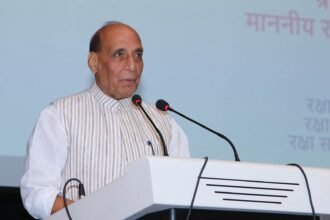








Delhi, 13 September(HS): Prime Minister Narendra Modi made a determined journey to Manipur on Saturday, overcoming heavy rains that grounded his helicopter and choosing instead a 1.5-hour road trip to Churachandpur. His first stop was at Peace Ground in the hill town, a stronghold of the Kuki-Zo people, where thousands gathered despite the downpour. “I salute the spirit of the people of Manipur. Even in such heavy rain, you came here in such large numbers. I express my gratitude to you for your love,” he said, praising the crowd’s warmth and resilience during his roadside arrival.
PM Modi added, “The scenes that I saw on the road today, my heart says that it was good that my helicopter did not fly today and I came by road. The love and affection that everyone gave me… I can never forget this moment in my life.”
He emphasized the Central Government’s commitment: “In order to bring life back on track in Manipur, the government of India is making all possible efforts. I promise you today that I’m with you. The government of India is with the people of Manipur,” and appealed to all groups “to take the path of peace for realising their dreams.”
PM Modi Welcomed with traditional honours including the Kokyet headgear,portrait and warm interactions with children in Churachandpur.Before arriving in Manipur, PM Modi inaugurated and laid the foundation stones for development projects worth over Rs 7,300 crore in Mizoram, showcasing major infrastructure advancements including the new Bairabi–Sairang railway line that now connects Aizawl to the rest of India. Adorned in traditional Mizo attire and honoured with cultural symbols like the Vakiria headgear and Mithun Horn, PM Modi celebrated regional heritage alongside progress.
The final leg of the visit is scheduled at Imphal’s historic Kangla Fort, a site of cultural and political significance. Here, PM Modi will meet families displaced by the violence and convey the Centre’s unwavering commitment to restoring peace and normalcy.PM Modi’s visit to Kangla Fort is a continuing gesture of reconciliation and building trust amid the state’s ongoing healing process.