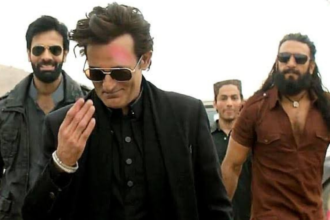







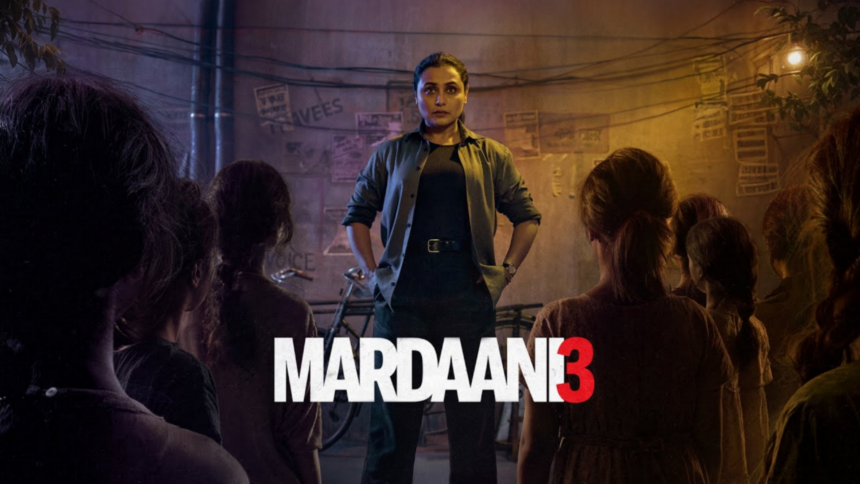
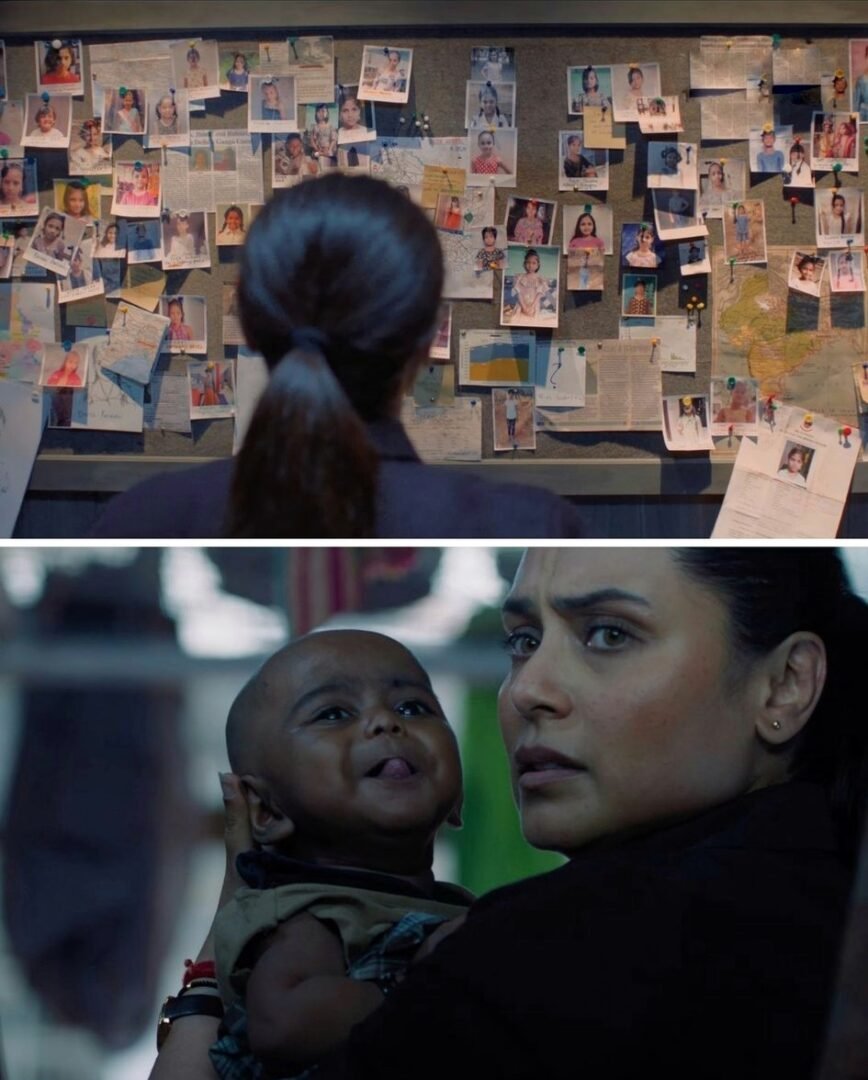
Mardaani 3 brings Rani Mukerji back as Shivani Shivaji Roy, the fierce police officer who has become the face of this franchise. The third chapter, directed by Abhiraj Minawala, depicts Shivani on the streets of Delhi, and she starts investigating the disappearance of two young girls. One is a daughter of a bureaucrat, and the other has a much poorer background. What starts as a missing persons case slowly opens up into a disturbing world of organised human trafficking.
The film once again positions Shivani as an alpha female, introduced with a heroic entry that recalls the larger than life grammar usually reserved for male action stars. The intent is clear. This is a story about power, justice, and crimes that society often prefers to ignore.
Story and Themes: Strong Intent, Heavy Delivery
The kidnapping of two girls in Bulandshahar sets the tone early. The contrast in police response based on social status hints at a deeper commentary on systemic injustice. The movie seeks to challenge the idea that society tends to respond differently when the victim is powerful versus when the victim is poor.
At the centre of the conflict is Amma, played by Mallika Prasad, a cold and unsettling child trafficker. The quest of Shivani to find Amma becomes a game of cat and mouse, with assistance of Ramanujan, portrayed by Prajesh Kashyap. He presents himself as a man who is battling the beggars mafia without being supported by an institution but subsequently, unveils some darker motives.
While the themes are relevant and urgent, the storytelling often feels heavy handed. The film does not use tension to develop naturally, but instead, it uses a lot of long dialogues to explain the plot instead of developing it through action. The communication is sometimes unnatural, as the characters literally proclaim their politics and intentions. Subtlety is not the film’s strength.
Rani Mukerji as Shivani Shivaji Roy: Authority or Overwriting

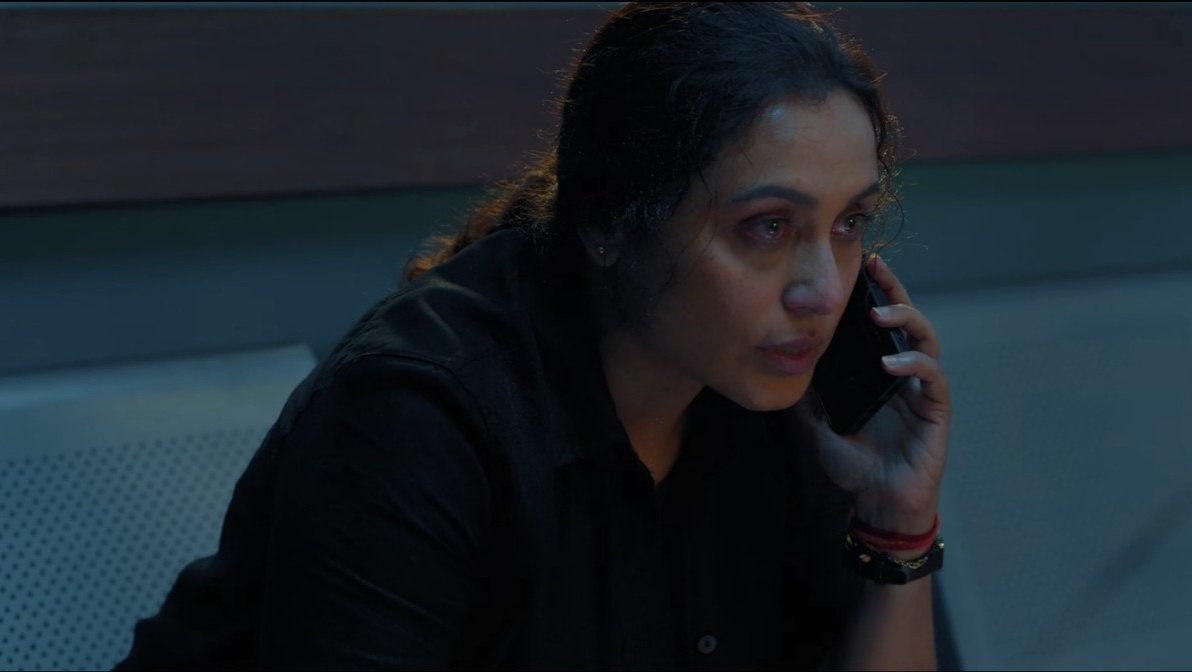
Rani Mukerji continues seamlessly from Mardaani 2, fully committed to Shivani’s no nonsense persona. She is full of intensity and the movie constantly attempts to put her in a position where she is someone who must be respected instantly. Nevertheless, this strategy is not always effective.
There are moments where Shivani’s physical dominance and mental sharpness feel more imposed by the script than earned on screen. When she has to conquer villains all by herself, or when she enters a room full of salutes, the scenes usually strike one as unbelievable, rather than awe inspiring. The overwriting limits quieter emotional moments, making her intensity feel performative instead of instinctive.
Villains and Supporting Cast
One of the greatest strengths of the previous Mardaani movies was their antagonists. Vishal Jethwa and Tahir Raj Bhasin added intensity and menace to the face offs with Shivani. Mardaani 3 struggles in comparison.

Mallika Prasad’s Amma has a chilling presence and a raw, unsettling energy. Her performance promises a powerful conflict, especially as a female villain opposite a female cop. Her arc, however, falls flat in the middle, and the film eventually shifts focus to male antagonists, diluting what could have been a more striking confrontation.
Prajesh Kashyap’s Ramanujan adds an unexpected turn to the story. His portrayal balances subtle strength with brutal behaviour, and his reveal brings shock value. Still, many of these twists feel predictable from a distance. Janki Bodiwala takes the little that it is given to her and does well, but her personality needed to be more detailed.
Music, Dialogue, and Atmosphere
Aigiri Nandini and the Mahishasura Mardini Strotam are effectively employed in the background score to give the fight of Shivani some moral weight. Rani’s Ladki Kyu monologue offers a familiar reflection on gendered exploitation, reinforcing the film’s feminist voice.
One of the most impactful lines is not said by the hero but the villain who tells a foreigner that we have a cheap life and even animals are more safe than poor street children. It is less provocation and more an uncomfortable indictment.
What Works and What Does Not
The runtime is crisp, and the film wastes little time setting up its central conflict. The subject matter remains grim and relevant, and the film refuses to look away from crimes against women and children. That sincerity gives the franchise its continued relevance.


However, familiarity weighs the film down. The beats in the narrative are also repetitive, particularly following recent performances that had developed similar themes. The later half is plagued with plot holes, tonal changes and a late foreign conspiracy twist that is undercooked. The tension dips, and the climax feels routine rather than gripping.
Final Verdict
Rating: ⭐⭐⭐
Mardaani 3 is by no means a reinvention of the franchise, and it fails to be as sharp as the earlier chapters. Yet, it remains a serious and sobering watch. Anchored by Rani Mukerji’s unwavering commitment to Shivani Roy, the film works more as a statement of continuity than surprise.
If you have liked Mardaani and Mardaani 2, this film will feel familiar in every sense, from premise to climax. It is nearly the same movie replicated with slight differences. Nevertheless, the fact that it does not treat crimes against women and children as spectacle makes it relevant. Shivani’s fight feels far from over, and that ongoing struggle is both the film’s limitation and its reason to exist.