






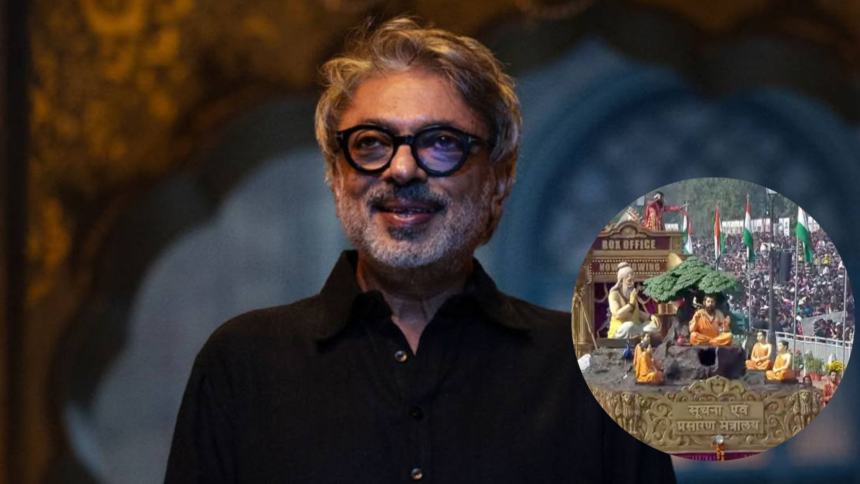
Mumbai: When Sanjay Leela Bhansali’s tableau rolled down Kartavya Path on Republic Day, it was more than just a visual spectacle. It marked a rare and historic moment for Indian cinema. The filmmaker was the first representative of the creator community of the country at the Republic Day Parade, in collaboration with the Ministry of Information and Broadcasting a special tableau in the theme Bharat Katha: Shruti, Kriti, Drishti.
Sanjay Leela Bhansali said he felt deeply honoured to take on this responsibility. According to him, the tableau was a tribute to India’s timeless stories and the power of cinema to retell them for every generation. He referred to the experience as an expression of the Indian experience where tradition and technology converge to make the national identity and cultural pride.
How the tableau told India’s story through Shruti, Kriti and Drishti
The tableau unfolded like a living narrative of Indian storytelling. It began with the cosmic resonance of Aum, which represents the source of sound, wisdom and creation. This was the beginning of the first section, Shruti, which displayed the rich oral traditions of India. One was depicted with a Guru instructing the disciples under a Peepal tree and the patterns of the flowing sound waves as the wisdom passed on the spoken word through centuries.
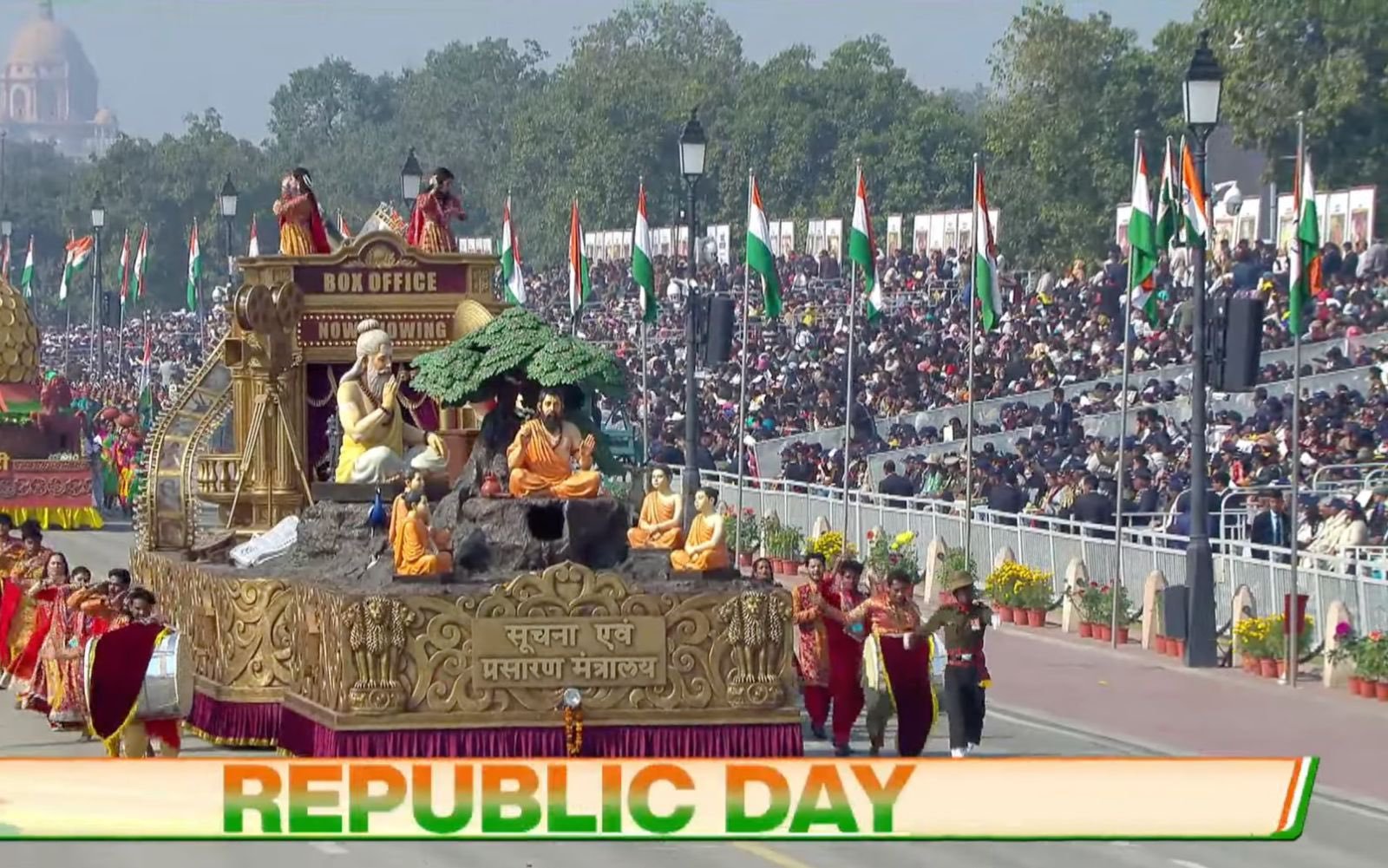
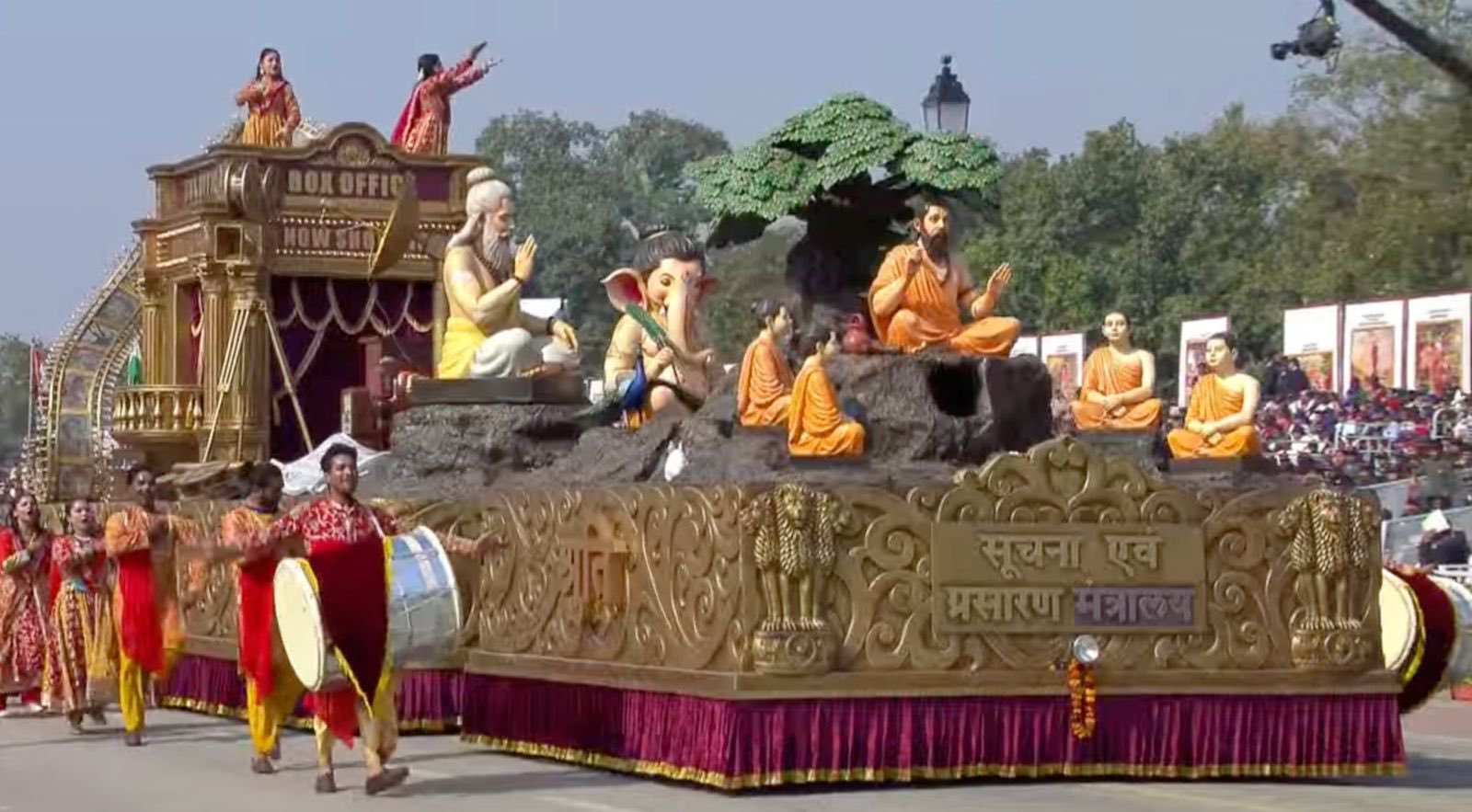
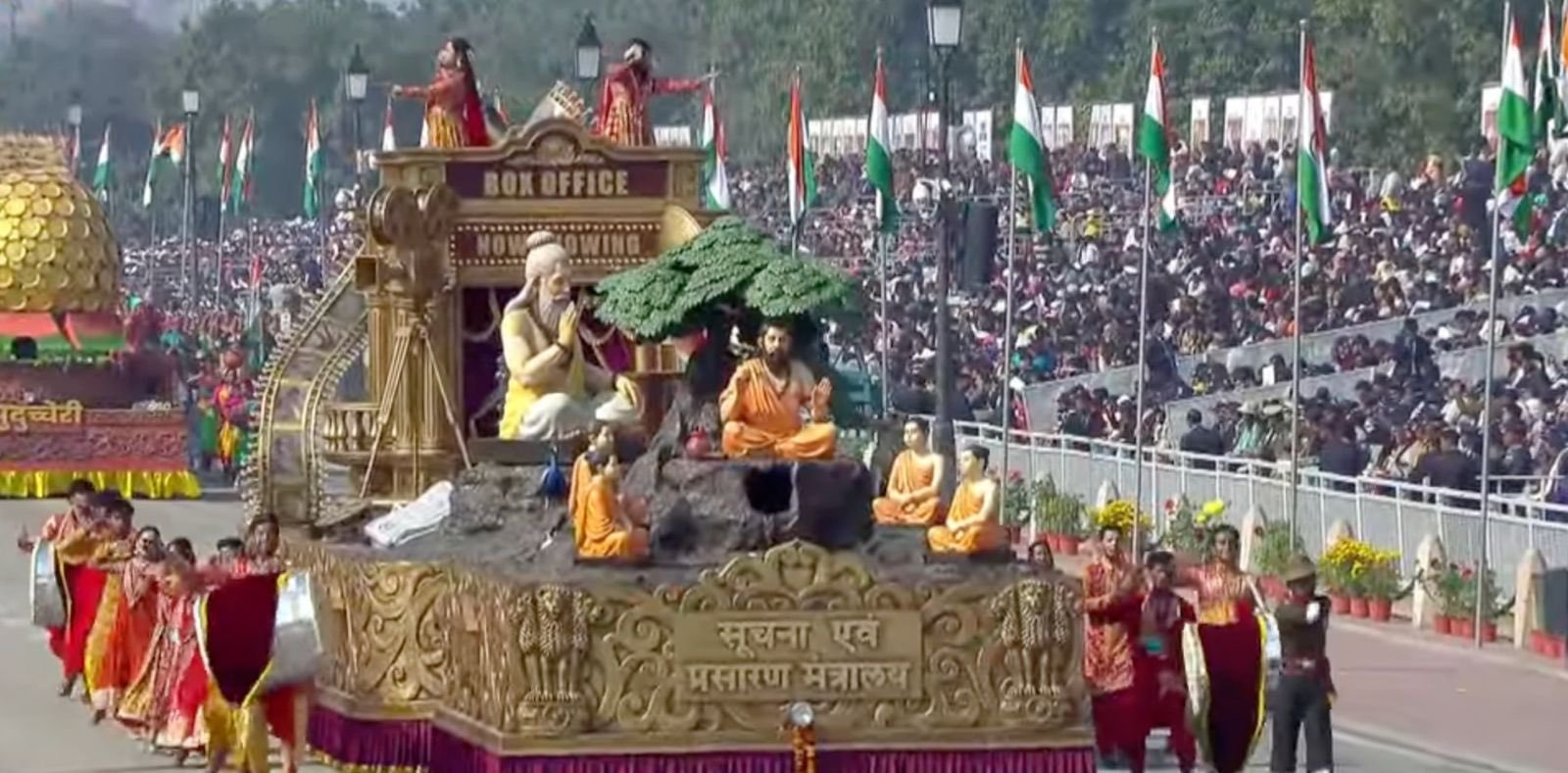
The second segment, Kriti, focused on the shift from oral to written expression. It had Lord Ganesha writing the Mahabharata, a formidable image, which represented sacred authorship and knowledge conservation by use of texts. This part intertwined the ancient literature with the roots of storytelling that are still felt in the Indian art and cinema in present times.
The final part, Drishti, took the story to the present. It displayed the contemporary media landscape of India featuring images of old cameras, film reels, satellites, newspapers and box office imagery. They collectively followed the history of cinema, broadcasting and print media. The tableau also featured digital aspects like Artificial Intelligence, Animation, Visual Effects, Gaming, Comics Extended Reality and the virtual production technologies which have revealed the increasing role in immersive and next generation storytelling by India.
Figures of filmmakers and artists were included to honour creative pioneers who shaped Indian media, reinforcing cinema’s role as one of the country’s strongest cultural voices.
Bhansali’s cinematic legacy and what lies ahead
Sanjay Leela Bhansali is known for his larger than life storytelling and meticulous visual design. From his directorial debut Khamoshi: The Musical in 1996 to celebrated films like Black, Devdas, Ram-Leela, Bajirao Mastani, Padmaavat and Gangubai Kathiawadi, his work has consistently blended emotion, music and grandeur. His latest addition to the story telling canvas came in the OTT series Heeramandi that also attracted attention due to its size and detail.
On the work front, Sanjay Leela Bhansali is currently filming Love & War, an epic saga set against the backdrop of a war. The film stars Alia Bhatt, Vicky Kaushal and Ranbir Kapoor. It is the first time that Vicky Kaushal has worked with the director, and Ranbir Kapoor is working with Sanjay Leela Bhansali again 19 years after his debut on the big screen, Saawariya, in 2007. The movie is said to have its theatrical release on March 20, but a means of confirmation remains expected.
Sanjay Leela Bhansali also has a love story, Do Deewane Seher Mein, which stars Siddhant Chaturvedi and Mrunal Thakur, that will hit the theatres on February 20.
The Republic Day tableau stands as a fitting extension of Bhansali’s cinematic vision. By bringing together ancient wisdom, written heritage and modern media innovation, it not only celebrated Indian cinema but also reminded audiences that storytelling in India has always evolved with time while staying rooted in its cultural soul.
Also Read | Would These Iconic Bollywood Films Get Cancelled If Made Today?