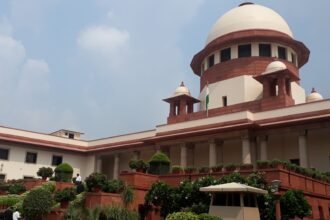






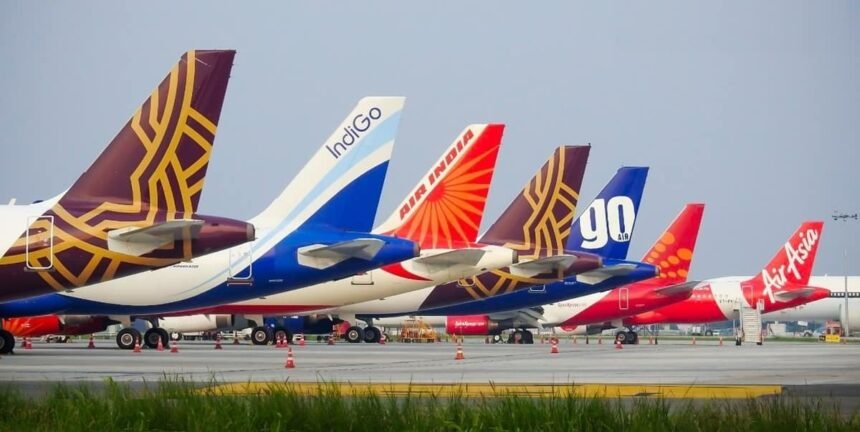
India’s Supreme Court is closely examining how private airlines raise ticket prices during festivals and busy travel seasons. The judges said that charging very high fares sometimes three times the normal price can be unfair to passengers.
They pointed out that during events like the Kumbh Mela and major holidays, many people are forced to travel and end up paying extremely high amounts. The Court is worried this may be exploitative and harmful to consumers.
The judges have now asked the central government to explain its position before deciding whether new rules or controls are needed on airline ticket pricing.
In this public interest case filed by social activist S. Laxminarayanan, the argument is that air travel in India is no longer only for the rich it has become an important and necessary service for many people, especially during emergencies, festivals, or when no other transport is available.
The petition says that airlines now use computer-based systems that keep changing ticket prices many times a day. Because of this, fares often suddenly become very expensive. This mostly harms middle-class and poorer passengers, who usually book tickets at the last moment because of urgent personal or work needs.
During the hearing, the Court said many times that the sharp rise in ticket prices on important routes like Delhi to Prayagraj or Jodhpur during festivals was unfair to passengers. Justice Mehta said that during these times, ticket prices became almost three times higher than normal. Justice Nath added that this did not happen only once, but during many festivals and busy travel seasons.
The petition says that, unlike important public services like railways, electricity or post offices, airlines are not properly regulated when it comes to ticket prices.
It explains that airlines have reduced the free baggage limit from about 25 kg to only 15 kg and now charge very high fees for extra luggage. It also says there are no legal limits on how much airlines can increase ticket prices suddenly (surge pricing) or on other extra charges.
The petition asks the Court to order the government and the aviation authority (DGCA) to make strict rules on how airfares are fixed. This includes putting limits on sudden price increases, controlling extra fees, making cancellation and refund rules clearer, and creating an independent aviation regulator to protect passengers’ rights.
In reply, the government’s lawyer said that since 1994 the aviation sector has been deregulated, meaning ticket prices are decided by the market, not by the government. This was done to encourage competition and help the industry grow. He argued that if judges start controlling airfares, they would be interfering in economic policy.
The Supreme Court did not accept this argument. The judges said that deregulation does not mean airlines are free to overcharge or exploit passengers.
The Court has now given the other side four weeks to submit their replies and fixed the next hearing for February 23, 2026. This shows that the Court wants to study detailed information about how ticket prices are set before deciding whether to pass any temporary or final orders.
Legal Context and Broader Implications
India’s airline industry is mostly free from government control, so private airlines are allowed to decide ticket prices on their own. Like in many countries, they use dynamic pricing, where computer systems change ticket prices based on demand, how many seats are left, and how close the travel date is.
The person who filed the case says this system is unfair because there are no clear rules or transparency. This especially hurts ordinary passengers who cannot book tickets early and end up paying very high prices. Similar concerns have come up in other industries too, where automatic pricing systems and surge pricing have been questioned under consumer protection laws.
If the Supreme Court gives orders to make ticket prices more transparent or to limit fares during busy times, it could change how airline rules work in India. It might push the government to pass new laws, create a special authority to protect airline passengers, or give more powers to the DGCA.
These changes would not only affect festival travel. They could also apply during emergencies, natural disasters, or any situation where people urgently need affordable flights.
The petitioner’s appeal also raises important constitutional concerns. It says that sudden and unclear increases in fares are unfair and go against the right to equality under Article 14. It also argues that such hikes restrict people’s freedom to move freely under Article 19(1)(d), and may affect the right to life and dignity under Article 21, especially for people who cannot afford urgent travel in emergencies.
These arguments have not yet been fully examined by the courts. But the Supreme Court’s interest in the case shows that it may closely look at how to balance business freedom with fairness and public welfare.
In the future, courts and lawmakers may have to decide how much pricing information airlines should share with regulators and judges, whether India should adopt consumer-protection rules like those in the European Union, and how such rules would fit with international aviation laws and trade agreements.
The case is still continuing. The Supreme Court’s hearing in February will show whether the Court plans to give immediate directions or send the issue back to the government to make new policies.
ALSO READ | Breaking the Old Bar: Supreme Court Tightens Grip on Women’s Representation in Legal Bodies