







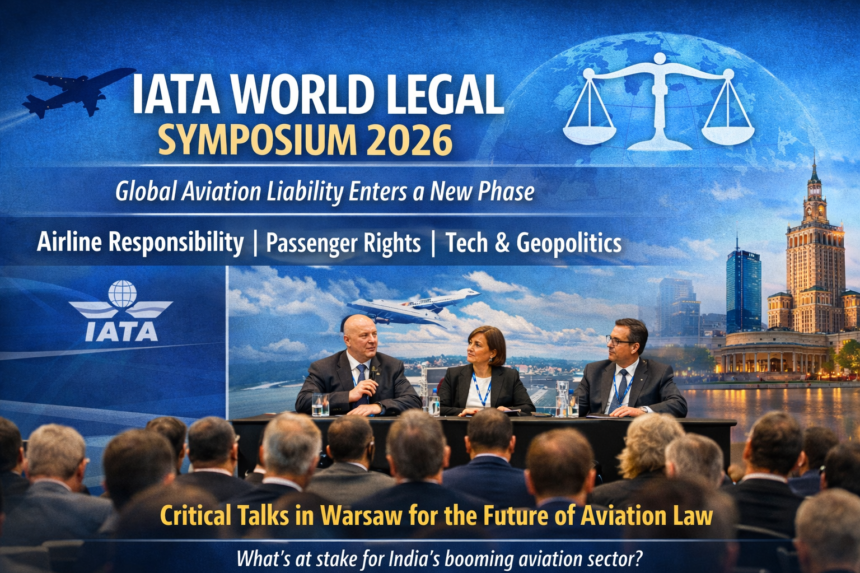
The International Air Transport Association (IATA) will host its World Legal Symposium (WLS) from February 17 to 19, 2026, in Warsaw, Poland. This event is one of the world’s leading forums on aviation law and liability, bringing together a wide range of experts including airline executives, government regulators, aviation lawyers, insurers, aircraft manufacturers, and representatives from international organizations.
This year, the focus of the symposium is particularly important: how aviation laws around the world need to change to keep up with fast-moving developments in technology, regulations, geopolitics, and consumer protection. With air travel growing rapidly, legal frameworks are often struggling to keep pace. The symposium will explore how responsibility, risk, and accountability should be shared across the aviation industry, from airlines and manufacturers to regulators and insurers.
Participants will discuss pressing topics such as:
- The impact of new aviation technologies, including drones, electric aircraft, and AI-assisted systems, on liability and safety regulations.
- International legal challenges for airlines operating across multiple jurisdictions.
- Consumer rights and compensation in an era of rising travel disruptions.
- The effects of geopolitical changes on air transport liability and cross-border regulations.
- How to modernize contracts and insurance policies to reflect evolving risks.
The symposium aims to provide a platform for collaboration and problem-solving, helping the global aviation community develop clear, fair, and future-ready legal frameworks. By sharing experiences, lessons, and best practices, the WLS will help ensure that air travel remains safe, efficient, and legally accountable in an era of rapid change.
What the Symposium Is About
The IATA World Legal Symposium is a major international meeting where experts discuss who is legally responsible when something goes wrong in aviation like accidents, delays, or other disruptions and how these responsibilities should be handled in today’s fast-changing world.
At the 2026 symposium, the main topics will include:
- Passenger Rights and Airline Responsibilities
- How airlines are responsible if passengers are injured, delayed, denied boarding, or if flights are cancelled.
- Exploring ways to protect passengers while keeping airline operations efficient.
- Aircraft Accidents and Incidents
- Who is liable when planes crash or have technical problems?
- Responsibilities may involve airlines, aircraft manufacturers, leasing companies, and maintenance providers.
- Resolving Disputes
- How legal conflicts are solved, including arbitration (a private legal process), disputes between countries over jurisdiction, and enforcing judgments made in other countries.
- New Technology Risks
- Emerging technologies like AI-assisted flight systems, automated controls, and drones can create new legal challenges.
- Cybersecurity threats and data privacy issues are also increasingly important.
- Geopolitical and Regulatory Challenges
- How wars, sanctions, airspace closures, or government interference can affect airlines and passenger rights.
- The legal implications of sudden changes in political or regulatory environments.
- International Legal Frameworks
- Discussions will refer to international rules like the Montreal Convention of 1999, which sets standards for airline liability.
- Experts will examine where these rules are outdated or struggling to keep up with modern aviation challenges.
- Sustainability and Climate Change
- How airlines and regulators are legally accountable for environmental impacts, carbon emissions, and sustainability efforts.
- Legal responsibilities for adapting to climate-related disruptions, like extreme weather affecting flights.
- Emerging Trends in Aviation Law
- How drones, urban air mobility, and space tourism raise new questions about liability and passenger protection.
- The role of insurance and risk-sharing in modern aviation operations.
In short, the symposium is about understanding the complex legal landscape of aviation today, ensuring passengers are protected, airlines are fairly held accountable, and laws evolve with technology and global changes.
The Legal Framework: Where Aviation Law Stands Today
Air travel is heavily regulated at the international level, and airline liability (the responsibility of airlines for accidents, injuries, or lost luggage) is mostly governed by international treaties. The main ones are:
- The Montreal Convention (1999)
- This is the main modern law for international air travel.
- It sets uniform rules on how much airlines have to pay if passengers are injured or die, if luggage is lost or damaged, or if cargo is delayed or damaged.
- Airlines are automatically responsible up to a fixed amount for injury or death. Beyond that, passengers need to prove the airline was at fault.
- Passengers have flexibility in where they can file a lawsuit including the country where they live, not just where the airline is based.
- The Warsaw Convention system
- This is the older system of rules for airline liability.
- It still applies in some countries, though it has mostly been replaced by the Montreal Convention.
- Bilateral Air Services Agreements (ASAs)
- These are agreements between two countries that allow airlines to operate flights between them.
- Modern ASAs often include consumer protection rules and mechanisms for resolving disputes.
Challenges with the Current Legal Framework:
While the Montreal Convention and related treaties cover traditional airline risks like crashes or lost baggage, they were not designed for today’s aviation technology. Some of the new challenges include:
- Software and automation failures: Modern planes rely heavily on software and automated systems. If these fail, it’s unclear how liability is assigned.
- Unmanned and autonomous aircraft (drones, delivery aircraft, and air taxis): Current treaties don’t fully address accidents caused by these systems.
- Complex leasing and operational structures: Airlines often lease planes or outsource operations, making it harder to determine who is legally responsible.
- Cybersecurity risks: Threats like hacking or digital system failures are not specifically covered by older treaties.
These gaps are why international forums, like the Warsaw Convention Symposium, are discussing updates to the rules. The goal is to make aviation law fit modern technology and globalized operations while still protecting passengers.
Airline liability law has a strong foundation, but modern aviation is moving faster than the rules. New technologies, complex business arrangements, and emerging risks require updated legal solutions to ensure passengers are protected and airlines are fairly accountable.
Why This Matters for India
India is no longer a small player in aviation. Its airline industry is growing fast, with more planes, more passengers, and better international connections. The global aviation discussions matter for India in several ways:
- Indian Airlines and Global Rules
Indian airlines flying abroad must follow international rules, no matter what Indian law says. If global standards on passenger safety, flight delays, or technology problems change, it affects Indian airlines’ legal and financial risks. - Passenger Rights and Complaints
More people in India are taking airlines to court or consumer forums over issues like delays or cancellations. How global aviation bodies view airline responsibility often influences how Indian courts decide these cases. - Air Agreements with Other Countries
India is signing or updating agreements with other countries about air travel. Rules about liability, dispute resolution, and passenger protection are now key parts of these talks. Global discussions help shape these agreements. - Technology and Safety Rules
India is adopting new digital aviation technologies. Legal discussions about AI, data privacy, and cybersecurity abroad will affect Indian regulators like the DGCA and lawmakers as they create new aviation rules.
Expert Committees and Timelines
IATA usually uses ideas from the World Legal Symposium (WLS) to:
- Help expert groups work on rules about liability and insurance.
- Release guidance notes or position papers within 12–24 months.
- Influence submissions to ICAO and other international organizations.
The exact members of these committees and schedules are usually decided after the event. The results from WLS 2026 are expected to guide policy discussions through 2026 and 2027.
Broader Legal and Policy Implications
The symposium shows a bigger trend: powerful players, like airlines and even governments, are being watched more closely under international law.
Just like global institutions are warning that judicial independence and executive power can be at risk even in strong democracies aviation law is also moving toward more accountability and less automatic trust in airlines.
For airlines, this means:
- They can’t just hide behind small print in contracts.
- They are more likely to face legal cases in other countries.
- They need to be more open, honest, and careful with passengers.
For regulators and governments, this means:
- Domestic laws should match international standards.
- Weak enforcement of rules is less acceptable.
- Countries need to work together more to regulate aviation.
The Bigger Picture
The IATA World Legal Symposium 2026 is more than just a gathering of aviation lawyers. It is a major event that signals the future direction of global aviation law. The symposium is highlighting important trends in the industry: stricter rules for airline liability, stronger protections for passengers, and clearer responsibilities for airlines and other stakeholders. In other words, the days when the aviation sector could rely on vague or unclear legal rules are coming to an end.
For India, this matters a great deal. As one of the fastest-growing aviation markets in the world, India is increasingly connected to global aviation networks. The legal decisions, guidelines, and standards discussed at the symposium will influence Indian aviation law, policies, and regulatory practices. Airlines operating in India, as well as passengers, can expect changes that align with international best practices.
Beyond law, the symposium also sets broader trends for safety, customer service, and dispute resolution in the aviation sector. It reflects a global push for accountability, transparency, and fairness. For Indian policymakers, regulators, and legal professionals, paying attention to these developments is essential not just to stay in line with international standards but also to ensure that India’s aviation sector remains competitive, safe, and reliable for both domestic and international travelers.
In short, the IATA World Legal Symposium 2026 is shaping the rules of the sky and India cannot afford to ignore its lessons.
ALSO READ | The Indus Waters Treaty at Risk: Future Scenarios and Global Implications