







Thanjavur, Tamil Nadu: Standing tall for over a thousand years, the Brihadeeswara Temple remains one of India’s most extraordinary achievements in architecture, engineering, and cultural vision. Built between 1003 and 1010 CE during the reign of Chola emperor Rajaraja Chola I, the temple continues to astonish historians, engineers, and architects worldwide for its scale, precision, and endurance.
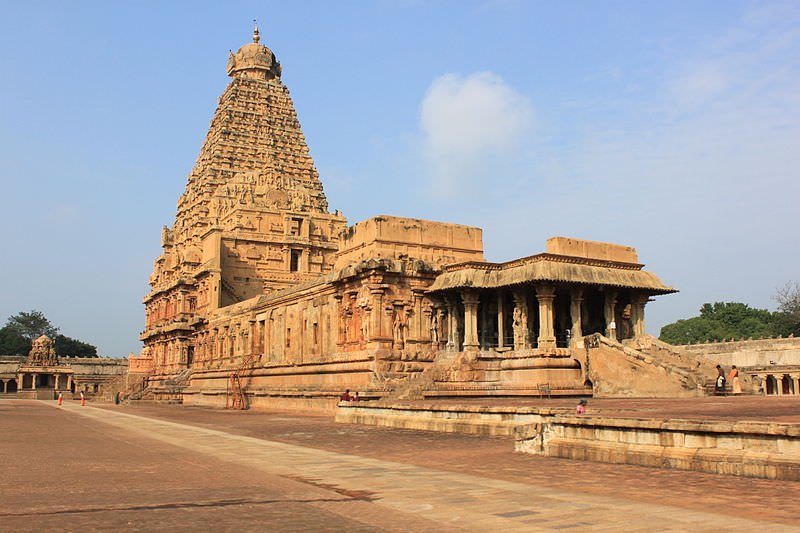
Constructed almost entirely from granite, the temple is remarkable for having no mortar in its structural core. Instead, it employs a highly sophisticated interlocking stone technique, allowing the monument to withstand centuries of natural wear, climatic extremes, and multiple seismic events an engineering feat that modern science still studies with admiration.

An Engineering Feat Ahead of Its Time
The temple’s towering vimana rises to approximately 66 metres (216 feet), making it one of the tallest temple towers of its era anywhere in the world. At its summit rests a single granite capstone weighing nearly 80 tonnes, placed with astonishing accuracy without the aid of cranes or modern machinery.
Scholars believe the Cholas used an inclined ramp system stretching several kilometres to transport and position the massive stone, highlighting a deep understanding of physics, load distribution, and logistics. Equally remarkable is the structure’s stability: despite its enormous weight, the temple’s balanced geometry and interlocking masonry have allowed it to endure earthquakes for over a millennium.
Spiritual Grandeur and Cultural Depth
Dedicated to Lord Shiva, the Brihadeeswara Temple was originally known as Rajarajeshwaram, symbolising the Chola ruler’s devotion and imperial vision. The sanctum houses one of the largest Shiva lingams in India, while the massive monolithic Nandi statue at the entrance stands as a masterpiece of sculptural excellence.
The temple walls are adorned with detailed inscriptions documenting land grants, temple rituals, musical traditions, and administrative systems of the Chola empire. These inscriptions provide invaluable insight into the social, economic, and cultural life of 11th-century South India.

A Living Heritage Site
In 1987, the Brihadeeswara Temple was designated a UNESCO World Heritage Site, under the collective listing “Great Living Chola Temples.” Unlike many ancient monuments, it remains an active place of worship, hosting daily rituals, major Shaivite festivals, and classical dance traditions such as Bharatanatyam.
Today, conservation efforts led by the Archaeological Survey of India focus on preserving the temple’s structural integrity while maintaining its living religious and cultural functions.
A Testament to India’s Civilizational Genius
More than a religious monument, the Brihadeeswara Temple stands as a symbol of India’s ancient scientific knowledge, architectural mastery, and cultural continuity. Its survival without mortar, its earthquake resistance, and its monumental scale challenge modern assumptions about pre-industrial engineering.
Over a thousand years after its completion, the Brihadeeswara Temple continues to inspire awe—proving that India’s classical civilization combined spirituality, science, and art into enduring stone.