







New Delhi: President Donald Trump indicated that the United States will reduce its punitive 50% tariffs on India “at some point,” citing New Delhi’s substantial reduction in Russian oil purchases as the primary justification for the potential relief.
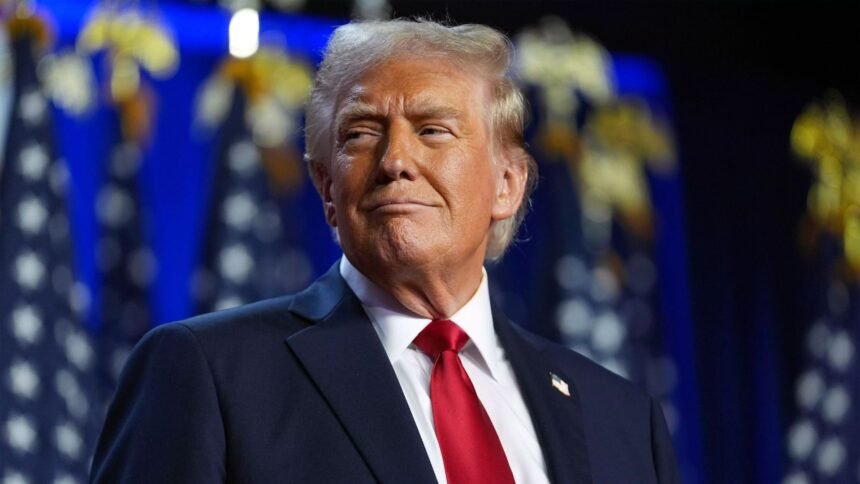
Trump made the remarks Monday during an Oval Office ceremony where he administered the oath to Sergio Gor, the new US Ambassador to India. When questioned by reporters about the tariff situation, Trump stated:
Right now, the tariffs are very high on India because of the Russian oil, and they’ve stopped doing the Russian oil. It’s been reduced very substantially. Yeah, we’re going to be bringing the tariffs down…At some point, we’re going to be bringing them down.”
The comments represent the clearest signal yet that Washington may be preparing to ease what have become the highest US tariffs on any major trading partner. India currently faces a combined 50% tariff rate – comprising a 25% “reciprocal tariff” implemented in August and an additional 25% penalty specifically imposed for purchasing Russian crude oil.
The shift comes amid concrete evidence of India’s pivot away from Russian energy. According to Bloomberg and Business Standard reports published Monday, state-owned Hindustan Petroleum Corporation (HPCL) purchased 2 million barrels of US West Texas Intermediate crude oil for January 2026 delivery through spot market tenders. The purchase marks a significant diversification as Indian refiners face November 21 sanctions deadlines on transactions with Russia’s largest oil companies, Rosneft and Lukoil.
India had become the world’s second-largest buyer of Russian oil after Moscow offered steep discounts following its 2022 invasion of Ukraine. At peak levels in 2024-2025, Russian crude accounted for 34-39% of India’s total oil imports, reaching 1.7-1.8 million barrels per day. This dramatic increase from just 2% of imports in 2021 became a major irritant in US-India relations.
The Trump administration imposed the secondary 25% tariff in August specifically to penalize India’s Russian oil purchases, with Trump stating that India was “buying massive amounts of Russian Oil” and “selling it on the Open Market for big profits.” Treasury officials accused Indian refiners of “profiteering” and funding Russia’s war machine.
More Read

However, the economics have shifted dramatically in recent months. According to trade sources cited by Reuters and CNBC, discounts on Russian crude have narrowed from $8-12 per barrel earlier this year to just $1.80-2.20 per barrel currently. Combined with US sanctions effective November 21, Indian refiners report that Russian oil flows are expected to fall to “near zero” in coming months.
Trump’s tariff regime has devastated sectors of India’s export economy. The 50% rate affects approximately $48 billion in Indian exports to the United States – India’s largest export market. Indian goods exports to America fell 37.5% between May and September 2025, with textiles, gems and jewelry, leather goods, and shrimp industries facing particularly severe impacts. Economists estimate the tariffs could reduce India’s GDP growth by 0.3-0.5 percentage points.
Five rounds of trade negotiations between Washington and New Delhi have been conducted since March, with both sides expressing cautious optimism about reaching an agreement by year-end. According to sources quoted by Mint and Business Today in October, a potential deal could reduce US tariffs on Indian goods to 15-16% – comparable to rates on Japan and South Korea – in exchange for India’s commitment to phase out Russian oil imports and provide limited agricultural market access.
Commerce Minister Piyush Goyal said earlier this month that “sensitive and serious issues” remain unresolved, particularly around opening India’s politically contentious agricultural and dairy sectors to American imports. Prime Minister Narendra Modi has described farmer protections as “big red lines” his government will not cross.

Trump notably softened his rhetoric Monday, calling Modi “his friend” and “a great man,” and expressing confidence that “we’re close to something that works for everyone.” Analysts at Oxford Economics and Goldman Sachs suggest an agreement could be finalized within weeks if both sides demonstrate flexibility on remaining sticking points.
The pharmaceutical and electronics sectors – representing approximately $25 billion in Indian exports – remain exempt from the tariffs, ensuring America’s supply chain for generic drugs and semiconductors continues uninterrupted.
Also Read | US Sanctions Force Indian Refineries Into Emergency Mode Over Russian Oil Deals