








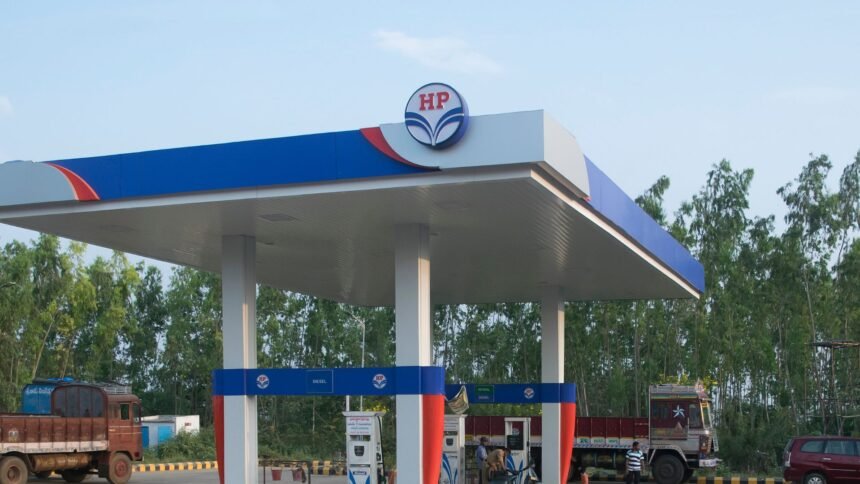
New Delhi: India’s state-owned refiners HPCL and MRPL have secured 5 million barrels of crude oil from US and West Asian suppliers, marking a strategic pivot away from Russian supplies amid mounting sanctions pressure. The spot market purchases, executed through competitive tenders for January delivery, underscore India’s aggressive diversification of its energy import basket.
According to Business Standard, Hindustan Petroleum Corporation Limited (HPCL) purchased 2 million barrels each of US West Texas Intermediate (WTI) crude and Abu Dhabi’s Murban crude for January arrival, while Mangalore Refinery and Petrochemicals Ltd (MRPL) bought 1 million barrels of Iraqi Basra Medium crude scheduled for January 1-7 delivery. Trade sources confirmed the transactions, though seller identities and pricing details remain undisclosed.
The purchases come as Indian refiners actively scout for alternatives to Russian crude following US President Donald Trump’s sanctions on Rosneft and Lukoil, Russia’s two largest oil companies. Business Standard reported that MRPL has paused Russian oil purchases “due to the risks involved,” while HPCL, which had already cut Russian intake in recent months, has also halted imports from Russia.
This strategic shift reflects India’s delicate balancing act between energy security and geopolitical pressures. As the world’s third-largest oil importer, India depends on foreign suppliers for roughly 88% of its crude oil needs approximately 4.8 million barrels daily. Until recently, Russia dominated this supply chain, capturing a 36-40% market share after offering steep discounts following Western sanctions over Ukraine. India had become the world’s largest buyer of seaborne Russian crude since 2022.
The sanctions landscape fundamentally altered this equation. With penalties on Rosneft and Lukoil taking effect November 21, 2025, Indian state refiners controlling over 60% of the nation’s 5.2 million barrel-per-day refining capacity confronted mounting compliance risks. Tanker rates doubled following the sanctions announcement, while Russian crude discounts narrowed significantly, eroding the economic advantage that initially drove Indian purchases.
HPCL, a Maharatna public sector enterprise, operates refineries in Mumbai and Visakhapatnam with combined direct capacity of 22.5 million tonnes per annum. The company achieved record throughput of 25.27 million tonnes in fiscal year 2024-25, demonstrating operational efficiency at 110% capacity utilization. MRPL, a subsidiary of ONGC with 16.96% HPCL ownership, runs India’s only refinery equipped with dual hydrocrackers at its 15 million tonne facility in Mangalore.
The diversification strategy extends beyond this transaction. India now sources crude from 39 countries, deliberately reducing Middle East dependence from 63% in 2017 to approximately 46% in 2024. The US has emerged as India’s fifth-largest supplier, with American crude exports to India surging 32% in 2024 and reaching peaks of 540,000 barrels per day in October.
This energy recalibration carries strategic implications for US-India relations. Following a February 2025 summit, President Trump and Prime Minister Narendra Modi agreed to position America as a “leading supplier” of oil and gas to India, targeting growth in bilateral energy trade from $15 billion to $25 billion as part of broader efforts to double total trade to $500 billion by 2030.
India’s approach reflects pragmatic energy diplomacy. The Standing Committee on Petroleum emphasized in December 2023 that diversification would reduce vulnerability to supply disruptions and address the “Asian premium” the markup Middle Eastern producers charge Asian buyers over official selling prices. With India projected to overtake China as the largest driver of global oil demand growth by 2027, securing reliable, cost-effective supplies remains paramount.
The January deliveries will feed refineries capable of processing crude grades ranging from light, sweet WTI to heavier, high-sulfur Middle Eastern varieties flexibility that positions India as a major refining hub exporting petroleum products globally. As Russian crude flows face increased complexity through intermediary traders, India’s state refiners are demonstrating their capacity to rapidly adjust sourcing strategies while maintaining the operational tempo critical to both domestic energy security and export commitments.
Also Read | US Sanctions Force Indian Refineries Into Emergency Mode Over Russian Oil Deals