








Patna: Bihar’s high-stakes assembly election appears to be heading toward a clear outcome, with early counting trends giving the National Democratic Alliance (NDA) a comfortable lead across the state. The vote-counting process, which began at 8 a.m. in centres across all districts, quickly set the tone for what many analysts describe as a “decisive but hard-fought” mandate.
Historic Voter Turnout Signals Strong Public Mood
This election witnessed an unprecedented surge in voter participation. Across both phases of polling, Bihar recorded the highest turnout in its electoral history, crossing 67% overall. Several districts, especially in rural regions, reported remarkably high participation from women voters that is, in some pockets exceeding 70%.
Such turnout figures reflect a heightened public desire to influence the state’s political direction, especially on issues like unemployment, price rise, and migration, which dominated the narrative throughout the campaign.
Early Trends Show NDA Holding Ground
With leads firming up through the afternoon, the NDA appeared to be comfortably crossing the majority mark of 122 seats. The Bharatiya Janata Party (BJP) and Janata Dal (United) displayed strong performances in their core strongholds, while also registering gains in constituencies where competition was expected to be tight.
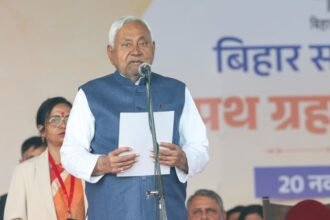
For Chief Minister Nitish Kumar, who entered the race with decades of political experience and multiple terms behind him, the trends indicate yet another successful electoral test. His governance record, development programs, and long-standing appeal among women voters seem to have played an influential role in shaping the outcome.
Opposition Campaign Falls Short of Expectations
The Mahagathbandhan (MGB), comprising the Rashtriya Janata Dal (RJD), Congress, and Left parties, appeared to be falling short of the numbers projected by its leaders during the campaign. Despite a high-energy campaign by Tejashwi Yadav, who aggressively pitched employment guarantees and youth-friendly reforms, the alliance struggled to convert enthusiasm into seat gains.
While the opposition may still secure a sizeable presence in the Assembly, the early tally suggests it will not be enough to challenge the NDA’s lead.
New Players Make Limited Impact
This election also saw new parties and independent candidates attempting to break into Bihar’s political space. Among them, the Jan Suraaj movement, contesting its first assembly election, gained visibility but did not translate it into meaningful leads during counting. Political observers believe these new entrants may need more time and organisational reach before they can challenge established party structures.
What the Verdict Means for Bihar
Bihar’s results carry significance beyond the state itself. The high voter turnout, dominated by youth and women, highlights deep public engagement with economic concerns and social welfare policies. The NDA’s performance, if sustained through final results, is expected to influence national political strategies ahead of upcoming electoral cycles.
For the ruling alliance, the mandate will likely be interpreted as support for continuity and stability. For the opposition, it presents a moment for reassessment; particularly on campaign messaging, alliance management, and organisational strength.
As counting continues and final numbers crystallise, Bihar stands at the threshold of another political chapter and this one shaped by an assertive electorate and a renewed mandate that is likely to steer policy direction in the months to come.
Also Read | Bihar Assembly Elections: Voting Begins in 20 Districts for 122 Seats in Final Phase