







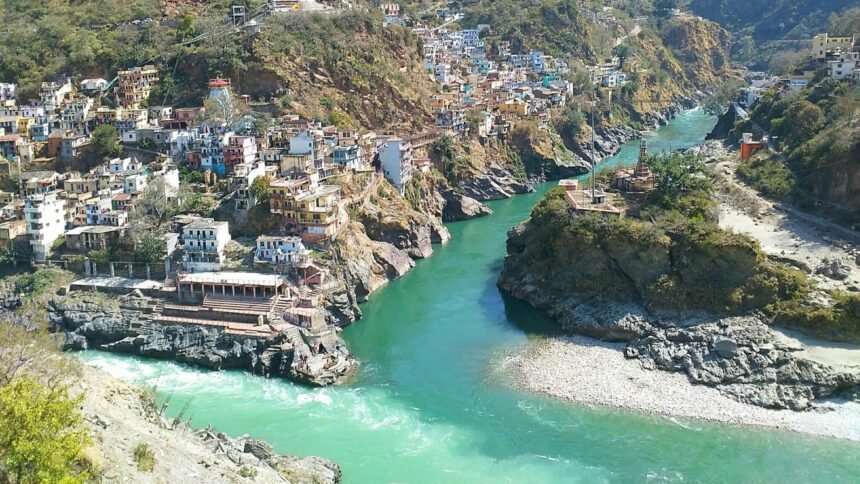
Dehradun: As Uttarakhand celebrates its 25th Foundation Day on November 9, Prime Minister Narendra Modi inaugurated projects worth ₹8,260 crore. But the real story of Devbhoomi goes beyond these numbers it’s about a land that awakens each morning to 20,000 natural springs and where 12,064 Van Panchayats protect forests using centuries-old traditions.
A State Born From Sacrifice
Uttarakhand’s birth wasn’t a simple administrative decision. In 1994, police firing at Khatima, Mussoorie, and Rampur Tiraha killed dozens of activists. After the struggles led by heroes like Indramani Badoni and Kashi Singh Airy, Uttarakhand became India’s 27th state on November 9, 2000. Every Foundation Day remembers those martyrs who gave their lives for this dream.
Char Dham: Where Pilgrimage Meets Ecology
This year, 4.6 million pilgrims visited the Char Dham circuit. Kedarnath, Badrinath, Gangotri, and Yamunotri aren’t just shrines they’re symbols of the Himalaya’s fragile ecosystem. The SDC Foundation’s December 2024 report warned that crowd management and environmental protection matter more than record numbers.
Hemkund Sahib, the world’s highest Gurudwara at 4,632 meters, tells a similar story. In 2024, over 36,000 pilgrims arrived in just the first 11 days, leading to a daily limit of 5,000 to prevent overcrowding.
Naulas and Chaals: Himalaya’s Living Water Banks
In Uttarakhand, ‘water banks’ aren’t modern schemes they’re centuries-old naulas and chaals. Almora’s 1,000-year-old naula and Pithoragarh’s 700-year-old water temple showcase this tradition brilliantly.
The Dayarani Lake Project in Pithoragarh worked wonders. Started in 2017, it increased spring discharge from 1.5 to 6 liters per minute a 300% jump! Women like Kamla Devi, who spent 2-3 hours fetching water, now fill their pots in just 10 minutes.
Tata Trusts’ Himmotthan Society has implemented 270+ water schemes since 2001, benefiting 150,000 people. Over 300 springs have been revived, with 145+ now flowing year-round.
Banj Forests: The Real Oxygen Banks
Uttarakhand’s 24,303 square kilometers of forests cover 45.44% of the state. Banj (Oak) trees are called ‘green gold’ here. They don’t just produce oxygen they retain water, prevent soil erosion, and support biodiversity. One tree produces 260 pounds of oxygen annually; two mature trees suffice for a family of four.
However, 2024 saw Uttarakhand rank first nationally for forest fires. The Shitlakhet ‘Friends of the Forest’ group showed hope. Under Gajendra Pathak’s leadership, this community reduced fire incidents five-fold in 2025 through WhatsApp-based rapid response and preventive clearing.
Van Panchayats: Democracy Meets Conservation
The 12,064 Van Panchayats, running since 1931, manage 19% of state forests. This is among the world’s largest community conservation experiments. In 2024, Uttarakhand became India’s first state to integrate AI into forest management.
Under the ‘Ek Ped Maa Ke Naam’ campaign, Uttarakhand alone planted 8.2 million trees. The Miyawaki Method is creating ‘tiny forests’ that grow 10x faster and 30x denser than conventional plantations.
Tigers and Glaciers: Nature’s Warning
With 560 tigers, Uttarakhand ranks third in India. Corbett Tiger Reserve alone shelters 260 tigers the highest in any Indian reserve. But climate change looms large. Between 2013-2023, glacier lake numbers increased 1.9% and area expanded 8.1% a danger signal indicating accelerating melt.
Solar Dreams and Sacred Groves
The state’s Solar Policy 2023 targets 2,500 MW by December 2027. Already, 575 MW has been approved with 235 MW under development. The Koti Nainbagh plant generates 1,000 units daily, earning farmers ₹1.2-1.5 lakh monthly.
Meanwhile, the Ramayan Vatika established in 2024 features 139 plant species from Valmiki’s Ramayana, while the Mahabharat Vatika showcases 37 species mentioned in the epic. These living museums bridge sacred texts with biodiversity conservation.
Climate Reality Bites
India witnessed its 5th driest winter since 1901 in early 2025, with 89% districts suffering rainfall deficit. Uttarakhand farmers faced 10-40% crop losses in 2024 due to erratic weather, hailstorms, and droughts. Traditional festivals like Basant Panchami and Harela are losing significance as weather patterns no longer align with ancient calendars.
Temperature rose 0.46°C between 1911-2011, accelerating at higher elevations. In 2024, unprecedented heat required fans even in hill villages where such temperatures were unknown.
The Path Forward
Uttarakhand’s future lies in its demonstrated synthesis: 12,064 Van Panchayats managing forests through centuries-old systems now enhanced with AI; ancient naulas revived with hydrogeological science increasing spring discharge 48%; spiritual tourism generating 84 million visitors managed through sustainable policies; ₹8,260 crore development projects coexisting with forest conservation.
Yet challenges intensify faster than solutions scale. Ranking first for forest fires, 5,428 water sources facing declining levels, 50% of Himalayan springs drying up and climate disruption destroying crops warn of fragility beneath apparent success.
The next 25 years will determine whether this synthesis of tradition and technology, spirituality and science, can sustain the ‘Land of Gods’ for future generations.
Also Read | Why Rishikesh Truly Deserves a Spot on Every Yoga Lover’s Travel List